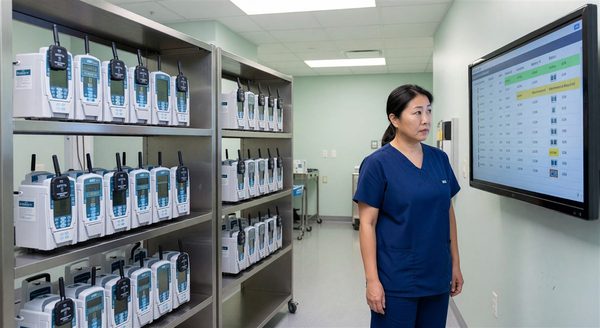
Equipment loss and underutilization are significant operational inefficiencies in hospitals. Nurses routinely spend 20-40 minutes per shift searching for mobile equipment — IV pumps, portable monitors, wheelchairs, and specialty carts. Equipment not located in time is assumed missing and replaced, driving unnecessary capital expenditure. Meanwhile, expensive equipment sits in overlooked closets or unused.
RFID (Radio Frequency Identification) asset management systems address these inefficiencies by providing real-time or near-real-time location data for tagged equipment across the facility. Deployed correctly, RFID reduces equipment search time, improves utilization rates, supports preventive maintenance scheduling, and strengthens sterile processing documentation.
How Hospital RFID Systems Work
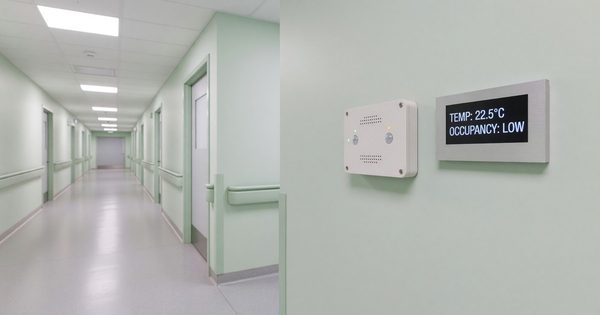
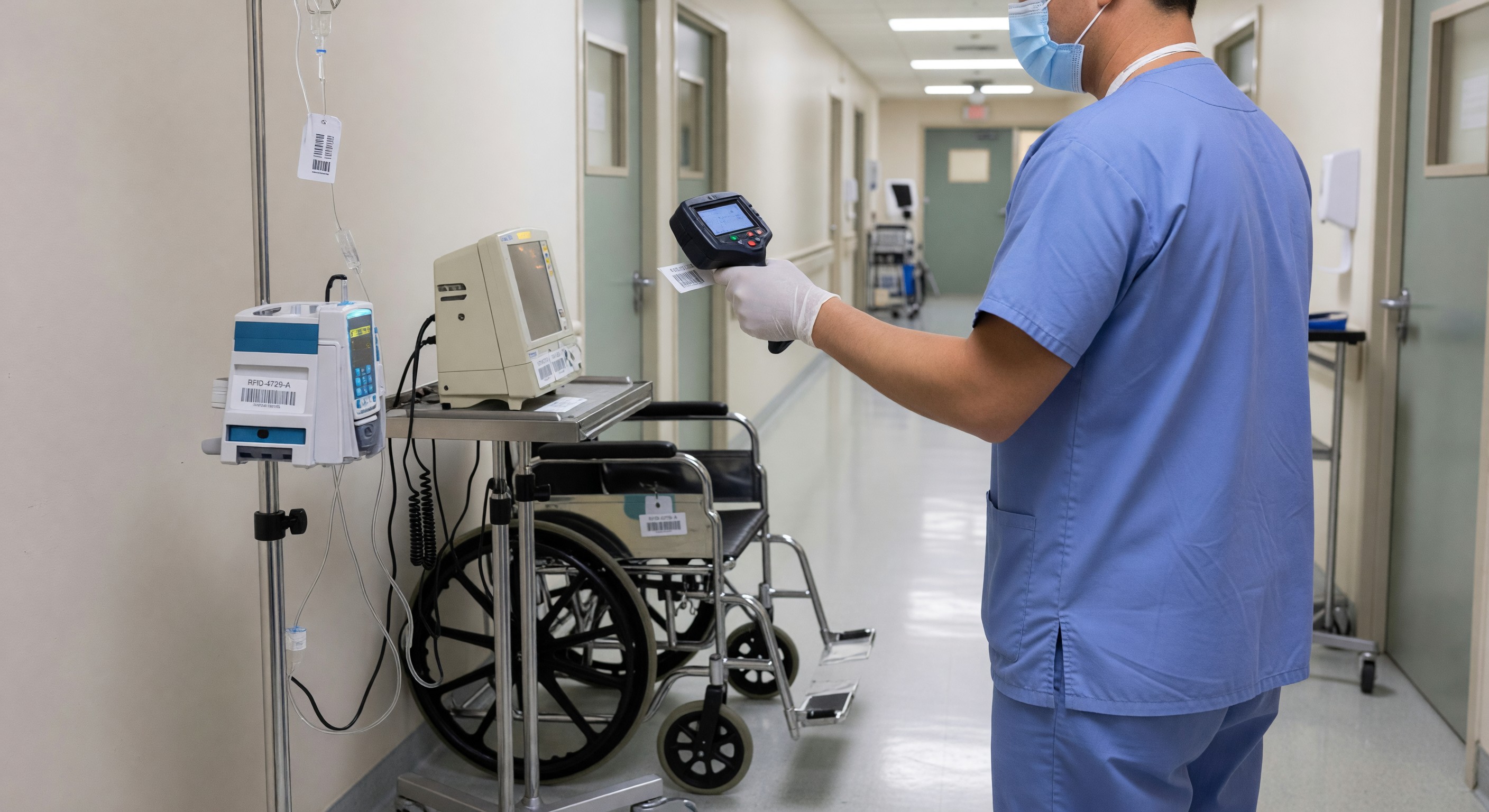
RFID asset management uses small battery-assisted or passive tags attached to equipment. Readers deployed throughout the facility — at corridor intersections, unit entries, and key locations — detect tagged assets and report their location to a central software platform.
Passive RFID: Tags have no battery; they reflect energy from reader signals. Range is short (typically centimeters to a few feet), making passive RFID suitable for point-of-care identification tasks like medication scanning and sterile processing item tracking.
Active RFID: Tags broadcast a signal using an onboard battery. Range is much longer (30-100 feet), enabling real-time location tracking throughout large facilities. Active RFID is the dominant technology for equipment location tracking in acute care hospitals.
Wi-Fi-based RTLS (Real-Time Location Systems): Some facilities deploy RTLS using the existing Wi-Fi infrastructure for location signals rather than dedicated RFID readers, reducing infrastructure investment. Accuracy is somewhat lower than dedicated active RFID.
BLE (Bluetooth Low Energy) tags: Increasingly common in newer deployments, BLE tags offer longer battery life than older active RFID and can be detected by a wide range of readers including smartphones.
Primary Use Cases
Mobile Equipment Tracking
The core use case: tagging high-value, frequently searched equipment including:
- IV infusion pumps
- Portable vital signs monitors
- Ventilators and respiratory equipment
- Specialty beds and pressure-relieving mattresses
- Wheelchairs and transport equipment
- Stretchers and procedure carts
Clinical staff locate equipment through a desktop or mobile interface, finding the nearest available tagged item within seconds rather than searching multiple units. Facilities routinely report 50-70% reduction in equipment search time following RFID deployment.
Equipment Utilization Analysis
RFID location data, aggregated over time, reveals utilization patterns that inform capital planning:
- Which pump models spend the most time in storage versus active use
- Units consistently short of equipment versus units consistently overstocked
- Equipment that is never located in clinical use areas — a signal it may be hidden, lost, or broken
This data supports equipment right-sizing decisions, reducing both shortage-driven rental costs and excess capital expenditure.
Preventive Maintenance Integration
RFID systems integrated with CMMS platforms can automate PM scheduling by:
- Tracking the location of equipment due for maintenance
- Flagging equipment that has not been serviced within PM interval
- Enabling biomed technicians to locate specific equipment for inspection without floor searches
Equipment compliance with PM schedules — required by Joint Commission EC.02.04.01 — improves when biomed can reliably find equipment rather than relying on staff to bring it to the biomed shop.
Sterile Processing Documentation
In sterile processing departments, RFID tracking of surgical instrument trays and sets provides:
- Chain-of-custody documentation from decontamination through packaging, sterilization, and delivery to the OR
- Sterilization cycle linkage: associating each tray with a specific sterilizer run and Bowie-Dick test result
- Recall management: if a sterilizer fails, RFID records identify which trays were processed in that cycle
AAMI ST79 (Comprehensive Guide to Steam Sterilization) and Joint Commission standards emphasize the importance of sterilization documentation. RFID replaces paper-based tracking with auditable electronic records.
Infrastructure Requirements
Reader Deployment
Active RFID reader deployment requires careful planning:
- Coverage mapping: Readers must be positioned to provide seamless coverage throughout the facility with no signal gaps. Layout planning typically involves an RF site survey and reader placement modeling.
- Power and data cabling: Each reader requires a data connection and power — either hardwired ethernet/POE or wireless, depending on the system.
- Reader maintenance: Readers are facility infrastructure requiring inclusion in the utility management PM program.
Network Integration
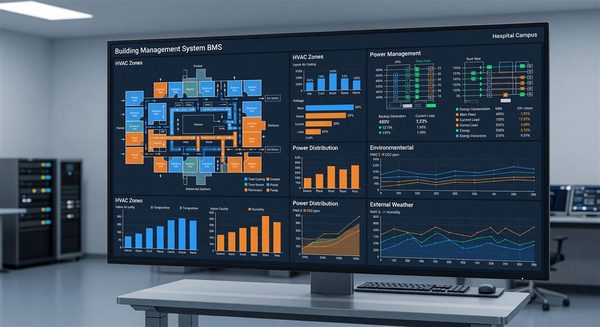
RFID middleware typically operates on the hospital network, requiring:
- Adequate network bandwidth at reader aggregation points
- Integration with existing CMMS and clinical applications (EHR integration for bedside equipment association)
- Cybersecurity controls: RFID systems with network connectivity are subject to the same IT security governance as other networked systems
Tag Management
Tags attached to equipment require ongoing management:
- Tag replacement cycle: active RFID batteries last 2-5 years depending on beacon frequency; battery replacement programs prevent tag expiration from creating tracking gaps
- Tag addition program: process for tagging newly purchased equipment before deployment
- Tag removal on retired equipment: decommissioned tags should be removed from the system inventory to prevent ghost entries
Return on Investment
Published case studies from hospital RFID implementations report ROI through:
- Reduced rental equipment costs (facilities renting pumps and beds due to perceived shortage)
- Reduced capital replacement of lost equipment
- Nursing time savings (reduced search time across large nursing staffs)
- Improved Joint Commission survey readiness through documented PM compliance
Typical healthcare RFID deployments achieve positive ROI within 18-36 months for facilities with significant mobile equipment inventories.
Frequently Asked Questions
Does RFID interfere with clinical equipment? Modern healthcare RFID systems operate in frequency bands tested for interference with clinical equipment. The FDA has published guidance on electromagnetic compatibility for medical devices. Facilities should work with their RFID vendor and clinical engineering to conduct interference testing before large-scale deployment, particularly near sensitive equipment like MRI and implantable devices.
What is the difference between RFID and RTLS? RFID refers to the tagging technology. RTLS (Real-Time Location System) is the broader concept of using location technologies (which may include RFID, Wi-Fi, BLE, infrared, or ultrasound) to track assets, patients, and staff in real time. Most hospital “RFID tracking” systems are more precisely described as RTLS using active RFID technology.
Can RFID be used to track patients and staff as well as equipment? Yes. Patient and staff tracking using RFID wristbands or badge tags is a separate RTLS application. Many facilities deploy a single RTLS infrastructure that tracks equipment, patients, and staff simultaneously. Patient tracking applications require additional privacy governance and HIPAA compliance considerations.
Who is responsible for RFID infrastructure in a hospital — IT or facilities? Physical infrastructure (readers, cabling, mounting hardware) is typically a facilities responsibility. The software platform and network integration falls to IT. Tag management may be shared between biomed engineering and clinical departments. Clear ownership of each component should be defined in the RFID governance structure to avoid maintenance gaps.