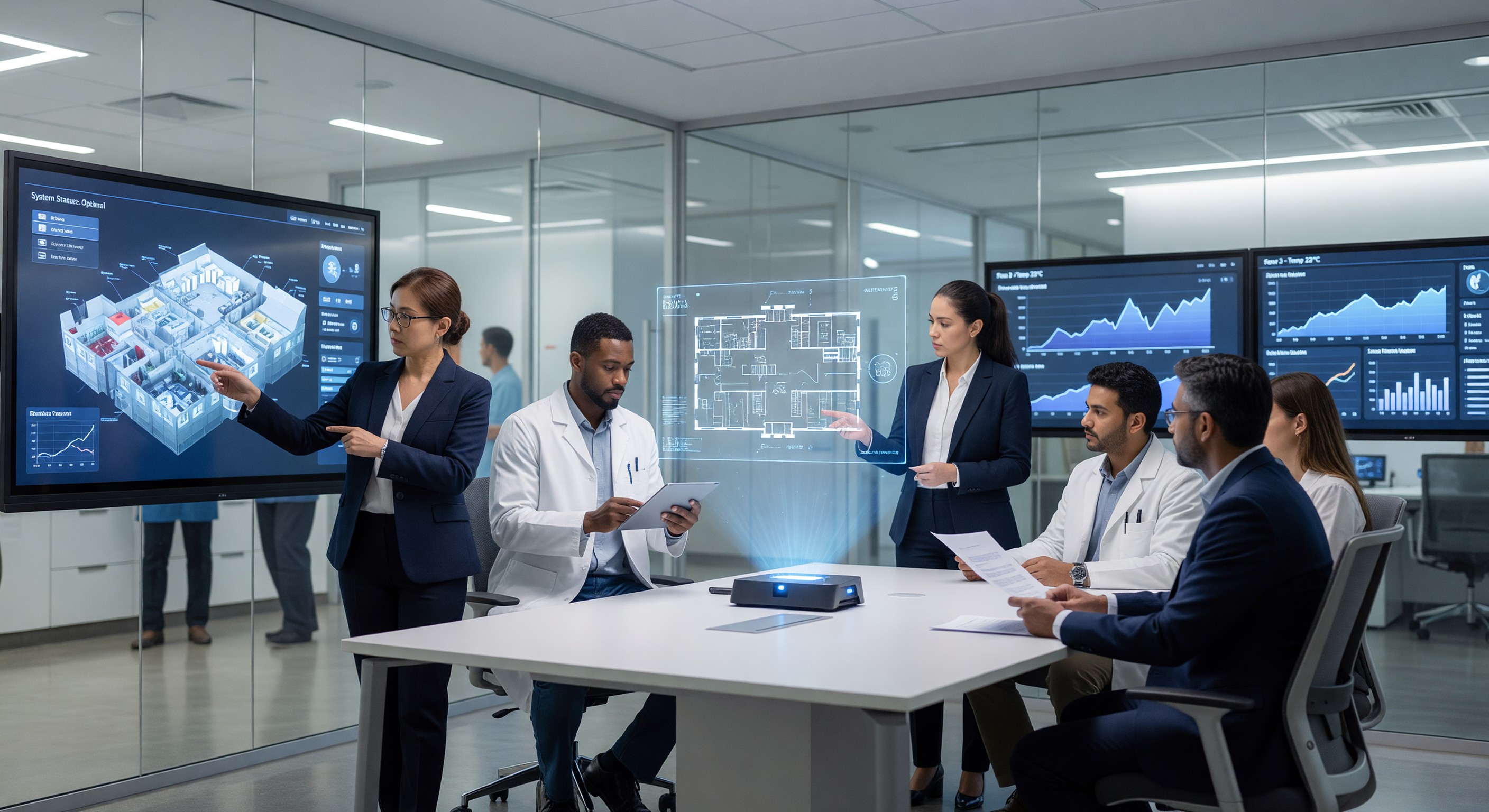
Healthcare facility management is undergoing a fundamental transformation. The profession that once focused primarily on keeping mechanical systems running and passing Joint Commission surveys is evolving into something more strategic, more technology-integrated, and more directly connected to clinical outcomes than at any previous point in its history.
For facility directors who entered the field through the trades or mechanical engineering backgrounds, this evolution requires adaptation. For those entering the field now, it defines the profession they’ll work in for their entire careers. Understanding where healthcare facility management is heading—and what competencies will define success in the profession over the next decade—is useful orientation for anyone navigating this transformation.
The Changing Role of the Healthcare Facility Director
From Reactive Maintenance to Predictive Operations The dominant operational model for most of healthcare facility management’s history has been reactive: systems fail, maintenance fixes them. Preventive maintenance programs improved on this, but still operated primarily on calendar schedules rather than actual equipment condition.
Predictive operations—where AI analytics and condition monitoring enable maintenance decisions based on actual equipment state—is becoming the new operational standard for facilities that can invest in the enabling technology. The facility director in this model spends less time responding to equipment failures and more time reviewing analytics dashboards, making strategic maintenance decisions, and managing technology systems that do much of the operational monitoring automatically.
From Single-Site Operator to Multi-Campus Manager Healthcare system consolidation has created facility management portfolios that span dozens of campuses, hundreds of buildings, and millions of square feet of managed space. The facility director role is increasingly a remote leadership and analytics role rather than a boots-on-ground technical role. Managing distributed portfolios through technology—centralized monitoring, remote diagnostics, distributed maintenance teams with mobile tools—requires different skills than managing a single campus.
From Facilities as Cost Center to Facilities as Strategic Asset Healthcare organizations are increasingly recognizing that facility quality affects clinical quality, patient experience, staff retention, and regulatory standing—all of which have financial value. Facility directors who can articulate this value in financial terms and connect facility investment to clinical and organizational strategy are positioned as strategic business partners rather than operational cost centers.
Technology Trends Reshaping the Profession
AI Operations Intelligence By 2030, the leading healthcare facility organizations will operate facilities management programs where AI provides continuous operational intelligence: predicting equipment failures weeks in advance, continuously optimizing energy use while maintaining clinical environmental requirements, automatically generating compliance documentation from sensor data, and surfacing operational anomalies for human attention.
The facility director’s role in this world is to interpret AI insights, make strategic decisions based on those insights, and maintain the human accountability and judgment that AI systems cannot replace. Technical expertise in building systems remains essential—you can’t interpret AI alerts about HVAC performance without understanding HVAC—but it’s deployed in a more analytical and strategic mode than the hands-on technical work that defined the profession historically.
Digital Twin as Operational Platform Building digital twins—virtual models synchronized with real building sensor data—are becoming operational platforms rather than specialized engineering tools. Facility directors using digital twin platforms can visualize the entire campus in real time, explore “what if” scenarios for operational changes, and manage distributed portfolios through a unified virtual representation of their physical assets.
The transition from floor plan binders to BAS graphic interfaces to digital twin platforms represents a generational shift in how facility professionals understand and manage physical assets. Digital twin literacy is becoming a basic competency for healthcare facility management professionals.
Autonomous Building Systems Building systems that adjust autonomously in response to changing conditions—weather, occupancy, clinical schedule, grid pricing—are increasingly sophisticated. In 2026, some healthcare facilities operate HVAC and lighting systems that require minimal manual intervention for routine operations, with human attention focused on exceptions, maintenance decisions, and strategic modifications.
The trajectory toward greater building autonomy will continue, though healthcare’s regulatory requirements for documented human oversight will likely prevent full automation of life-safety systems even as commercial buildings move further toward autonomous operation.
Workforce Transformation
The Disappearing Trade Skills Gap The skilled trades workforce shortage in healthcare facility management is a structural, multi-decade challenge. The pipeline of electricians, plumbers, HVAC technicians, and other trades professionals entering the workforce is insufficient to replace retiring professionals, and healthcare competes with higher-paying or less complex work environments.
This gap is being addressed through multiple converging forces: technology that reduces the headcount needed to manage a given facility (predictive maintenance, remote monitoring, building automation); workforce development programs that create new pipelines; and creative deployment models that use technology-augmented technicians to cover more ground with existing staff.
New Competency Requirements The competency profile for healthcare facility managers is expanding. Traditional technical competencies in building systems, mechanical trades, and electrical systems remain essential foundations. Added to these is a growing need for:
- Data literacy and analytics interpretation
- Technology platform management and vendor relationship management
- Project management for increasingly complex technology deployments
- Financial analysis and business case development
- Cross-functional collaboration skills for working across clinical, IT, and administrative domains
- Regulatory knowledge across multiple overlapping frameworks
Healthcare facility management professional associations—ASHE, IFMA, BOMA—are adapting their certification programs to reflect these evolving competency requirements.
Sustainability as a Core Operational Priority
Healthcare organizations’ sustainability commitments—net zero carbon by 2030-2050 for most signatories to the HHS Healthcare Sector Sustainability Pledge—are reshaping long-range capital planning and operational priorities in ways that will dominate healthcare facility management for the next two decades.
Electrification of fossil fuel uses, renewable energy procurement and on-site generation, EV charging infrastructure, and systematic efficiency improvement are not future-state aspirations—they are active operational priorities with specific timelines and accountability. Facility directors who can lead healthcare organizations through energy transition, articulate the financial case for sustainability investment, and manage the operational complexity of decarbonization are positioned for the highest-impact roles in the profession.
Regulatory Complexity and Compliance as a Permanent Priority
Healthcare regulatory complexity is not declining. OSHA’s workplace violence rule, enhanced CMS emergency preparedness provisions, evolving Joint Commission standards, state-level healthcare facility requirements, EPA environmental regulations, and building codes that update on overlapping cycles create a permanent, complex compliance management challenge.
Technology is helping—AI compliance monitoring, automated documentation, and digital audit trails reduce the manual burden. But the fundamental accountability for regulatory compliance remains with human professionals who understand the standards, manage the programs, and make the judgment calls that regulations require.
Frequently Asked Questions
What educational background best prepares someone for healthcare facility management leadership in 2026? The most effective healthcare facility management leaders combine a strong foundation in building systems (mechanical, electrical, or civil engineering; or a trades background with progressive advancement) with business skills (financial analysis, project management, communication) and regulatory knowledge (NFPA codes, Joint Commission standards, OSHA requirements). Graduate programs in healthcare administration or facilities management, combined with ASHE certification (CHFM), represent a valued credential pathway.
How should mid-career healthcare facility managers adapt their skills for the technology-rich environment of 2026? The highest-priority skills development for mid-career facility managers is data literacy—the ability to interpret data from building systems, analytics platforms, and compliance management tools in ways that drive better operational decisions. Most of the technology being deployed in healthcare facilities is designed to be accessible to non-engineers; the limitation is often the ability to interpret and act on the data it produces, not the ability to operate the technology.
Is the healthcare facility management profession at risk of automation displacement? Operational tasks that are highly repetitive and rule-based—standard preventive maintenance scheduling, routine compliance documentation, basic environmental monitoring—are being automated and will require less human labor. But the judgment-intensive aspects of facility management—managing regulatory relationships, making capital investment decisions, leading teams through complex projects, responding to unexpected situations—are not automatable and will remain human responsibilities. The profession is transforming, not disappearing.
What’s the most important thing healthcare facility directors can do now to prepare for the profession’s evolution? Build relationships across the organization—with clinical leadership, finance, IT, and administration—that position the facility department as a strategic partner rather than a service provider. The facility directors who will thrive in the evolving profession are those who are trusted partners in clinical quality, financial performance, and regulatory compliance decisions—not just technical experts who manage the building.