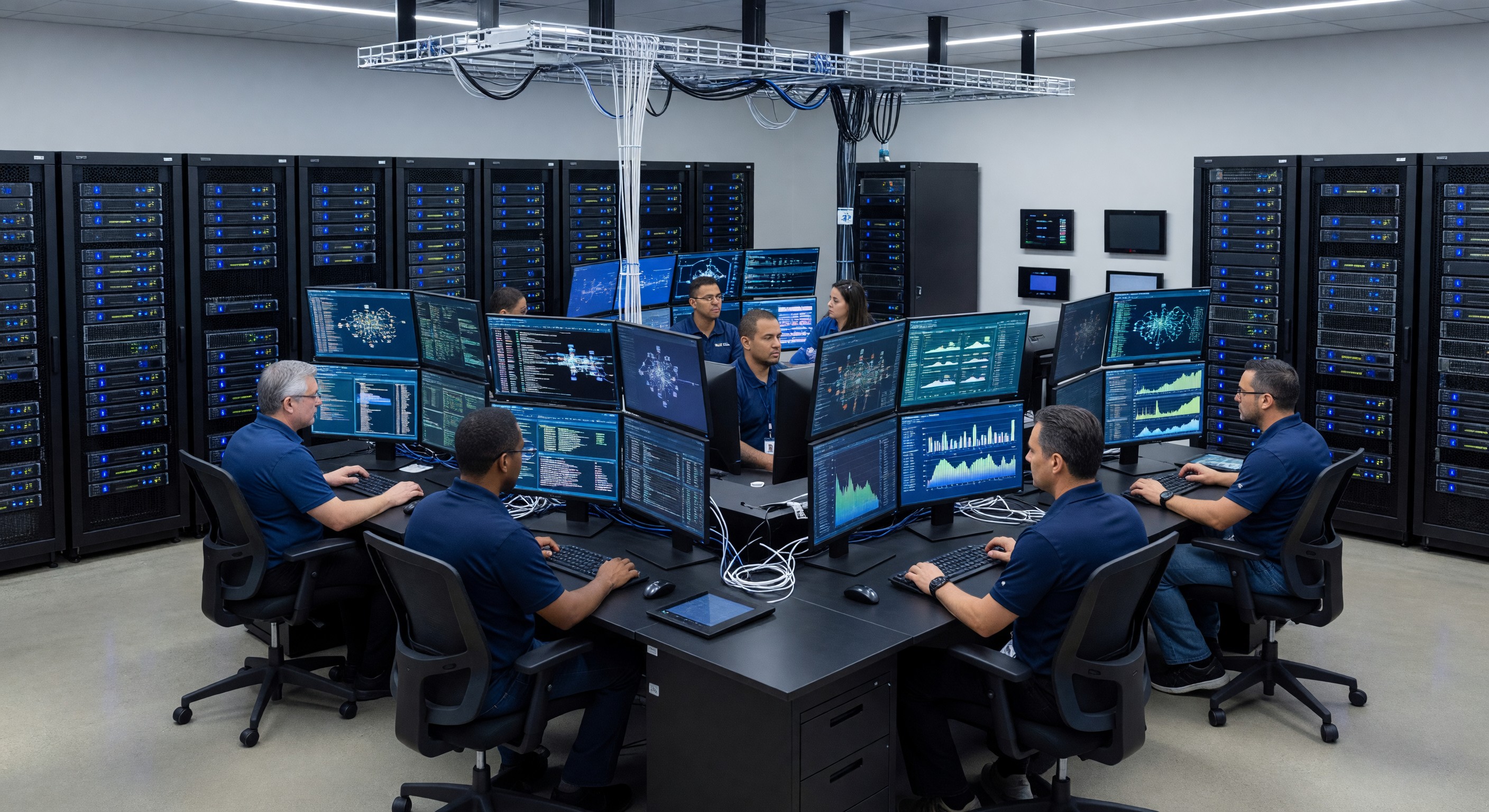
Healthcare campus digital infrastructure has undergone more change in the past four years than in the previous decade. The convergence of clinical IoT, building IoT, AI analytics platforms, cloud services, and the ubiquitous connectivity expectations of clinical and administrative staff has fundamentally changed what “adequate network infrastructure” means for a hospital campus in 2026.
For healthcare facility directors, digital infrastructure is no longer purely an IT department concern. Building automation systems, physical security, PARCS systems, nurse call, real-time location systems, and the growing landscape of facility IoT sensors all depend on the network infrastructure. When the network fails or performs inadequately, facility systems fail. And as these systems converge on shared network infrastructure, facility directors need a working understanding of network architecture decisions that shape what building systems can and cannot do.
The Network Infrastructure Foundation
Wi-Fi 6 and Wi-Fi 6E as the Clinical Standard Wi-Fi 6 (802.11ax) has become the standard for new and upgraded hospital wireless network deployments in 2026. The high-density device environment of a hospital—patient monitors, infusion pumps, mobile workstations, tablets, staff smartphones, and building IoT devices sharing wireless capacity—exceeds the capacity of previous Wi-Fi generations in patient care areas.
Wi-Fi 6E, which extends Wi-Fi into the 6 GHz spectrum band, is being deployed in the highest-density clinical environments where even Wi-Fi 6 capacity is challenged. Operating rooms, emergency departments, and intensive care units with extremely high device densities benefit from the additional spectrum.
Healthcare facility directors’ role in Wi-Fi infrastructure: Ensure that physical facilities decisions—mounting locations for access points, above-ceiling cable pathways, and plenum rating requirements for AP installations in clinical areas—are addressed in construction and renovation projects. Wi-Fi performance depends significantly on physical infrastructure decisions that facilities teams control.
Structured Cabling Infrastructure The foundation beneath wireless connectivity is structured cabling—the physical fiber and copper cable infrastructure that connects network equipment throughout campus buildings. Healthcare campus cabling infrastructure planned in 2026 should support:
- Fiber to each Intermediate Distribution Frame (IDF) in each building
- Cat 6A or Cat 8 copper cabling to devices where wired connectivity is preferred over wireless
- Sufficient pathway capacity (conduit, cable trays) for future expansion without major infrastructure disruption
- Standards-compliant physical plant documentation for every cable run
Healthcare facility directors who understand cabling infrastructure requirements can advocate for adequate cabling investment during construction and renovation projects—preventing the expensive retrofits required when inadequate cable pathways are discovered after construction is complete.
Network Segmentation Architecture The convergence of clinical IT, administrative IT, and operational technology (building systems, PARCS, physical security) on a shared campus network requires deliberate segmentation architecture that provides:
- Isolation between clinical systems and public/guest wireless
- Isolation between building OT systems (HVAC, BAS, elevators) and clinical IT
- Controlled connectivity between systems that need to integrate while maintaining security boundaries
- Management network access for IT and facilities teams without crossing security boundaries
The specific segmentation architecture is an IT security decision, but facility directors need to understand its implications for which building systems can connect to which other systems and what integration is possible within the security architecture.
Cloud-Edge Hybrid Architecture
Healthcare is moving toward a cloud-edge hybrid architecture where computing, storage, and analytics are distributed between cloud platforms and on-premises “edge” computing infrastructure based on the specific needs of each application.
What Goes to the Cloud
- Long-term data storage and analytics (building energy data, access control logs, CMMS data)
- AI analytics that process historical data patterns for insights
- Compliance reporting and documentation platforms
- Remote monitoring and management platforms for building systems
What Stays at the Edge
- Real-time building control (HVAC setpoint response cannot tolerate cloud round-trip latency)
- Life safety system processing (fire alarm, emergency power monitoring)
- Physical security systems with real-time operational requirements
- Clinical systems that cannot tolerate network-dependent latency
The hybrid model allows healthcare facilities to capture cloud economics and scalability for appropriate workloads while maintaining the reliability and low latency that critical building systems require at the edge.
5G Private Networks in Healthcare
Private 5G networks—dedicated cellular infrastructure deployed on a single campus for exclusive use by the facility owner—are emerging as a healthcare infrastructure option for 2026 and beyond. Private 5G offers characteristics that hospital-grade applications require:
Ultra-Reliable Low-Latency Communication (URLLC) 5G URLLC capabilities support real-time control applications that require sub-millisecond latency—more reliable and faster than Wi-Fi for applications like autonomous medical robots, critical equipment telemetry, and building control systems.
Massive IoT Device Support 5G can support far more simultaneous devices per unit area than Wi-Fi, enabling the high-density IoT sensor environments that smart hospital implementations require without the capacity congestion that affects Wi-Fi in device-dense clinical areas.
Security and Isolation Private 5G networks provide inherent isolation from public networks—devices on the private network cannot be accessed from the public internet without deliberate connectivity provisioning. This offers security architecture advantages for sensitive clinical and building system applications.
Healthcare organizations exploring private 5G should engage with telecommunications vendors (AT&T, T-Mobile, Verizon, Nokia, Ericsson) that have healthcare-specific deployment experience. Implementation costs for private 5G—infrastructure hardware, spectrum licensing (CBRS in the US), and ongoing management—are significant and typically appropriate for large academic medical centers or health systems rather than individual community hospitals.
IT/OT Convergence: Implications for Facility Directors
The boundary between information technology and operational technology is dissolving in healthcare facilities. Building automation systems that once operated on proprietary networks now connect to IP networks. Physical security systems share infrastructure with clinical IT. IoT sensors from parking systems, environmental monitoring, and medical equipment all communicate through the same enterprise network infrastructure.
This convergence creates both opportunities and challenges:
Opportunities
- Integrated data from IT and OT systems enables AI analytics that neither system could support alone
- Unified network management reduces the siloed infrastructure that historically required separate support teams
- Cloud-enabled remote monitoring of OT systems reduces on-site technical staffing requirements
Challenges
- Cybersecurity responsibility becomes shared and often unclear between IT and facilities
- OT system lifecycle (15–25 years) doesn’t align with IT lifecycle (3–7 years), creating technology mismatch
- OT system availability requirements (24/7 critical operations) constrain IT maintenance windows and patch cycles
- IT security practices developed for enterprise systems may be inappropriate or disruptive for OT systems
Healthcare facility directors in 2026 must engage proactively in IT/OT governance conversations rather than leaving these decisions entirely to IT departments. Building systems knowledge, operational requirements, and regulatory implications that facility directors bring to these conversations are essential for governance decisions that actually work for healthcare facility operations.
Frequently Asked Questions
What network connectivity should facility directors require in new construction specifications? Specifications for new construction should require: fiber backbone from the building’s main distribution frame to all intermediate distribution frames; Cat 6A horizontal cabling to all device locations (workstations, nurse call panels, building controls, security cameras); adequate conduit and cable tray pathways sized for 150% of day-one cable fill; and Wi-Fi access point mounting provisions with power and data at locations specified by the wireless design engineer.
How should healthcare facility directors engage with IT on network infrastructure planning? Establish regular touchpoints between facility management and IT/network engineering on: construction projects that affect network infrastructure, building system projects that require network connectivity, and building system performance issues that may have network root causes. Many healthcare organizations benefit from a joint Facilities-IT steering committee for infrastructure planning.
What’s the right balance between private 5G and Wi-Fi for hospital applications? For most healthcare facilities in 2026, Wi-Fi 6/6E remains the primary indoor connectivity technology, with private 5G as a premium investment for specific applications that justify the cost. Healthcare organizations evaluating private 5G should identify the specific applications (medical robots, critical IoT, high-density monitoring) that would benefit most and evaluate the cost per application benefit rather than treating private 5G as a wholesale Wi-Fi replacement.
How are healthcare facilities addressing the support burden of distributed IoT infrastructure? The proliferation of IoT devices—thousands of sensors, cameras, and controllers spread across a large campus—has created a support burden that exceeds the capacity of most facility IT teams. Healthcare organizations are addressing this through: standardization on fewer device platforms to reduce management complexity, cloud-managed IoT infrastructure that eliminates on-premises management servers, and managed service arrangements with vendors who provide device management as part of their service.