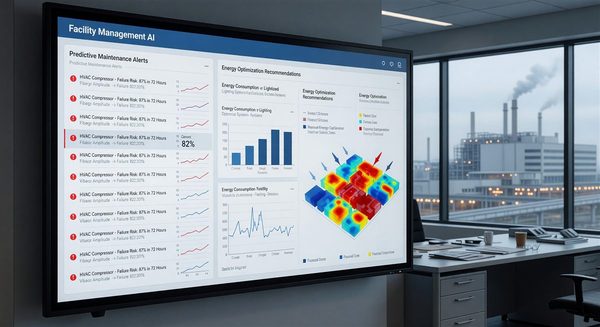
Generative AI—the category of artificial intelligence that produces text, documents, plans, and analyses in response to natural language prompts—has arrived as a practical productivity tool for healthcare facility managers. Unlike the predictive AI and machine learning analytics discussed elsewhere in facility management technology literature, generative AI is accessible today without specialized data infrastructure, IT integration projects, or vendor implementations. A facility manager with a subscription to a generative AI service can begin using it immediately for a range of documentation, research, and planning tasks.
That accessibility also creates risk: generative AI systems can produce confident-sounding but inaccurate information, particularly about technical regulatory specifics that require expert verification. Understanding where generative AI is genuinely useful and where it requires careful expert review is essential for healthcare facility managers who want to capture the productivity benefit without introducing errors into compliance programs.
Where Generative AI Adds Genuine Value
Documentation Drafting Healthcare facility compliance documentation is voluminous and largely formulaic. Water Management Program documents, ICRA reports, Environment of Care management plan updates, safety round finding summaries, and corrective action documentation all follow recognizable structures. Generative AI can draft first versions of these documents from brief prompts, which facility managers then review, verify, and refine.
The productivity gain is substantial: a Water Management Program document that might take 4–8 hours to draft from scratch can be produced in a useful first draft in minutes by AI, reducing the total time investment to 1–2 hours of review and refinement.
Regulatory Research and Summarization When NFPA releases a new code edition or Joint Commission publishes a standard update, facility managers need to understand what changed and what it means for their compliance programs. Generative AI can read and summarize complex regulatory documents, highlighting key changes and identifying potential compliance implications. This is particularly valuable for facility managers who aren’t trained code specialists—AI can translate technical regulatory language into operational guidance.
Specification Writing Equipment specifications, statement of work documents for contractor bids, and project scoping documents are time-consuming to write and often require researching technical requirements. Generative AI can draft specification sections based on brief descriptions of project requirements, producing starting-point documents that specialists then review and refine.
Training Material Development Staff training materials for new NFPA requirements, workplace violence prevention procedures, ICRA protocols, and other facility compliance topics are candidates for AI-assisted development. AI can draft training content based on regulatory source material, which facility managers and subject matter experts then verify and adapt for their specific organizational context.
Meeting Agendas and Reports EC Committee agendas, monthly compliance reports, safety round summary reports, and executive presentations summarizing facility program performance are all amenable to AI-assisted drafting.
Where Generative AI Requires Careful Oversight
Specific Regulatory Citations Generative AI systems sometimes produce plausible-sounding but incorrect regulatory citations—citing the wrong NFPA section number, misquoting a specific requirement, or conflating requirements from different regulatory sources. Any regulatory-specific content produced by AI must be verified against primary sources before being used in compliance documentation. Never rely on AI-generated regulatory citations without verification.
Technical System Specifications Detailed technical specifications for HVAC systems, emergency power systems, fire suppression systems, and medical gas systems require engineering expertise. AI can provide helpful context and structure, but technical specifications that affect patient safety or regulatory compliance must be reviewed by qualified engineers.
Current Regulatory Status Generative AI systems are trained on data with knowledge cutoff dates and may not reflect the most recent regulatory updates, enforcement priorities, or survey finding trends. For time-sensitive regulatory questions (what’s the current CMS enforcement position on this requirement?), verify with current primary sources rather than relying on AI knowledge that may be months or years outdated.
Legal and Liability Analysis AI-generated analysis of legal exposure, liability implications, or legal strategy should never be used without attorney review. Healthcare facility managers face genuine legal exposure from compliance failures, and decisions with legal implications require qualified legal counsel regardless of AI assistance.
Practical Implementation Guidance
Establish Organizational AI Use Policies Before facility managers begin using generative AI tools for compliance documentation, their healthcare organization should establish policies that address: which AI tools are approved for use, what information can be entered into AI systems (patient data and certain organizational information should not be entered into consumer AI services), and how AI-generated content should be reviewed before use.
Document AI Assistance in Review Processes Compliance documentation that was AI-drafted and then reviewed and approved by qualified facility management staff is legitimate and defensible—the human expert took responsibility for the final content. Establishing a review and approval process that documents human oversight of AI-generated content protects the organization’s compliance program integrity.
Use AI for Structure and Structure for AI The most effective use of generative AI for facility documentation is providing the structure (outline, format, section headers) and letting AI fill in content that humans then verify. Providing AI with specific, detailed prompts that include relevant regulatory references, facility-specific context, and desired document structure produces better output than open-ended prompts.
Verify Everything That Matters Regulatory citations, technical specifications, compliance requirements, and clinical safety information generated by AI should always be verified against primary sources before use. Establish a habit of treating AI output as a useful draft requiring verification rather than a finished product requiring approval.
AI Tools Currently Available for Facility Management
The generative AI landscape for professional use is evolving rapidly. As of 2025, the primary tools being used by healthcare facility managers include:
- Claude (Anthropic) — Strong performance on complex document analysis and technical writing
- ChatGPT / GPT-4o (OpenAI) — Widely used for documentation drafting and research summarization
- Microsoft Copilot — Integrated into Microsoft 365 for organizations using that productivity suite
- Google Gemini — Available through Google Workspace for healthcare organizations in that ecosystem
Healthcare organizations should evaluate which tools are approved for organizational use based on their data privacy requirements, existing technology agreements, and HIPAA compliance evaluation.
Frequently Asked Questions
Can HIPAA-protected information be entered into consumer generative AI tools? Generally no. Consumer generative AI services typically do not offer the Business Associate Agreements required for handling protected health information, and their data handling practices don’t meet HIPAA requirements. Healthcare facility managers should not enter patient names, medical record numbers, or other PHI into consumer AI tools. Enterprise versions of AI tools (Microsoft Azure OpenAI, Claude API with enterprise agreements, Google Healthcare AI) may offer HIPAA-compliant configurations.
Is AI-generated compliance documentation acceptable to Joint Commission surveyors? Joint Commission evaluates the substance of compliance documentation—whether it reflects actual organizational practices and compliance with applicable standards—not the method by which it was drafted. AI-drafted documentation that is reviewed, verified, and approved by qualified staff as accurately reflecting the organization’s compliance program is functionally equivalent to documentation drafted manually. The human review and accountability is what matters.
How can facility managers assess the accuracy of AI-generated regulatory information? Treat regulatory information from AI as a starting point requiring verification. Identify the primary source (NFPA code, Joint Commission standard, OSHA regulation) for any specific requirement the AI cites, and verify that the requirement appears as described in that source. Use AI for research efficiency—finding the relevant regulatory area more quickly—but rely on primary sources for specific compliance requirements.
What’s the biggest risk of using generative AI for healthcare facility compliance? The biggest risk is overreliance on AI-generated content without adequate expert review, leading to compliance documentation that contains errors, outdated information, or mischaracterizations of regulatory requirements. Establishing robust human review processes is the essential safeguard against this risk. AI is a productivity tool for expert facility managers—it doesn’t replace the expertise.