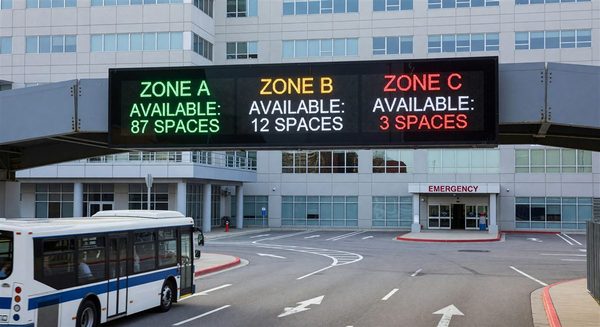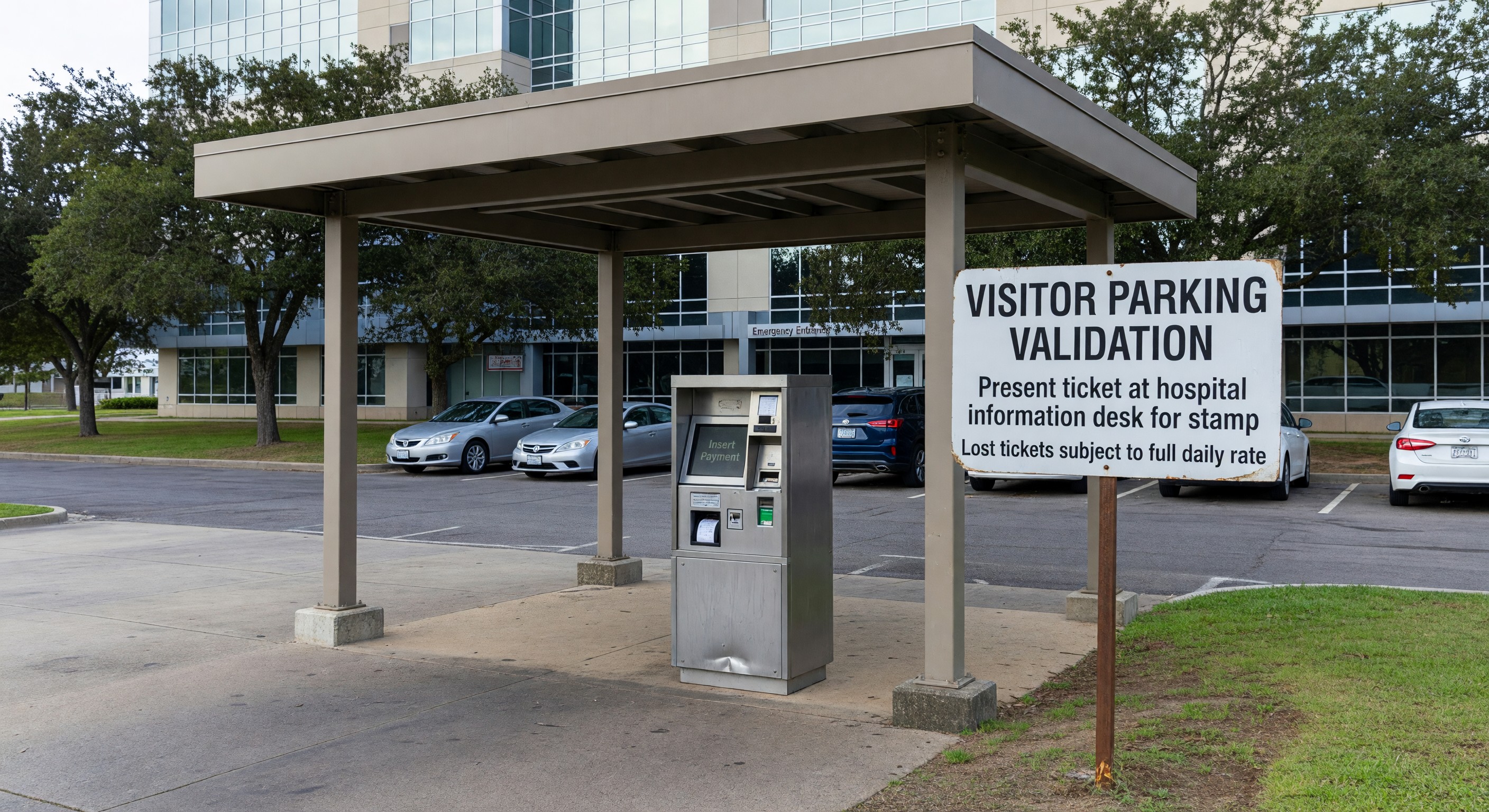
Visitor parking occupies a unique position in hospital parking operations. Unlike employee parking — which follows predictable permit and shift-change patterns — visitor parking is characterized by high variability in duration, volume, and purpose. A visitor accompanying a patient for a 30-minute outpatient appointment has completely different needs than a family member maintaining a vigil during a week-long ICU admission.
Managing visitor parking well requires policies that are simultaneously flexible enough to accommodate this variability, financially sustainable, and compassionate to the human reality behind every parking transaction.
Visitor Parking Policy Frameworks
Most hospital visitor parking programs use one of three policy models, or a hybrid:
Pay-to-park with validation — Visitors pay the posted daily rate, but certain patient categories (oncology, dialysis, ICU) receive full or partial validation. Validation is administered by the clinical department and reduces the charge at the exit pay station. This model maximizes revenue from lower-burden visits while protecting vulnerable patients from parking cost stress.
Free visitor parking — Common in suburban and rural hospitals with abundant surface lot supply. Eliminates administrative overhead of payment systems and removes a potential patient satisfaction pain point. Loss of revenue must be absorbed in operating budget.
Tiered pricing with caps — Hourly rates with a reasonable daily maximum (often $10–$20). Protects extended-stay visitors from unlimited accumulation while generating revenue from shorter visits. Requires clear communication of the daily cap at entry and on signage.
Validation Program Design
If your facility uses a validation model, the design of the validation program determines both its financial sustainability and its equity. Poorly designed validation programs are either too restrictive (clinical staff reluctant to validate, patients pay full rate) or too permissive (validation rate so high that revenue barely covers equipment costs).
Best practices:
- Define eligibility criteria in writing. Which service lines validate? What diagnoses or procedure types qualify? Is validation unlimited or capped at a daily rate?
- Automate validation where possible. QR code validation at pharmacy pickup, lobby kiosks, or through patient portal apps eliminates the need for staff to issue physical tickets.
- Audit utilization monthly. If a department is validating 95% of all daily transactions, the validation policy may be too broad. If a department is validating 5%, staff may not be aware of the program or eligibility criteria.
- Communicate the validation process to patients before they arrive. A patient who does not know validation is available — and learns about it as they exit — will have a negative experience regardless of the savings.
COVID-19 Visitor Restrictions and Parking Revenue (2020)
The COVID-19 pandemic fundamentally disrupted visitor parking economics. Visitor restriction policies — limiting facilities to zero visitors at peak, or one designated visitor per patient — eliminated the largest revenue segment of most hospital parking operations.
For facilities that had relied on visitor parking revenue to offset operating costs, the impact was significant. Budgets that had assumed $1–3 million in annual parking revenue suddenly faced projections of 30–50% of that figure during extended restriction periods.
Operational responses included:
- Temporary closure of parking structures to reduce operating costs (lighting, elevator maintenance, staffing)
- Reallocation of visitor parking zones to staff overflow
- Conversion of surface parking areas to COVID-19 testing sites, vaccine staging areas, or ambulance staging
- Elimination of attendant parking operations in favor of automated pay-on-foot to reduce in-person staff requirements
The pandemic also accelerated adoption of contactless and mobile payment at pay stations. Visitors (and staff) became much more comfortable with QR code scanning and tap-to-pay during this period, reducing reliance on cash and physical ticket transactions.
ADA Compliance in Visitor Parking
ADA Standards for Accessible Design (2010) establish minimum requirements for accessible parking spaces in healthcare settings:
- Minimum ratio: 1 accessible space per 25 total spaces (general); 1 van-accessible space per 6 accessible spaces
- Space dimensions: 8 feet wide minimum for accessible spaces; 11 feet wide for van-accessible spaces with 5-foot access aisle
- Location: Closest accessible spaces to each accessible entrance
- Signage: ISA sign mounted 60–66 inches to bottom of sign above the ground
- Surface: Firm, stable, slip-resistant; slope maximum 1:48 in all directions
Accessible pay stations must comply with ADA reach range requirements (forward reach maximum 48 inches; side reach maximum 54 inches). Audio instructions and large-button interfaces support users with visual impairments.
Non-compliance with ADA parking requirements is a significant liability exposure and a frequent source of patient complaints and regulatory citations.
Extended-Stay Visitor Programs
For patients admitted for extended periods — oncology, transplant, rehabilitation — the financial burden of daily parking adds to an already stressful situation. Extended-stay visitor programs provide parking passes at reduced monthly rates, often administered through the patient’s care team or the patient services department.
Many facilities offer these programs quietly — they are not prominently advertised because broad awareness would strain both program administration and revenue. Consider whether this reflects your organization’s values. Making the program easy to find and use for patients who need it is a meaningful patient experience and community benefit statement.
Hospital foundations occasionally fund parking subsidies for low-income patients as a charitable program, covering parking costs for patients who demonstrate financial need. This model ensures revenue is maintained while extending compassionate accommodation to the most financially vulnerable patients.
Frequently Asked Questions
How do we prevent visitor parking abuse by employees? The clearest solution is physical separation of visitor and employee entry points with separate access control on employee lanes. If budget or layout prevents this, LPR integration against the employee permit database can flag employee vehicles using visitor entry lanes. Signage and culture — making clear that abusing visitor parking takes spaces from patients — also has behavioral impact.
What is a reasonable visitor parking daily maximum rate? The relevant benchmark is your patient population demographics and regional norms. A safety-net hospital serving predominantly Medicaid and uninsured patients should set lower rates than a specialty referral center serving insured patients with higher incomes. Review patient financial counseling data — if patients are requesting charity care for parking costs, rates may be too high.
Should we offer a validation grace period for short visits? A 30–60 minute grace period at no charge is common practice for outpatient clinical settings where many appointments (lab draws, brief consultations) fall within this window. This eliminates the friction of payment for very short visits without significantly impacting revenue from longer stays.
How do we communicate parking rates to patients before their visit? Include parking information in appointment confirmation emails and reminder texts. Place parking rate information on the specific appointment page in the patient portal, not just a generic “visit us” page. Train scheduling staff to proactively mention validation eligibility during scheduling calls.