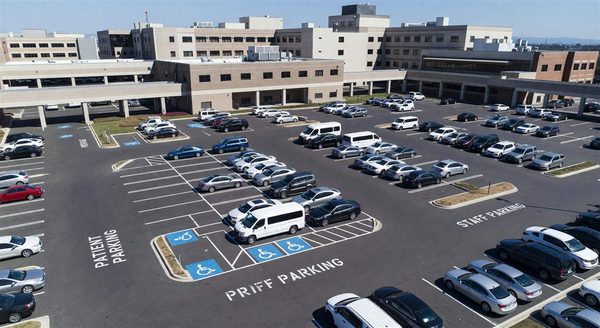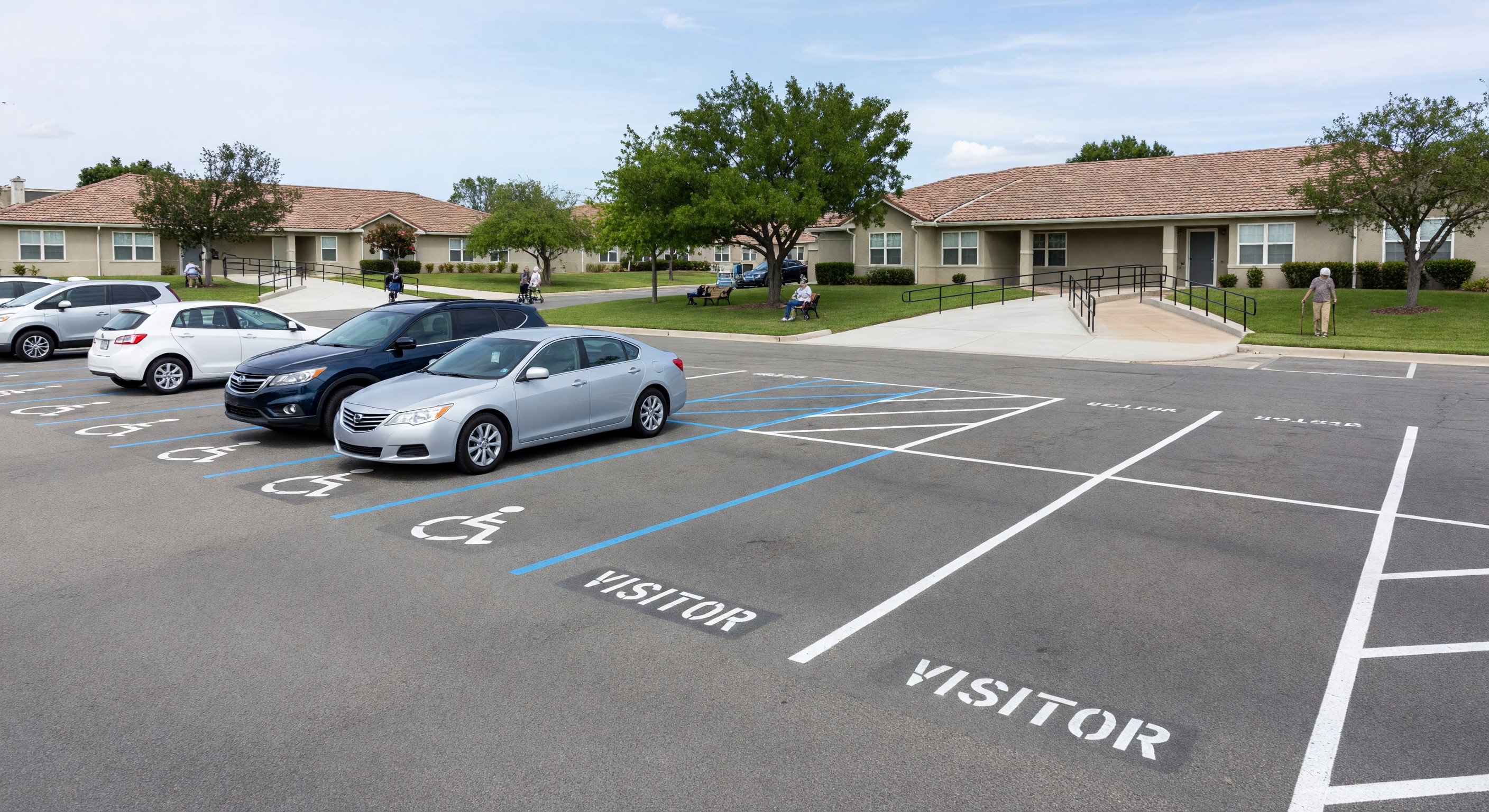
Parking management in senior living facilities and long-term care settings differs meaningfully from hospital parking. The population is stable (residents and their families, rather than transient patients), visit durations are longer, and the emotional stakes of parking difficulty may be even higher — a family member who visits regularly enough to notice poor parking conditions forms an ongoing impression of the community’s operational quality.
For facility directors and operations managers at continuing care retirement communities (CCRCs), skilled nursing facilities (SNFs), assisted living communities, and memory care units, parking management deserves thoughtful attention as part of the overall resident and family experience.
Resident Vehicle Management
Unlike acute care hospitals where patients are typically too ill to drive, many senior living residents — particularly in independent living and assisted living communities — maintain personal vehicles. Resident vehicle management requires:
Assigned spaces — Most independent living communities provide one assigned space per unit. Assignment should be at grade or with convenient elevator access, close to the resident’s building entrance. Assignments need to be managed as residents move between care levels or leave the community.
Accessible space allocation — As residents’ functional ability changes over time, accessible parking needs increase. Communities should maintain a waiting list for accessible spaces and manage transitions proactively.
Vehicle registration — Community policy should require registration of all resident vehicles, with permit display requirements to support parking enforcement. This also allows the community to contact residents about vehicle issues (a flat tire, lights left on, etc.).
Vehicle surrender planning — When a resident can no longer safely drive, the space assignment and any stored vehicle must be managed. Community policies should include a process for communicating this transition compassionately and handling the vehicle disposition.
Family Visitor Parking Programs
Family members of senior living residents visit with much greater frequency and regularity than hospital visitors. A daughter who visits her mother every Tuesday evening for years is a very different parking customer than a visitor arriving at a hospital for a one-time procedure.
This regular visitor population benefits from:
Visitor permit programs — Monthly or annual visitor permits for frequent family members simplify parking administration and give families the confidence of a known available space or zone. Color-coded windshield tags or placards are simple to administer.
Reserved weekend visitor capacity — Family visit volume peaks on weekends, particularly Saturday and Sunday afternoons. Ensuring adequate visitor parking supply during these peak periods — through temporary staff parking reallocation or reserved designation of visitor zones — prevents the friction of visitors circling during their most common visit times.
Evening and holiday capacity — Holiday visits (Thanksgiving, Christmas, Mother’s Day) create demand spikes that can overwhelm normal capacity. Communicate temporary overflow parking arrangements in advance to family members before major holidays.
Clear, consistent signage — Families who visit regularly develop an expectation of where to park. Changes in parking designations or zone configurations should be communicated well in advance and signed clearly during any transition.
Staff Parking in Long-Term Care Settings
Senior living and long-term care facilities share the staff parking challenges of acute care hospitals: shift changes create concentrated entry and exit events, staffing levels are variable with agency and part-time staff, and the facility operates continuously.
Specific considerations in long-term care settings:
CNAs and direct care staff — Certified nursing assistants and direct care workers are among the most critically needed and often lowest-compensated workforce in senior living. Charging for parking or providing inadequate parking for this population has meaningful impact on recruitment and retention.
24/7 staffing patterns — Night shift staff arriving and departing in darkness require well-lit, safe parking with appropriate proximity to the facility entrance. Lone-worker safety for night shift is an operational and liability concern.
Agency and travel staff — The staffing crisis affecting senior living operations makes agency staff a constant presence at many communities. Parking assignments for agency staff should be communicated at orientation and enforced consistently.
COVID-19 Visitor Restrictions in Senior Living (2021)
Senior living communities implemented some of the strictest visitor restrictions during COVID-19, protecting a population with extremely high mortality risk from the disease. These restrictions had dramatic effects on parking operations and visitor relationships.
As restrictions eased in 2021, many communities implemented structured visitor programs with advance scheduling — a significant change from open visitor access that required parking management adaptation:
Scheduled visit slots — When communities shifted to scheduled visits (indoor visits by appointment), parking demand became more predictable and manageable. Arrival clustering at appointment start times created brief demand peaks.
Outdoor visit areas — Communities that created outdoor visit areas (often using parking areas or adjacent grounds) required parking reconfiguration. Designated parking for outdoor visit participants, separated from general visitor parking, improved the flow experience.
Vaccination site logistics — Senior living campuses that hosted vaccination clinics for residents and community members required temporary parking reconfiguration similar to hospital vaccination sites.
ADA Compliance in Senior Living Parking
ADA parking requirements for senior living facilities follow the general requirements in the 2010 ADA Standards, with particular attention warranted given the resident population:
- The ratio of accessible spaces to total spaces should be reviewed against the actual resident and visitor population needs, not just the minimum ADA requirement
- Van-accessible spaces are especially important in communities serving residents who use wheelchair-accessible vehicles
- Surface conditions require regular inspection and maintenance — cracked, heaved, or soft asphalt creates trip and fall hazards for residents with mobility limitations
- Accessible route maintenance (curb cuts, ramps, transitions) requires regular inspection, as these features degrade faster than the main lot surface
Frequently Asked Questions
Should we charge residents for parking? In independent living and CCRC settings, parking is typically included in the monthly fee structure or available for a modest add-on fee. In skilled nursing facilities with a more transient patient population, policies vary. Consider your competitive market, your resident income profile, and the administrative complexity of parking billing before implementing a charge that may be modest in revenue impact but significant in resident relations impact.
How do we handle a resident who should no longer be driving but continues to park on campus? This is a sensitive situation that requires coordination between the facility director, clinical staff, and the resident’s family. Most communities have a policy framework for addressing unsafe driving concerns, which may include reporting to the state motor vehicle authority in some jurisdictions. Consult your legal counsel and clinical leadership before taking any unilateral action regarding a resident’s vehicle or parking privileges.
What is the appropriate security level for senior living community parking areas? At minimum: adequate lighting throughout, clearly marked visitor and resident zones, and controlled access to any underground or structured parking. Security cameras in parking areas are increasingly standard. Security patrol of surface lots — particularly overnight — is appropriate for communities in urban settings or those with documented security concerns.
How do we accommodate powered scooters and mobility devices in parking areas? Consider designated charging stations near accessible parking spaces for electric powered scooters and wheelchairs. Covered charging locations protect equipment from weather. Accessibility ramps between parking and building entrances must accommodate the turning radius and width of motorized mobility devices, which may exceed the minimum ADA clear width requirements.