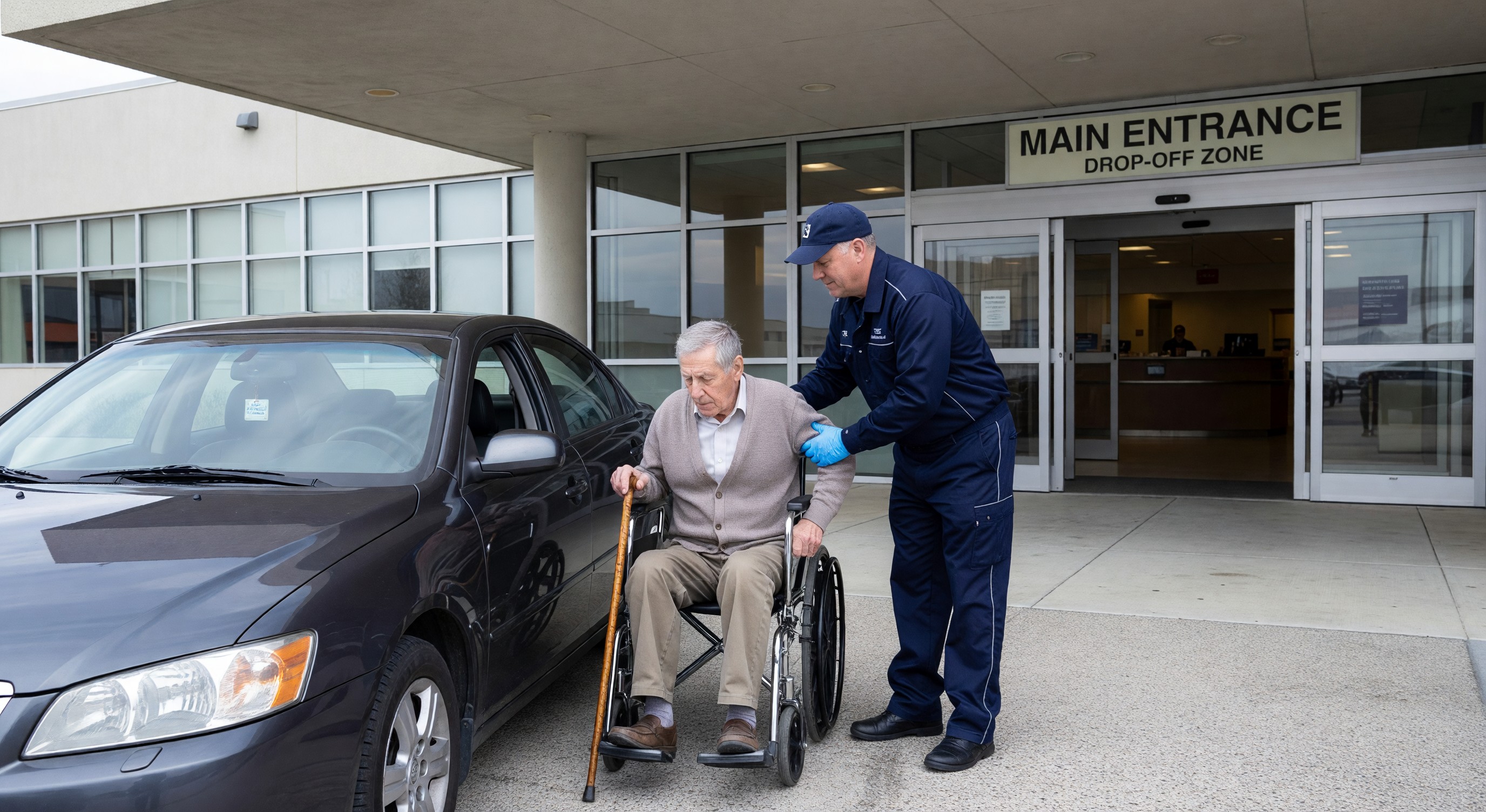
Valet parking at a hospital is not a luxury amenity — it is an access tool. For patients with mobility impairments, elderly patients traveling alone, patients managing significant illness, and families in crisis situations, valet parking removes a substantial barrier between arrival and care. The patient who would otherwise spend 20 minutes navigating a parking structure with a walker can instead step out at the front door and proceed directly to their appointment.
Healthcare facility directors who have implemented valet programs consistently report positive impact on patient satisfaction scores and reduced no-show rates among mobility-impaired patient populations. The operational and liability considerations are manageable with proper program design.
When Valet Parking Makes Sense for Hospitals
Valet programs require staffing, management, and insurance investment. The return on that investment is highest when:
Patient population has high mobility challenges — Oncology, orthopedics, geriatrics, and neurology patient populations have disproportionate rates of mobility impairment. Facilities with significant volume in these service lines benefit most from valet.
Parking supply is remote or complex — Campuses where close-in patient parking is genuinely limited, where structures are confusing to navigate, or where walking distances are significant gain more value from valet than campuses with abundant close-proximity surface parking.
High volume of first-time visitors — Valet eliminates the navigation challenge for patients who do not know the campus layout.
Weather conditions — In markets with significant winter weather, valet reduces the patient safety risk of elderly or mobility-impaired patients navigating icy parking structures.
Operational Structure
Hospital valet programs are operated either in-house or through a contracted parking management company. Most healthcare facilities use contracted operators, as:
- Parking management contractors carry their own insurance and liability policies covering vehicle damage
- Staffing, training, and scheduling management are assumed by the contractor
- Contractor performance accountability (via SLA) is cleaner than managing internal valet staff
When contracting, specify:
- Minimum staffing levels during defined operating hours
- Response time from patient arrival to vehicle receipt
- Vehicle damage claims process and liability coverage minimums
- Background check requirements for valet attendants
- Uniform and professional standards
- GPS or key management system requirements
Key Management and Vehicle Security
Every vehicle received by the valet must have a documented key receipt system. Key tags with vehicle description, license plate, and location information must be generated at check-in and matched at vehicle return. Lost-key incidents are the most common valet liability event.
Key management requirements:
- Secure, locked key cabinet or board when not in attendant hands
- Key handoff log documenting every transfer of key custody
- Vehicle parking location recorded and updated when vehicle is moved
- Two-person verification for vehicle return (to prevent delivering the wrong vehicle)
For facilities with high valet volume, electronic key management systems — where key fobs generate a receipt with vehicle information and location — reduce human error and provide audit trails.
Liability and Insurance Considerations
Valet parking creates a bailment relationship: the hospital or its valet operator takes legal responsibility for the vehicle upon receipt of the keys. Vehicle damage claims are the primary liability exposure.
Required coverages:
- Garage keeper’s liability — Covers damage to customer vehicles while in the operator’s care, custody, and control. Minimum $1 million per occurrence is standard for healthcare valet programs.
- Garage liability — Covers bodily injury and property damage arising from valet operations (a valet attendant striking a pedestrian, for example).
- Employee dishonesty — Covers theft from vehicles by valet employees.
The hospital should be named as an additional insured on the contractor’s policy, and certificates of insurance should be renewed annually. Vehicle damage claim procedures should be documented in the valet service agreement and communicated to patients at check-in.
ADA Requirements for Valet Operations
ADA requirements for accessible valet service are clear: if a valet parking service is provided, the valet drop-off area must be located on an accessible route from the building entrance, and valet staff must be trained to assist passengers with disabilities (providing assistance with vehicle exit, retrieving mobility devices before the customer exits, providing timely vehicle return without requiring significant waiting).
The ADA does not require self-park as an alternative if valet is the only parking service provided. However, if self-park is also available, accessible self-parking spaces are still required in the self-park area.
Frequently Asked Questions
What are standard valet parking hours for a hospital? Most hospital valet programs operate during core business hours — typically 6 AM to 8 PM or 6 AM to 6 PM on weekdays. Some facilities extend hours for evening visitors or clinics. 24/7 valet is uncommon except at highest-acuity institutions where after-hours patient access is a significant operational consideration.
How do we handle valet for patients receiving recurring treatment (chemotherapy, dialysis)? Offer a valet parking pass or punch card program for recurring treatment patients, priced at a reduced monthly rate. Recurring patients who become familiar with the valet service and staff develop a positive relationship that contributes significantly to patient experience scores in the associated service line.
What is a reasonable valet fee structure for a hospital? Common structures: $5–10 per use for short visits; reduced or free for validated categories (oncology, long-term treatment); monthly pass for recurring patients at $30–$80 per month. Some facilities offer valet as a free service subsidized by the clinical departments whose patients benefit most. Review your patient population affordability data before setting rates.
How do we evaluate valet contractor performance? Define SLAs in the contract: maximum wait time from vehicle delivery to attendant receipt, maximum wait time for vehicle return, damage claim rate, and patient satisfaction scores specific to valet. Review monthly with the contractor. Conduct patient satisfaction surveys of valet users specifically. Conduct periodic unannounced quality checks including posing as a patient and evaluating the service experience.