Five years after the labor market disruption of the early 2020s, hospital facilities departments are still hiring against a smaller, less stable parking workforce than they had before. Cashier turnover is high, attendant shifts go unfilled, and overnight coverage in particular has become a chronic problem. Meanwhile, patient and visitor volumes are back to or above pre-2020 levels, and patient satisfaction surveys still pick up parking experience as a measurable driver of overall ratings.
Facility directors who were skeptical about parking automation a decade ago are now running the numbers differently. The question is no longer whether to automate — it’s how to automate without creating a new set of problems for vulnerable patients, late-night visitors, and staff who genuinely need a human on the other end of an intercom.
This article lays out a staged automation strategy that has held up across multiple campus deployments. It is not a pitch for a specific vendor or a specific architecture. It is a sequencing argument: which problems to solve first, which to leave alone until the early stages stabilize, and where humans still belong even in a fully automated system.
Start With the Highest-Friction Shifts
The first analysis to run isn’t a technology evaluation — it’s a labor data pull. Look at the past twelve months of parking operations and answer four questions:
- Which shifts are most frequently understaffed or covered by overtime?
- Where are the volume peaks that overwhelm even fully staffed shifts?
- What share of attended transactions are simple credit-card payments versus exceptions that genuinely need a human?
- Where are the worst patient and visitor complaints concentrated by time of day?
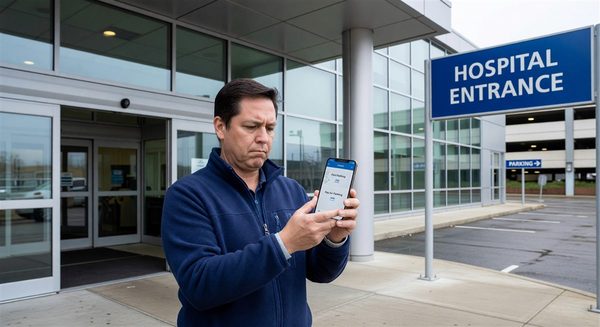
In nearly every hospital we have looked at, the answer converges. The hardest shifts to staff are nights and early mornings. The worst friction is the overnight ED visitor trying to figure out how to pay at 3 AM at an unstaffed booth. The simple-payment share runs above 80 percent. The complaints cluster around the same gaps.
That tells you where to deploy automation first. It is not the busy weekday morning shift, which is staffed and works fine. It is the chronically uncovered overnight, where every weekend a patient family is frustrated, an attendant is paid time-and-a-half to cover an understaffed shift, or both.
The Three-Layer Automation Stack
A hospital parking automation strategy that holds up over time has three layers, deployed in this order.
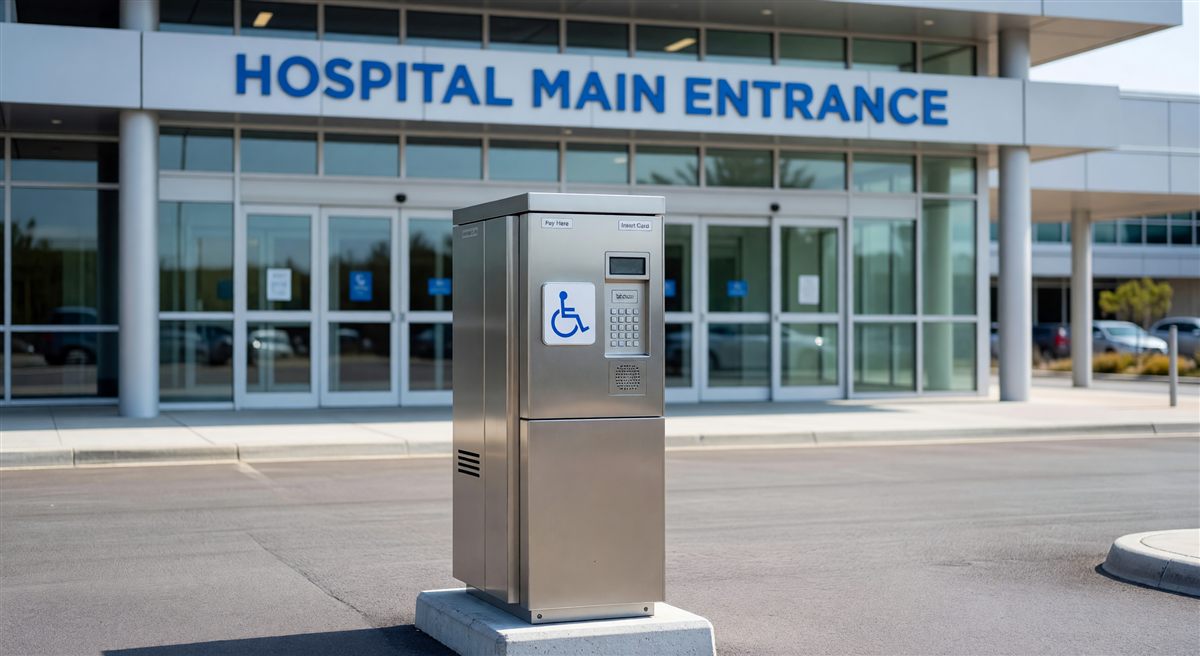
Layer 1 — Unattended payment. Replace cashier-dependent transactions with self-service pay stations or in-lane payment, and add LPR-based pay-by-plate for the operators who want to skip ticket dispensing entirely. This is the layer that recovers the most labor cost in the shortest timeline. Modern unattended payment terminals handle EMV chip, contactless, mobile wallets, and validations. The hardware is mature, the integration with parking management software is well-understood, and the patient experience for routine transactions is at least as fast as a human cashier.
Layer 2 — Remote intercom and exception handling. This is where most hospital deployments quietly fail. The pay station works. The gate works. But when something goes wrong — a damaged ticket, a validation that didn’t apply, a payment dispute, a patient who is confused or impaired — there has to be a human who can resolve it quickly and empathetically. The right answer is a remote intercom platform staffed either by a centralized team covering multiple campuses or by an outsourced 24/7 operator. Average call volumes per lane per day are low enough that one remote agent can comfortably cover a portfolio of facilities.
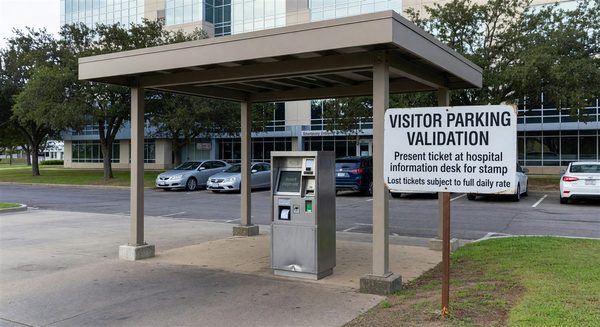
Layer 3 — Validation and credential automation. Patients and visitors should not be standing at a pay station rummaging for a paper validation stamped at the nurse’s station. Modern systems push validations electronically — through the EHR or scheduling system at point of service, through a discharge workflow, or through a guest portal. Frequent visitors, infusion patients, and oncology patients who come weekly should have credentials that the LPR or RFID system simply recognizes. The labor savings here are quieter but real: fewer cashier minutes spent processing paper, fewer disputes, fewer angry calls about validations that were misapplied.
Where Humans Still Belong
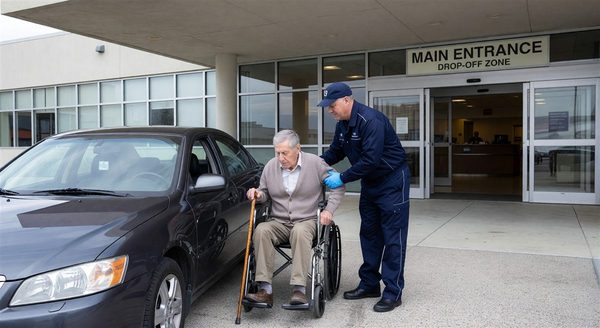
Full automation is the wrong goal. Hospitals are not airport parking garages. The patient population includes elderly visitors who do not use mobile phones, families in acute distress, non-English speakers, and people with cognitive or physical impairments that make a self-service kiosk genuinely difficult. A fully automated system that does not have a fast, empathetic human escalation path will fail the patient experience test, even if it works technically.
The places to keep human staffing in a mostly-automated environment:
- Daytime peak hours at the main entrance. A floor host who can intercept confused visitors, offer wayfinding, and handle simple payment exceptions in person is worth keeping even when the pay stations are doing 90 percent of the work.
- Visible 24/7 security presence. This is a security function more than a parking function, but the perception of safety in a hospital parking structure at night is itself a patient experience driver. Automation can run the transactions; uniformed presence handles the rest.
- Centralized remote intercom team. This is the least visible but most important human role. A well-trained remote operator who can resolve a damaged-ticket situation in under 90 seconds is worth more than three on-site cashiers in terms of patient impact.
Sequencing Matters More Than Vendor Selection
The single biggest mistake in hospital parking automation projects is trying to deploy all three layers simultaneously. The teams that get this right deploy in clear stages over twelve to eighteen months:
- Months 1–4: Pilot unattended payment on the lowest-volume entrance with the highest staffing pain. Let the team work the bugs out without patient-facing risk at the busiest entrance.
- Months 5–8: Stand up the remote intercom platform alongside the pilot. Make sure call response times are documented and the workflows are clean before expanding.
- Months 9–12: Roll automation out to remaining entrances, starting with overnights and working back to daytime peaks.
- Months 13–18: Layer in EHR-integrated validation and credential automation as the parking system stabilizes.
Trying to compress that timeline is how facilities end up with deployments that technically work but generate enough patient complaints to invite an executive intervention that sets the program back two years.
Measuring Whether It’s Working
Automation success in healthcare parking is not measured by labor cost reduction alone. The metrics that matter to the C-suite are different from the ones that matter to the parking manager. A working dashboard tracks at minimum:
- Transaction success rate by entrance and shift
- Average intercom response time and resolution rate
- Patient satisfaction scores for parking-specific items
- Complaint volume by category — broken equipment, payment dispute, validation issue, accessibility concern
- Labor hours by shift, with overtime broken out
The first six months after a deployment, expect transaction success rates in the high 90s, intercom response times under two minutes, and patient satisfaction parking scores at parity with the pre-automation baseline. If any of those drift, it is almost always either a payment integration issue or a remote intercom staffing issue. Both are fixable, but not by adding more pay stations.
What This Means for the FY27 Capital Plan
For facility directors writing FY27 capital plans, the case for parking automation is no longer about cutting headcount. It is about reliable coverage of shifts that cannot be reliably staffed any other way, paired with a measurable improvement in patient experience for the routine 80 percent of transactions and a clearly defined human escalation path for the remaining 20 percent.
The investment scales with campus size, but for a typical mid-size hospital with two structures and four entrances, a Phase 1 deployment of unattended payment plus remote intercom is well within a single budget cycle. Phase 2, including LPR and validation automation, is usually a second-year line item.
The hospitals that have done this well started with the labor data, picked the right pilot lane, kept human staff where they belong, and sequenced the rollout patiently. The ones that have struggled tried to solve the entire problem in one procurement.