Parking permit management at a hospital is, at its core, an inventory allocation problem with significant workforce equity implications. The inventory is finite: a defined number of spaces distributed across zones with varying quality attributes (proximity, coverage, level access). The demand almost always exceeds the supply for the most desirable zones. And the allocation decisions have real consequences for employee satisfaction, retention, and perceived fairness.
A parking permit program that feels arbitrary or inequitable becomes a persistent source of staff complaints that finds its way to nursing leadership, HR, and executive offices. A well-designed program with transparent criteria, digital tools, and fair enforcement reduces that friction substantially.
Program Design Principles
Before selecting technology or defining enforcement procedures, establish the foundational policy principles that will govern permit allocation:
Tier definition — How many permit tiers will you maintain, and what determines tier membership? Common approaches: job classification (physician, nurse, support), compensation band, seniority, or a combination. Whatever the basis, document it clearly and apply it consistently.
Zone assignment — Which tiers have access to which zones? Zone assignment should be driven by operational necessity (staff who work night shifts need close, lit, safe parking), clinical function (on-call physicians need immediate access), and equity considerations (lowest-wage workers should not be allocated the most remote and inconvenient zones).
Waitlist management — High-demand zones will have waitlists. How is the waitlist managed? First-come, first-served within a tier is the most defensible and transparent approach. Automated notification when a position becomes available reduces administrative burden.
Temporary permit provisions — How are temporary vehicles (rental cars, borrowed vehicles) handled? A self-service process for registering temporary plates for defined periods reduces administrative overhead and removes a persistent source of enforcement disputes.
Digital Permit Management Systems
Modern hospital permit management has moved from hang tag stickers and manual spreadsheets to fully digital platforms:
Online permit portals — Web-based portals where employees apply for permits, register vehicles, update vehicle information, and pay permit fees. Administrative staff can view and modify permit records, run reports, and manage waitlists. Integration with HR systems ensures that inactive employees are automatically deactivated.
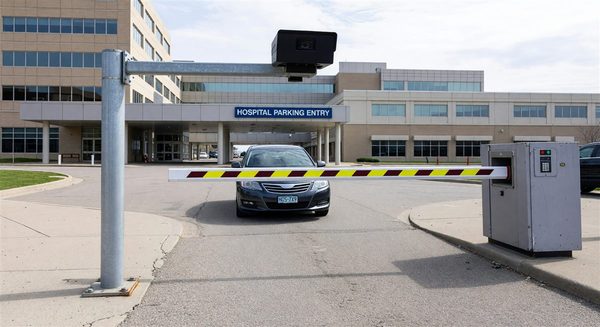
Mobile credential support — Some systems support mobile-only permits where a license plate registration is the credential and no physical permit is issued. Integration with LPR at entry points allows automatic gate opening based on plate recognition.
Self-service vehicle registration — Employees can add, remove, or update vehicle registrations within defined policy limits (e.g., up to 3 vehicles per permit, with one active at a time) without administrative intervention. This dramatically reduces the email volume that permit offices receive.
Integration with PARCS — The permit database must be integrated with the parking access and revenue control system. Changes in the permit portal should sync to the PARCS in real time. A permit revoked at 9 AM should result in access denial at the entry gate at 9:01 AM, not 9 AM the next day.
Reporting — Dashboard views of zone occupancy rates, waitlist lengths by tier, permit utilization rates, and revenue by zone support both operational management and budget reporting.
Equity Considerations in Permit Allocation
Healthcare permit programs that allocate the best spaces to the highest earners — while placing the lowest earners in the most remote or inconvenient zones — create a visible marker of institutional hierarchy that affects culture and belonging.
Equity considerations to evaluate in program design:
Night shift staff — Employees working 11 PM–7 AM shifts deserve consideration for parking proximity and lighting that reflects their lone-worker safety needs. A nurse walking 800 feet through an unlighted surface lot at 11 PM is a safety issue that proximity and lighting policies should address.
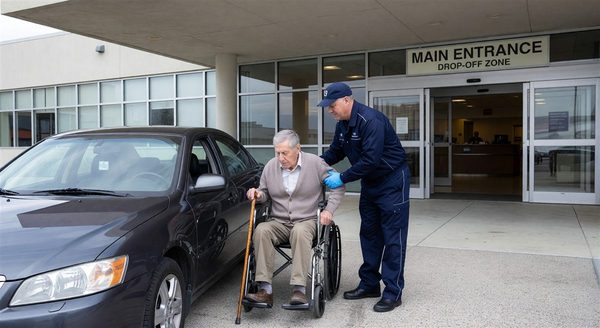
Physical accessibility — Staff with disabilities or temporary mobility limitations deserve accessible space assignment that accommodates their actual needs, not just the ADA-minimum accessible spaces already required.
Compensation relative to permit cost — If permit fees are charged, the percentage of take-home income represented by a $50 monthly parking fee differs dramatically between a $14/hour food service worker and a $50/hour nurse. Tiered pricing or subsidy programs that adjust permit cost based on compensation are more equitable.
Geographic accessibility — Staff who live closer to campus and drive short distances have fewer alternatives to parking. Staff with access to reliable transit have alternatives. Equity-conscious programs may consider transit subsidy as an alternative to parking permit rather than treating all staff as equally dependent on workplace parking.
Enforcement Without Creating Adversarial Culture
Parking enforcement is one of the most visible ways a facilities department can create friction with the clinical workforce. Overly aggressive enforcement — ticketing nurses during crisis shift changes, booting vehicles during surge events — generates lasting resentment. Under-enforcement — where permit holders lose the value of their zone because it is occupied by non-permitted vehicles — generates equal resentment from a different direction.
Effective enforcement principles:
- Written, consistently applied policy — Enforce the same way every time. Variable enforcement based on who happens to be watching is the most complained-about aspect of parking programs.
- Warning before citation for first offenders — A written warning is usually sufficient for first-time violations; it changes behavior without creating a punitive debt.
- Prioritize patient-zone violations — Staff using patient parking is the highest-impact enforcement target and the one most visible to patients. Enforce this consistently.
- Easy appeals process — An online or email-based appeals process that gets a response within 48 hours reduces the frustration associated with citations. Most legitimate appeals involve extraordinary circumstances that warrant adjustment.
Frequently Asked Questions
How do we handle the physician who parks wherever they want because they never get ticketed? This is a culture issue as much as an enforcement issue. Physician parking privileges should be defined in writing, and the permit program should apply to all employees including physicians. If enforcement has historically been selective, a formal communication from medical staff leadership and administration about uniform policy application helps establish the expectation before enforcement begins. Starting with a warning period before full enforcement also helps manage the transition.
What is the right ratio of permits to spaces? Some facilities issue permits on a 1:1 basis (one permit per space). Others issue on an oversell basis (e.g., 1.1 permits per space), accepting that not all permit holders will be present simultaneously. Oversell ratios work for zones where 100% occupancy is rare. For zones where permit holders reliably arrive at the same time (nursing staff at shift change), oversell creates guaranteed frustration. Analyze actual utilization before overselling any zone.
How do we recover unclaimed or underused permits? Institute a permit renewal cycle (annual renewal is common) where staff must actively renew or forfeit their permit. Any unreturned permit should be automatically deactivated at the end of the permit year. Audit entry event data for permits that have not been used in 90+ days and contact the permit holder — a permit holder who no longer works at the facility or no longer drives is occupying a permit that someone on the waitlist needs.
Should permit management be administered by HR, facilities, or a joint function? Both HR and facilities have relevant roles. HR controls employment data and should trigger permit provisioning and deactivation as part of onboarding and offboarding workflows. Facilities controls the physical zones and should manage zone capacity, waitlists, and enforcement. A joint committee that sets policy, with administrative execution by a shared service function, is the most effective governance model.