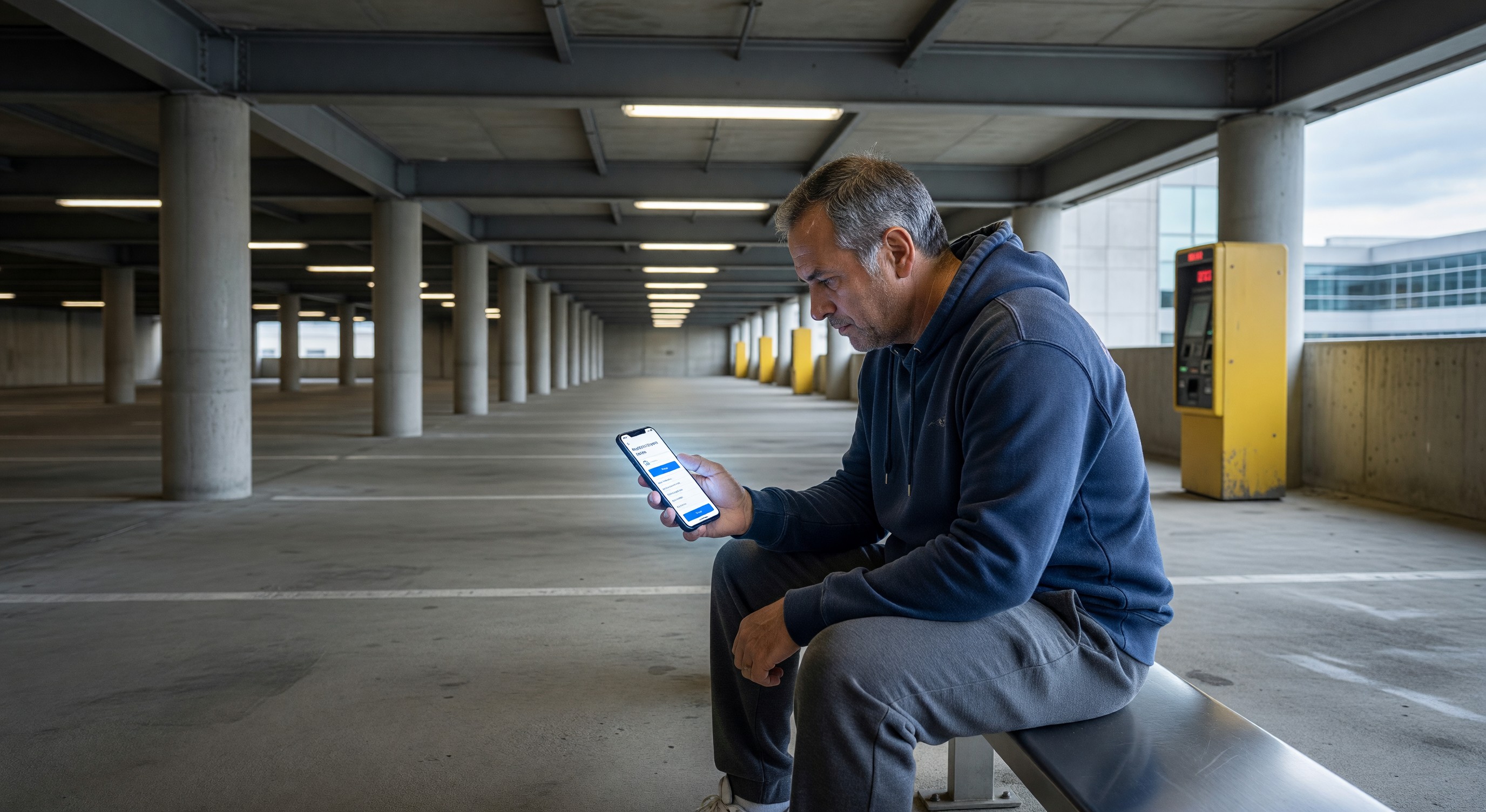
Pay-by-phone parking has moved from a convenience feature to an operational standard in healthcare facility parking. The combination of contactless payment demand accelerated by COVID-19, rising patient expectations around digital convenience, and declining cash handling preferences among healthcare organizations has made mobile parking payment adoption a priority for facility directors across the country.
For hospital parking operations, pay-by-phone systems offer genuine operational advantages—but also introduce integration challenges and equity considerations that require careful planning.
How Pay-by-Phone Works in Healthcare Parking
Pay-by-phone parking allows patients, visitors, and staff to initiate, extend, and pay for parking sessions using a smartphone app or SMS interface without interacting with a physical payment kiosk. The core workflow:
- Driver parks and notes the lot or zone number (displayed on physical signage)
- Driver opens the parking app, enters zone number and vehicle plate number
- App displays the applicable rate and allows session start
- Payment is processed through a stored credit card, digital wallet, or hospital bill
- Enforcement verification occurs through LPR or manual plate lookup against active sessions
Most platforms also allow session extension from anywhere—a significant benefit for patients whose appointments run longer than expected, eliminating the need to leave a treatment area to add time to a parking meter or move a vehicle.
Benefits Specific to Healthcare Settings
Reduced Kiosk Congestion Pay-by-phone transactions eliminate one of the most common friction points in hospital parking: the queue at the pay station. During peak arrival windows—Tuesday and Wednesday mornings in most hospitals—kiosk lines create delays that ripple into patient on-time arrival rates. Even modest adoption of mobile payment (30–40% of transactions) meaningfully reduces peak kiosk wait times.
Integration with Patient Billing Some hospital systems have implemented parking payment integration with patient billing platforms, allowing parking charges to be added to a patient’s account and settled through standard billing processes. This eliminates the need for patients to pay at the time of the visit—a meaningful accommodation for patients who arrive without cash or cards due to the nature of their admission.
Simplified Validation Traditional parking validation requires physical stamps, tickets, or codes distributed by clinical departments. Pay-by-phone platforms can implement digital validation—a department enters a patient encounter number or phone number to apply a discount or free session directly to an active parking session, eliminating paper validation entirely.
Staff Permit Management Many pay-by-phone platforms support multi-vehicle permit management, allowing employees to register their personal vehicles and gain access to designated lots through LPR-linked permit validation rather than hang tags or stickers. This simplifies permit management for employees who drive multiple vehicles and eliminates hang tag replacement requests.
ADA and Equity Considerations
Pay-by-phone parking cannot be the only payment option in healthcare settings. Several considerations require maintaining accessible alternatives:
Smartphone Access Gaps A meaningful percentage of hospital patients—disproportionately elderly, low-income, and rural populations—lack smartphones or reliable data connectivity. The 2024 CMS Conditions of Participation guidance reinforces the principle that healthcare facilities must not create barriers to access based on ability to use technology.
ADA Requirements ADA standards require accessible parking payment options for individuals with disabilities. Physical kiosks must meet ADA height and reach requirements, and facilities cannot designate ADA spaces as pay-by-phone-only zones.
Maintaining Kiosk Infrastructure Even after pay-by-phone adoption reaches 60–70% of transactions, maintaining physical kiosk infrastructure for the remaining transactions is necessary. The operational savings from reduced cash handling and kiosk maintenance should be evaluated against the capital cost of keeping hardware current.
Revenue and Operational Impact
Healthcare organizations that have deployed pay-by-phone alongside existing PARCS infrastructure typically report:
Improved Revenue Capture Pay-by-phone systems with session extension capability capture revenue that’s lost when drivers leave before their parking session expires. Extended sessions—where a driver adds time remotely—represent pure incremental revenue with no additional facility cost.
Reduced Cash Handling Costs Cash handling in hospital parking operations carries significant direct costs: armored car service, bank fees, cash drawer reconciliation, and the labor associated with cash management. Organizations that shift 50%+ of transactions to digital payment report meaningful reductions in cash handling overhead.
Faster Audit and Reconciliation Digital transaction records from pay-by-phone platforms simplify parking revenue auditing. Every transaction is timestamped, associated with a plate number, and stored in the platform database—making revenue reconciliation and dispute resolution significantly faster than systems relying on paper ticket stubs.
Integration with PARCS and Gate Systems
Pay-by-phone systems deliver maximum value when integrated with the existing PARCS infrastructure rather than operating as a parallel system. Integration points include:
LPR Enforcement When the pay-by-phone platform shares active session data with the LPR enforcement system, enforcement becomes automated. The LPR camera reads the plate, the enforcement system queries active sessions, and unpaid vehicles are flagged for citation or booting without manual lookup.
Gate Release In facilities with barrier gate systems, pay-by-phone can trigger automatic gate release upon session initiation—allowing cashless entry and exit without stopping at a payment kiosk. This requires the pay-by-phone platform to communicate with the gate management system in real time, typically via API integration.
Validation Workflow Integration Digital validation workflows that connect departmental billing systems with the pay-by-phone platform allow clinical staff to validate patient parking directly from the EMR or scheduling system, without issuing physical validation media.
Deployment Considerations
For facility directors planning pay-by-phone deployment, several implementation factors shape success:
Signage and Wayfinding Effective zone number signage is the foundation of pay-by-phone usability. Every surface lot section and garage level needs clear, durable signage displaying the zone code. Poor signage is the single most common cause of patient frustration with mobile parking payment.
Staff Training Patient-facing clinical and administrative staff should understand how pay-by-phone works so they can answer patient questions and process digital validations. Brief training at registration and billing touchpoints improves adoption rates.
Phased Rollout Starting with employee parking before extending to patient and visitor lots allows the operations team to identify integration issues and refine the validation workflow before high-volume patient parking is converted.
Frequently Asked Questions
Can pay-by-phone parking systems integrate with hospital patient portals or apps? Yes. Leading pay-by-phone platforms offer white-label or API-based integration that allows hospitals to embed parking payment within their existing patient apps or portal experiences. This presents parking as a seamless part of the visit rather than a separate transaction.
What happens if a patient’s phone dies and they can’t access the app to pay? Pay-by-phone systems should always be offered alongside physical kiosks. Facilities should communicate clearly that kiosk payment remains available, and enforcement policies should include a grace period for patients who contact parking operations to report technical difficulties.
How do pay-by-phone systems handle validation for inpatients who park and then are admitted? This is a genuine operational challenge. Most hospitals address it through a combination of daily rate caps (limiting total charges for extended sessions), social services validation protocols for patients who become inpatients from emergency or observation status, and grace periods that allow parking operations to apply retroactive validation when notified of an unplanned admission.
Are there HIPAA considerations with pay-by-phone parking platforms? Pay-by-phone parking platforms that integrate with patient billing or EMR systems may receive protected health information (appointment details, billing account numbers). Healthcare organizations should evaluate vendor BAA requirements and ensure parking data is handled in compliance with applicable HIPAA privacy and security rules.