Parking enforcement in healthcare settings presents a challenge that doesn’t exist in most other contexts: the person parked illegally might be a patient in crisis, a family member receiving devastating news, or a caregiver who arrived in an emergency. Heavy-handed enforcement that prioritizes compliance over compassion creates patient relations problems and, in serious cases, genuine harm.
Yet without any enforcement, patient parking fills with staff vehicles, visitor lots become long-term employee storage, and ADA spaces go occupied by non-permitted vehicles—creating access problems for the patients who need those spaces most.
Effective hospital parking enforcement threads this needle through system design, technology-assisted enforcement, and carefully calibrated escalation protocols.
The Case for Systematic Enforcement
The argument for parking enforcement in healthcare settings is ultimately about equity and access. When staff vehicles fill lots designated for patients and visitors, patients who arrive in pain, after medical procedures, or with mobility limitations cannot access the facility they came to receive care from. When ADA spaces are occupied by non-permitted vehicles, the impact falls disproportionately on the most vulnerable patients.
Healthcare organizations that have implemented systematic parking enforcement consistently report:
- Increased availability of patient spaces during peak hours
- Reduced patient and family complaints about parking access
- Improved employee satisfaction when staff lots are protected from visitor overflow
- Higher parking revenue through reduced fraudulent permit use and improved validation compliance
The key is implementing enforcement in a way that distinguishes between operational violations (an employee parked in a patient space) and human situations requiring grace (a visitor who parked in the wrong lot while accompanying a patient to the emergency department).
Technology-Assisted Enforcement
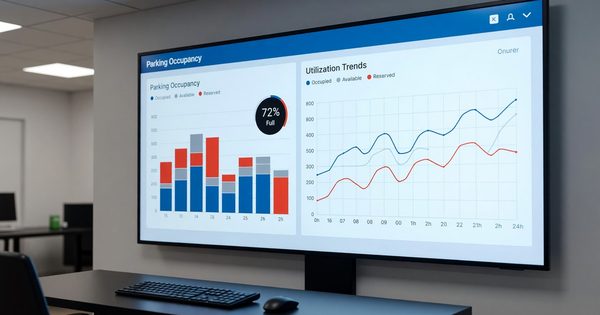
Modern parking enforcement in healthcare settings increasingly relies on technology to improve consistency and reduce confrontational enforcement encounters.
LPR-Based Enforcement License plate recognition systems patrol lots either on dedicated enforcement vehicles or through fixed cameras at lot entries. Plates are checked against permit databases, and vehicles without valid permits or active pay-by-phone sessions are flagged automatically. This approach eliminates the need for enforcement officers to manually check every vehicle, focusing their time on exceptions.
LPR enforcement is particularly effective for permit zone compliance. When every employee vehicle is registered in a permit database linked to an authorized lot, violations are identified automatically without a physical inspection.
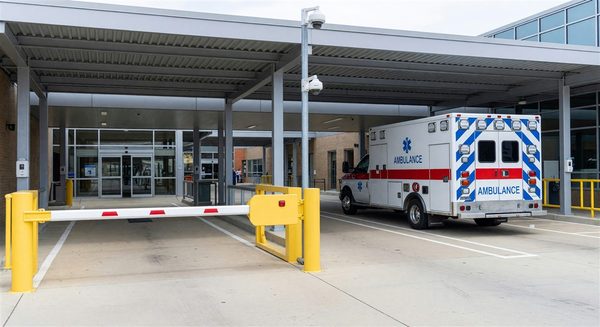
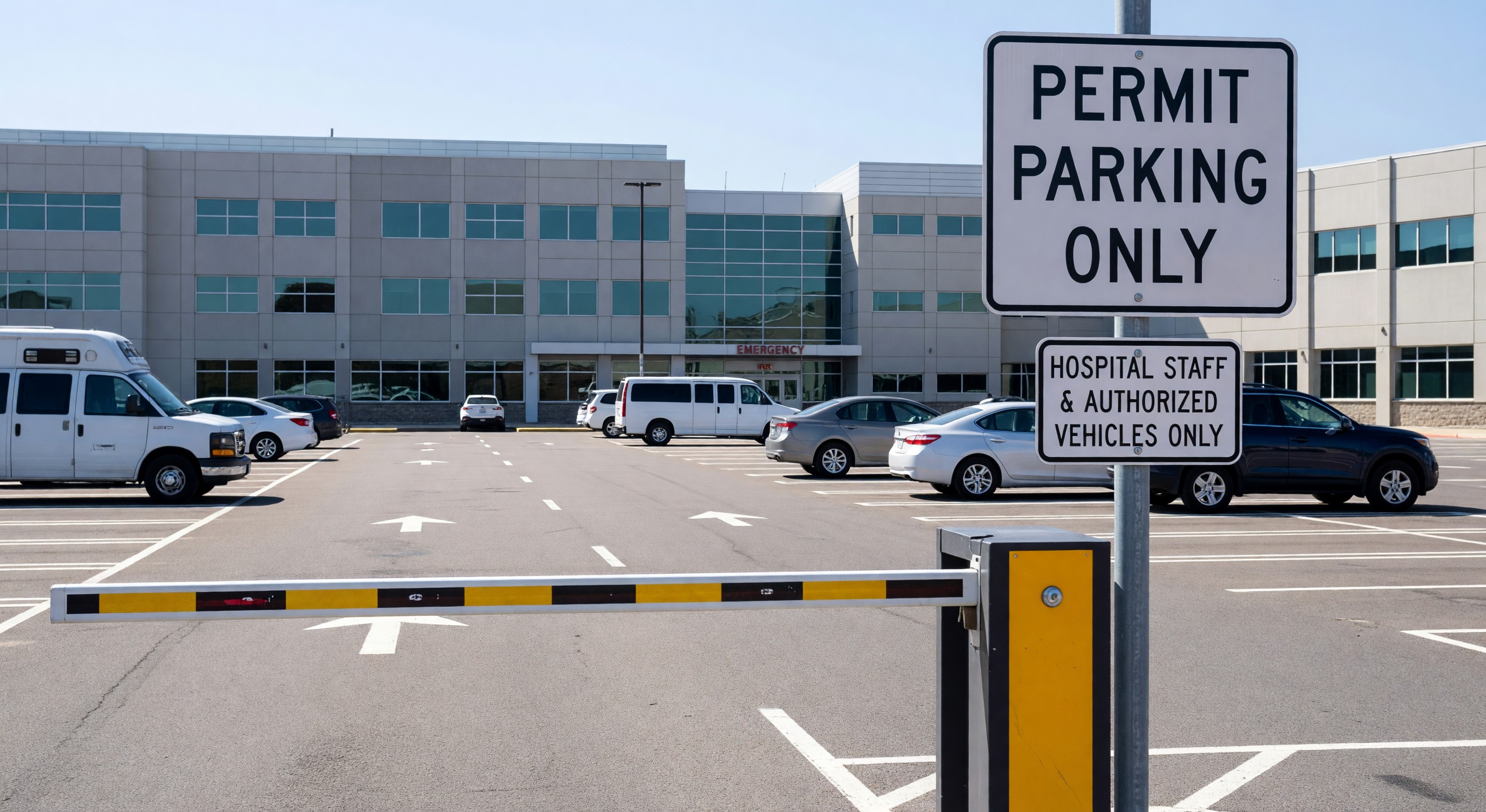
Automated Gate Systems Barrier gate systems that require badge access or validated payment to enter designated zones prevent unauthorized entry rather than penalizing it after the fact. Employee-only garages equipped with barrier gates effectively eliminate the permit violation problem for those structures—only authorized vehicles can enter. For patient visitor lots, payment kiosks and pay-by-phone systems with gate integration ensure that parking fees are collected at point of use rather than through after-the-fact enforcement.
The combination of automated access control and LPR spot enforcement covers the majority of enforcement scenarios, reducing the need for foot patrols and staff confrontations.
Mobile Enforcement Management Enforcement teams using mobile apps connected to the parking management platform can verify permit status, issue digital citations, photograph violations, and track citation status from a smartphone. This eliminates paper records, speeds up citation processing, and creates an auditable enforcement record that supports appeals processes.
Escalation Protocol Design
The escalation protocol—what happens when a violation is identified—is where patient-centered enforcement design matters most.
First Occurrence Warning Most healthcare parking enforcement programs begin with a written warning rather than a citation for first violations by registered permit holders. For vehicles with no permit on record, a warning is placed on the windshield explaining where patient or visitor parking is available and directing them to the appropriate area.
Second Occurrence Citation A second violation by the same vehicle within a defined period (typically 30 days) triggers a formal citation. Citation amounts should be calibrated to create a deterrent without being punitive to patients—most healthcare parking citations range from $25 to $75, significantly lower than commercial or municipal parking fines.
Permit Suspension For employees, repeated permit violations may result in temporary permit suspension. This is the most effective deterrent for staff compliance issues, as the permit represents significant convenience value that employees don’t want to lose.
Booting and Towing Booting and towing should be reserved for the most serious and persistent violations: vehicles blocking fire lanes, occupying ADA spaces without permits, or remaining in violation after multiple citations. Healthcare facilities should establish clear policies on who has authorization to order a boot or tow and what notification procedures are required.
ADA Parking Enforcement
Unauthorized use of ADA-designated spaces is subject to federal and state penalties beyond hospital parking citations. Healthcare facilities have both a legal and ethical obligation to ensure ADA spaces are accessible to qualified users.
ADA enforcement in healthcare settings typically includes:
- Visual permit verification (state-issued placard or plate) as the primary compliance check
- Assistance locating appropriate parking for visitors who incorrectly use ADA spaces without understanding the requirements
- Citation for vehicles without valid ADA credentials using designated spaces, with referral to local authorities when state fines apply
Healthcare parking teams should be trained to distinguish between ADA placards issued for temporary versus permanent conditions, and to handle ADA enforcement situations with sensitivity given the medical context.
Managing the Patient Relations Dimension
Even well-designed enforcement programs generate occasional conflicts and complaints. Healthcare organizations should establish:
Clear Appeals Process Every citation should include information on how to appeal. An accessible, patient-centered appeals process—with a reasonable deadline and a human reviewer who can apply context—resolves most legitimate disputes and demonstrates that the enforcement program isn’t purely punitive.
Compassionate Exception Handling Enforcement staff should have authority to exercise discretion in genuine hardship situations. A vehicle in an unauthorized space because the driver was accompanying a patient to the emergency department may technically violate the permit rules, but enforcement action in that context is both inappropriate and damaging to patient relations. Clear guidelines on when discretion applies protect enforcement staff from inconsistency while protecting patients from inappropriate citations.
Proactive Communication Many parking violations occur because signage is unclear, permit zone boundaries are confusing, or patients don’t understand the validation process. Proactive communication—in appointment reminders, on the hospital website, and through physical signage—prevents more violations than enforcement can ever address after the fact.
Frequently Asked Questions
Can a hospital tow a patient’s vehicle without notice? Towing without advance notice is permissible in most states for certain violation types (fire lane blocking, ADA space violation without permit), but most healthcare organizations apply more conservative towing policies that include a notice period for other types of violations. Legal requirements vary by state, and healthcare parking programs should ensure their towing policies comply with applicable state vehicle code provisions.
How should enforcement handle situations where a visitor parked in a restricted area because patient drop-off was full? This scenario points to a systemic problem—insufficient drop-off capacity—rather than an enforcement problem. The appropriate response combines a warning (not a citation) for the visitor with an internal report flagging the drop-off capacity issue for operations review. Enforcement data showing repeated violations in specific areas often reveals infrastructure or signage gaps.
What’s the best approach for enforcing employee parking permits without creating staff relations problems? The most effective approach is strong communication and culture rather than heavy enforcement. Explaining why patient parking access matters, providing convenient and fairly priced employee parking options, and making permit management easy (including easy permit transfers when employees get new vehicles) reduces violations. When enforcement is needed, starting with warnings and engaging supervisors before citations creates less backlash than immediate punitive action.
Should healthcare facilities use boot immobilizers for parking violations? Booting is an effective deterrent but creates patient relations risks if applied to patient vehicles. Most healthcare organizations limit booting to employee lot violations where non-patients are the primary offenders, and specifically prohibit booting vehicles in patient-designated areas without supervisor authorization and verification that the vehicle is not associated with a current patient visit.