Hospital parking has long been managed by intuition—facility directors making decisions based on complaints, observation, and rough counts. That era is ending. The combination of affordable sensor technology, cloud-based PARCS platforms, and accessible analytics dashboards is giving healthcare organizations genuine visibility into how their parking assets perform—and where they’re failing patients, staff, and the bottom line.
Why Parking Data Matters More Than It Used To
Healthcare parking is no longer a passive amenity. It’s a patient experience touchpoint, a staff retention factor, and an operating revenue source. When parking fails—congested entrances, full garages with no wayfinding, staff taking patient spaces—the downstream effects ripple into patient satisfaction scores, employee survey results, and lost valet revenue.
The 2024 CMS Conditions of Participation final rules reinforced patient experience standards that tie reimbursement to HCAHPS scores. While parking itself isn’t directly scored, the arrival experience shapes first impressions that influence how patients rate their entire visit. Facilities with congested, confusing parking consistently report lower satisfaction in “ease of getting to the facility” metrics.
Data analytics gives facility directors the evidence base to make a case for parking investment—and to prove ROI after implementation.
Core Data Inputs for Hospital Parking Analytics
Effective parking analytics starts with reliable data collection. The primary inputs include:
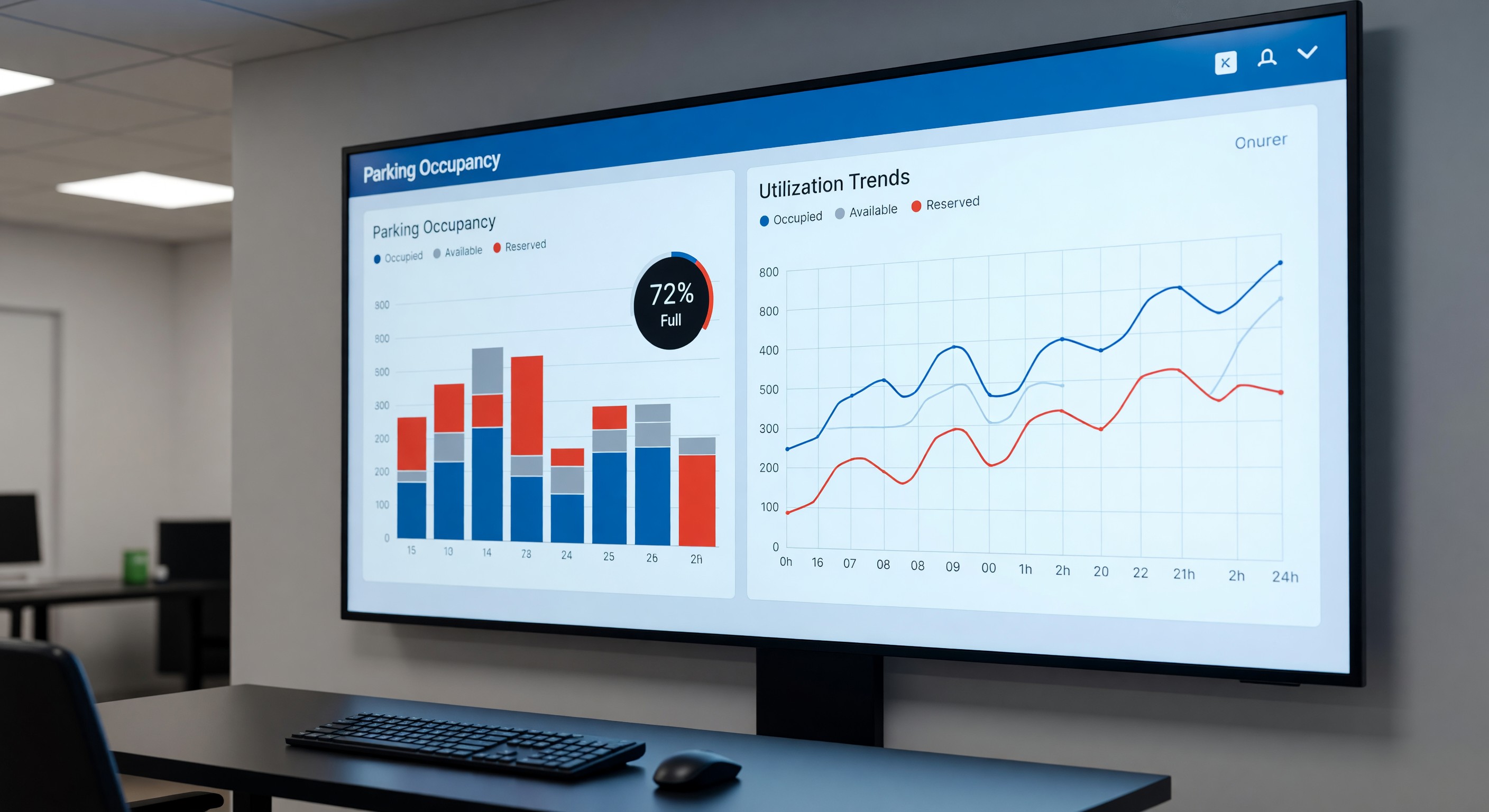
Occupancy Sensors Loop detectors embedded in pavement, overhead ultrasonic sensors in structured garages, and camera-based counting systems at surface lot entrances all generate real-time occupancy data. Modern systems update every 15–30 seconds and feed centralized dashboards accessible from any browser.
Transaction Data from PARCS Parking access and revenue control systems generate rich transaction logs—entry time, exit time, duration, payment method, validation usage, and revenue per session. When this data is aggregated over months, patterns emerge around peak demand windows, average length of stay by lot, and the correlation between weather and occupancy.
Permit and Badge Data For employee parking managed through badge-access systems, swipe logs reveal which permit holders actually use their assigned lots and which lots are chronically underutilized. Many hospitals discover that a significant percentage of registered permit holders have stopped commuting by car, freeing spaces that appear “allocated” but sit empty.
Event and Schedule Data Surgical schedules, clinic appointment volumes, and shift change times all influence parking demand. Integrating hospital scheduling data with parking analytics enables predictive modeling—anticipating peak demand before it becomes a crisis.
Key Metrics Facility Directors Should Track
Not all data is equally actionable. The metrics that matter most for hospital parking operations include:
Peak Occupancy Rate by Zone Understanding which lots hit 100% occupancy and at what times allows targeted interventions. A garage that peaks at 95% occupancy every Tuesday and Thursday morning needs a different response than one that averages 60% year-round.
Average Length of Stay Shorter average stays indicate visitor-heavy usage. Longer stays indicate staff domination of visitor spaces—a common problem that validation programs and time-of-day pricing can address.
Revenue per Space per Day This metric normalizes revenue across lots of different sizes and helps identify underperforming assets. A surface lot charging a flat daily rate may generate less revenue per space than a garage using dynamic pricing, even at lower occupancy.
Validation Utilization Rate Tracking which departments issue parking validations, at what rate, and for which patient types allows healthcare systems to right-size validation programs and identify departments that overuse or underuse them.
Walk Distance from Parking to Entry Analytics platforms that map lot locations against building entrances can calculate average walk distances by shift and appointment type. This data supports ADA compliance planning and helps prioritize which lots to designate for mobility-impaired visitors.
Predictive Modeling Applications
The most sophisticated hospital parking operations are moving beyond descriptive analytics (what happened) to predictive analytics (what will happen).
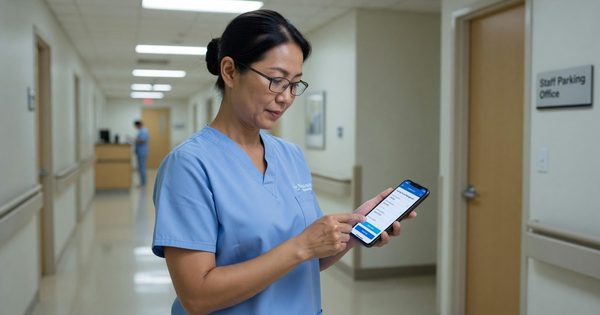
Demand Forecasting By correlating historical occupancy data with appointment volume, day of week, season, and special events, analytics platforms can forecast parking demand 24–72 hours ahead. This allows dynamic messaging—warning staff through mobile apps when lots are expected to be full so they can adjust arrival times or choose remote parking with shuttle service.
Maintenance Scheduling Parking structures require regular maintenance: pavement sealing, garage striping, elevator servicing, lighting replacement. Analytics can identify low-demand windows—Sunday mornings, holiday periods—when closing sections for maintenance causes the least disruption.
Revenue Optimization Dynamic pricing models adjust parking rates based on real-time occupancy. When a surface lot is 40% full, lower rates attract price-sensitive visitors. When a garage approaches capacity, slightly higher rates can spread demand to adjacent underutilized lots. Some health systems have increased parking revenue 15–20% by implementing demand-based pricing without adding a single new space.
Integration with Access Control and Wayfinding
Parking analytics becomes significantly more powerful when integrated with broader facility systems.
Automated parking guidance systems (APGS) use occupancy sensor data to update digital signage at lot entrances and intersections, directing drivers to open spaces in real time. When this data also feeds the hospital’s mobile app and external wayfinding platforms, patients can check parking availability before leaving home.
Integration with access control systems allows permit enforcement to be automated. When a badge-linked permit holder enters a lot beyond their authorization, the system flags the exception for review rather than requiring physical enforcement by parking staff.
Building the Case for Investment
Parking analytics systems require capital investment—sensor hardware, software licensing, and integration work. For most mid-size health systems, a full-featured analytics platform covering structured parking and major surface lots runs $150,000–$400,000 in upfront costs with ongoing annual SaaS fees.
Justifying this investment requires demonstrating ROI across multiple dimensions:
- Revenue recovery: Reduced unauthorized access, better enforcement, dynamic pricing
- Avoided capital cost: Optimized utilization can delay or eliminate the need for new parking construction
- Staff satisfaction: Reliable, fair parking is consistently cited in healthcare employee satisfaction surveys
- Patient experience: Reduced arrival friction supports HCAHPS scores
Many facilities find that the revenue recovered from eliminating permit fraud and improving enforcement alone covers a significant portion of the system cost within two years.
Implementation Considerations
For facility directors evaluating parking analytics investments, several implementation factors deserve attention:
Data integration requirements: The analytics platform must integrate with existing PARCS equipment, access control systems, and ideally with scheduling or HR systems. Vendor interoperability should be evaluated before purchase.
Staff training: Analytics dashboards are only valuable if operations staff know how to interpret them. Build training into the implementation plan.
Privacy and data retention: Vehicle occupancy data and transaction records may be subject to state privacy regulations. Establish data retention policies before go-live.
Phased rollout: Large health systems with multiple campuses should consider phasing implementation—starting with highest-volume locations to validate the platform before expanding.
Frequently Asked Questions
What types of sensors are most reliable for hospital parking occupancy tracking? Overhead ultrasonic sensors have become the standard for structured garages due to their accuracy and low maintenance requirements. For surface lots, camera-based counting at entry/exit points is often more cost-effective than per-space sensors and provides the same aggregate occupancy data.
Can parking analytics integrate with existing PARCS equipment or does it require replacement? Most analytics platforms are designed to integrate with major PARCS brands through API connections or data export. A full replacement is rarely necessary, though older equipment without data output capability may require gateway hardware to enable connectivity.
How long does it typically take to see meaningful data patterns after implementing parking analytics? Thirty days of data provides a useful baseline for daily and weekly patterns. Seasonal patterns require at least six months of continuous data collection. Most facilities begin making operational adjustments within the first 60 days based on peak occupancy insights.
What’s the typical payback period for a hospital parking analytics investment? Payback periods vary widely based on parking volume, current revenue leakage, and whether dynamic pricing is implemented. Facilities with active enforcement challenges and multiple surface lots often achieve payback within 18–24 months. Smaller facilities with structured garages already under tight management may see longer payback periods of 3–4 years.