The COVID-19 pandemic forced hospital parking operations to reinvent themselves faster than any normal capital or operational cycle would demand. Visitor restriction policies, surge capacity demands, COVID-19 testing and vaccination site requirements, and the need for contactless operations all required immediate, creative responses from parking and facilities teams with little precedent to guide them.
Looking back from 2021, the changes hospitals made to their parking operations during COVID-19 offer both operational lessons and a preview of how healthcare parking will continue to evolve.
Phase 1: Visitor Restriction and Revenue Collapse (March–June 2020)
When state health departments and hospital systems implemented visitor restriction policies in March 2020, hospital parking operations lost their largest revenue segment almost overnight. Visitor parking, which represents 50–70% of daily transactions at most hospital facilities, effectively ceased.
Operational adaptations:
- Partial closure of parking structures to reduce operating costs, with remaining open levels serving staff
- Redeployment of parking attendants to alternative functions (screening station support, wayfinding assistance)
- Temporary permit rate freezes or discounts to support staff who were themselves under financial pressure
- Suspension of parking enforcement in some facilities to avoid creating negative interactions during a high-stress period
Revenue impact: Facilities that had budgeted $2–4 million in annual parking revenue faced 60–80% shortfalls during peak restriction periods. Parking contracts with fixed-cost components (debt service on parking structures, maintenance contracts) continued regardless of revenue performance, requiring facilities to absorb significant budget gaps.
Phase 2: Surface Lot Conversion to COVID-19 Sites
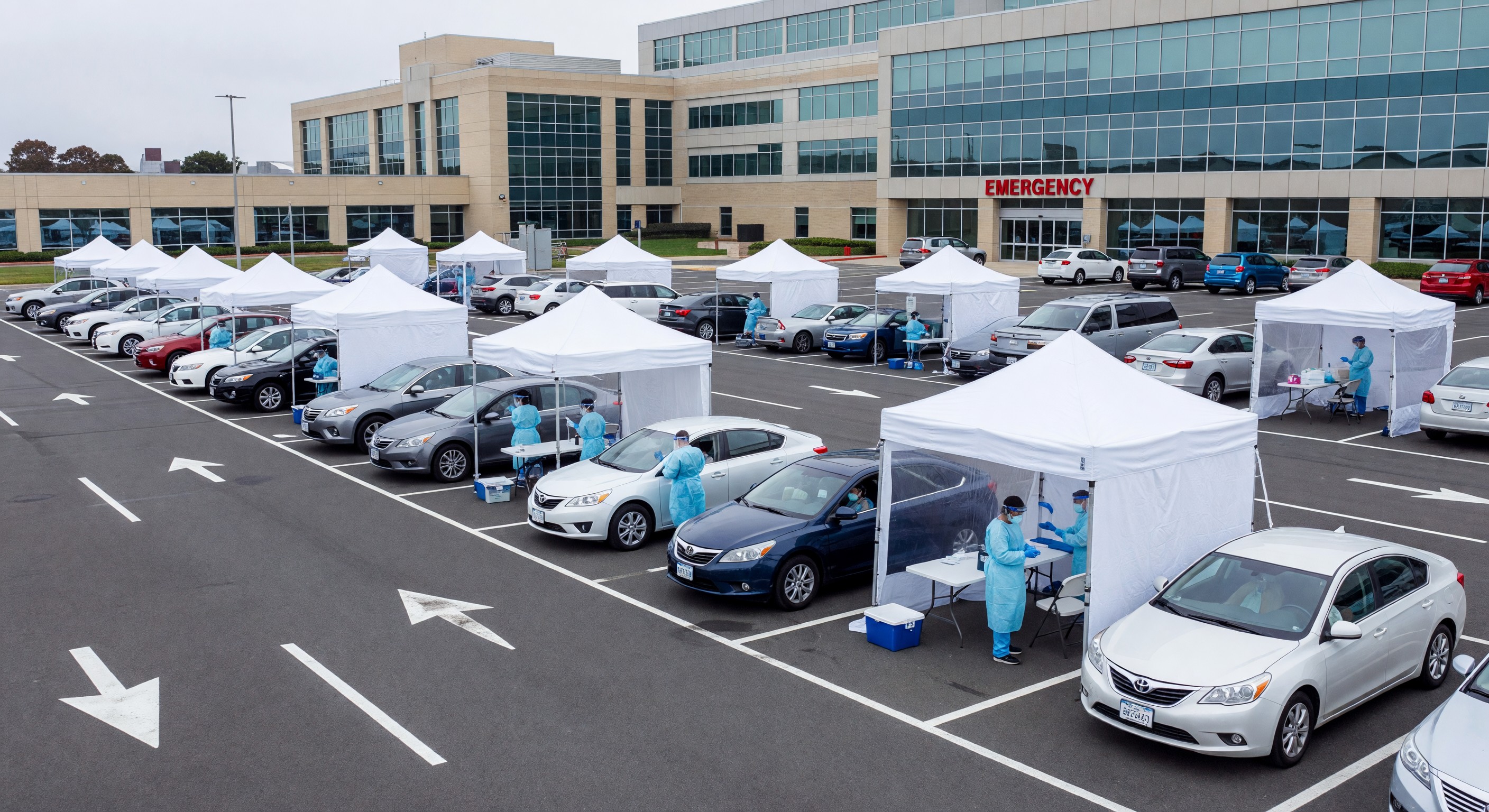
As COVID-19 testing demand exploded in spring 2020, hospital surface parking lots became the most logical location for drive-through testing operations. The automobile-centric format of testing — limiting potential airborne spread, minimizing cross-traffic with clinical areas, providing easy traffic management — made drive-through testing a standard model.
Converting parking to testing operations required:
- Barrier placement and traffic control setup to manage vehicle queuing
- Canopy or tent installation for test administration areas
- Power and communications to support registration and result documentation systems
- Security and access control for the testing zone
- Signage to direct testing patients separately from clinical patients
Later in 2020 and into 2021, the same lots converted to vaccination staging sites — larger operations requiring more complex logistics including vehicle flow management for multiple vaccination stations, observation areas where vaccinated individuals waited 15–30 minutes post-vaccination, and appointment staging to manage volume.
Phase 3: Contactless Payment Acceleration
The desire to minimize touch surfaces during COVID-19 accelerated the adoption of contactless payment in hospital parking. Facilities that had planned gradual transitions to touchless payment technology found themselves accelerating those plans out of necessity.
Changes implemented during COVID-19 that persisted:
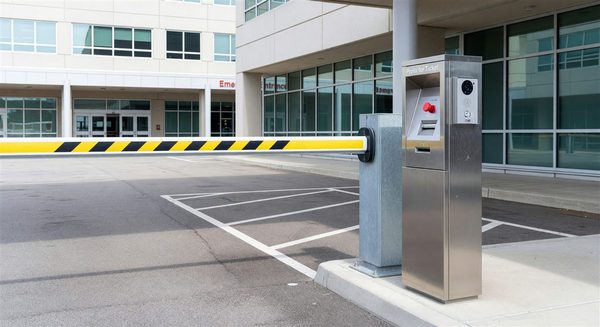
- QR code-based payment at pay stations (scan to pay without touching the screen)
- License plate recognition exit (vehicle identified by plate at exit, no ticket or card required)
- Mobile payment apps for staff permits
- Pay-by-phone for visitor parking (phone number entered at entry, payment via app at exit)
By 2021, contactless payment capability was no longer a nice-to-have feature — it was an expected baseline for hospital parking equipment procurement. Facilities evaluating PARCS vendors began requiring contactless capability as a minimum specification.
Phase 4: Vaccine Distribution Logistics (2021)
The COVID-19 vaccine rollout in early 2021 created the largest coordinated public logistics operation in modern healthcare history. Hospitals designated as vaccine administration sites had to manage volumes of patients unlike any outpatient clinic they had previously operated.
Parking was central to the logistics challenge. A community vaccination site operating 8–12 hours per day with appointments every 10 minutes needed:
- Structured arrival queuing to prevent street congestion
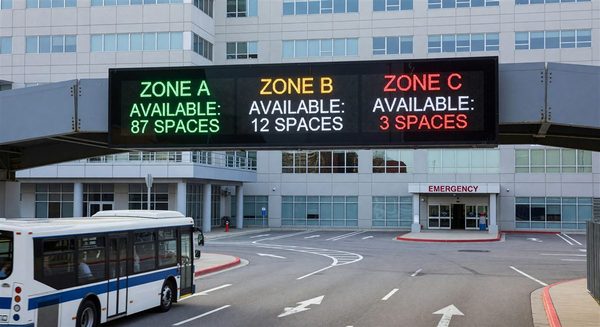
- Clear wayfinding from entry to registration to vaccination to observation
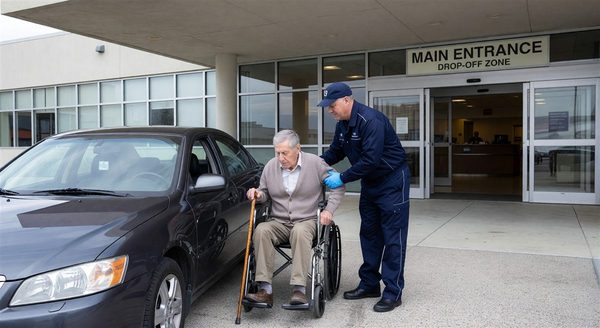
- Reserved accessible spaces for mobility-impaired vaccinees
- Vehicle flow management to prevent simultaneous arrival peaks overloading the site
- Staff parking separate from vaccinated-public parking to maintain clear pathways
Many hospital facilities teams coordinated these operations with virtually no lead time, improvising solutions based on their understanding of campus traffic patterns and their relationships with vendors who could provide temporary barriers, signage, and canopy infrastructure.
Lasting Changes in Hospital Parking Operations
The COVID-19 period accelerated several trends that now define hospital parking expectations:
Contactless as default — New equipment procurement specifications routinely require contactless payment capability. Facilities replacing aging pay station equipment now view touch-free operation as a baseline requirement.
Digital communication — Appointment confirmation communications now routinely include parking information. The pandemic period showed that pre-arrival communication dramatically reduced on-site confusion during changing conditions.
Flexible zone management — Facilities that had cloud-managed access control and parking systems were able to reconfigure zones and credentials remotely during the pandemic. This flexibility is now recognized as an operational requirement, not a luxury.
Mobile-friendly patient interaction — Mobile parking apps, QR code validation, and mobile permit management saw adoption that would have taken years under normal conditions. The patient base is now significantly more comfortable with mobile parking interactions.
Frequently Asked Questions
Have hospital visitor parking revenues recovered to pre-pandemic levels? Most acute care hospitals reported visitor parking revenue recovery to near pre-pandemic levels by mid-2022, as visitor restriction policies were substantially lifted. Some facilities reported that revenue recovery was accompanied by an improved payer mix — the shift from cash to credit card during contactless adoption reduced cash handling labor costs and improved revenue reconciliation.
Are hospitals maintaining COVID-19 testing sites in parking areas long-term? Most dedicated COVID-19 testing sites have been decommissioned or significantly scaled back. However, the operational experience has informed thinking about how surface lots can be repurposed for community health events, mobile clinic operations, and emergency surge capacity. Some facilities have made modest permanent infrastructure investments (power and communication conduit in key lots) to support future temporary deployments.
What parking policy changes from COVID-19 have become permanent? Enhanced cleaning protocols for pay station surfaces, contactless payment requirements, pre-arrival parking communication to patients, and expanded permit management via mobile app are among the most commonly retained COVID-19 era changes. Most facilities also retained the digital documentation and remote management capabilities they adopted under pandemic pressure.
How do we communicate parking changes to patients who have become accustomed to COVID-19-era conditions? Some patients accustomed to COVID-19 visitor restrictions may be surprised by reinstated parking charges or changed zone configurations. Clear, advance communication through appointment reminders and signage at facility approaches prevents frustration. Frame messaging around service restoration and any improvements (new payment technology, better wayfinding) made during the transition period.