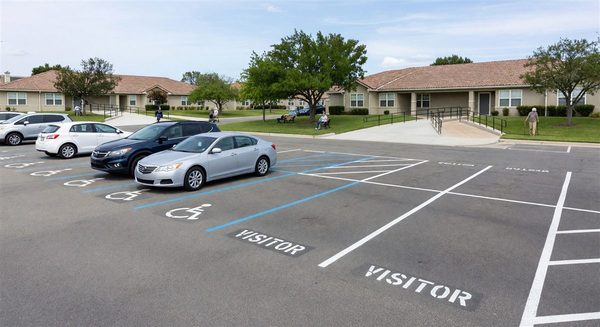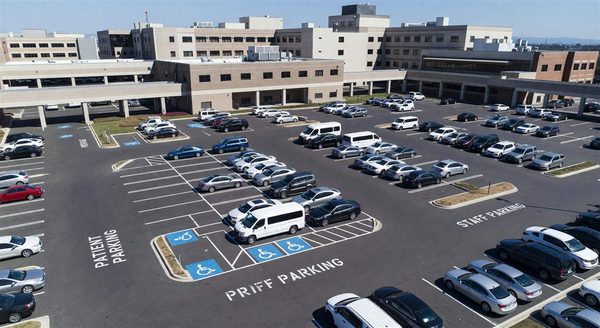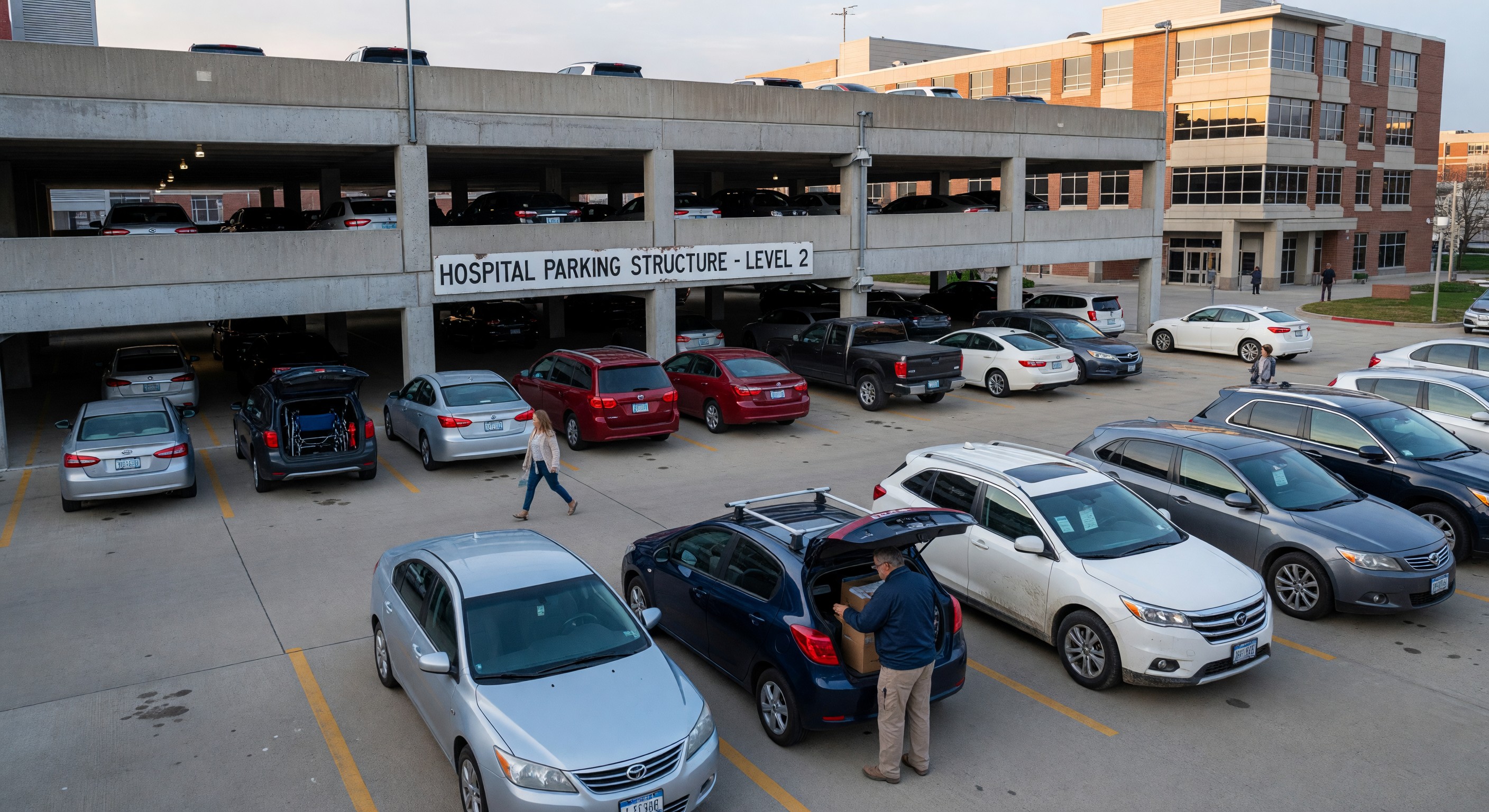
No area of hospital operations experienced a more abrupt and dramatic impact from COVID-19 than parking. When elective procedures were suspended in spring 2020, patient volumes collapsed by 50–75% at many facilities. Parking revenue—which had been a reliable, substantial operating income source for most hospitals—fell proportionally. Staff parking demand fluctuated as remote work policies, furloughs, and redeployments reshuffled employee patterns.
As patient volumes recovered through 2021 and into the post-pandemic period, hospital parking operations faced a more complex recovery than simply returning to pre-pandemic baselines. Patient behavior had changed, contactless payment expectations had grown, and the financial losses accumulated during the pandemic had created pressure to optimize revenue generation more aggressively than pre-pandemic parking management typically had.
How COVID-19 Changed Hospital Parking Operations
The pandemic was an accelerant for operational changes that had been discussed for years before 2020:
Contactless Payment Adoption Pre-pandemic, pay-by-phone and contactless payment options at hospital parking facilities were available at many facilities but rarely the dominant payment method. COVID-19 created immediate patient and staff pressure to eliminate cash handling and kiosk touch interactions. Facilities that responded quickly by promoting pay-by-phone options saw adoption rates reach 40–60% within months—and those rates largely held as patient behavior normalized.
Touchless Entry Technology Similarly, touchless barrier gate entry—using LPR for entry without taking a ticket or touching a button—moved from a future-planning item to an immediate priority at many facilities. Ticket-based entry systems that required hands-on interaction faced patient resistance and staff safety concerns that pushed technology investment decisions forward.
Validation Process Overhaul The pandemic eliminated much of the paper validation workflow that clinical departments had used for decades. Departments that had resisted digital validation—issuing paper tickets or stamps—adopted departmental validation codes, QR code systems, and pay-by-phone validation workflows out of practical necessity. Most found that digital validation was operationally superior and didn’t revert to paper systems as conditions normalized.
Staff Parking Restructuring With hybrid work and remote work policies reducing some office-based staff presence, and with surge staffing for COVID care creating new demand patterns, staff parking allocation had to be restructured. Many facilities used the pandemic period to conduct permit audits that identified unused or duplicate permits, and used those findings to right-size permit programs.
Revenue Recovery Strategies
Hospital parking operations that have successfully recovered and grown revenue past pre-pandemic baselines have typically employed several interconnected strategies:
Dynamic Pricing Implementation Pre-pandemic, most hospital parking operations used fixed daily or hourly rates. The pandemic disrupted enough operational assumptions that many facilities were willing to consider dynamic pricing—rates that vary based on lot, time of day, and demand levels—that they had resisted before.
Dynamic pricing implemented in the recovery period has consistently generated revenue increases of 10–20% at pilot locations without generating significant patient complaints, particularly when the pricing model is clearly communicated and the rate variation is moderate rather than extreme.
Permit Audit and Right-Sizing Permit audits conducted during low-demand periods revealed that permit programs had grown inefficiently—more permits allocated than spaces available, permits for employees who no longer worked on-site, duplicate permits for employees who had changed vehicles. Right-sizing permit programs—reducing the total permit count to match actual capacity—reduced the employee parking conflicts that generated complaints and allowed better space allocation for patients.
Premium Parking Revenue Development Several hospital systems developed premium parking products during the recovery period: covered or valet-equivalent parking for oncology and procedural patients who are willing to pay a modest premium for closer, more protected access. These premium products generate higher revenue per space and address patient experience needs that standard parking can’t meet.
Validation Program Rationalization The pandemic-forced transition to digital validation created an opportunity to rationalize validation programs that had grown without clear governance. Many facilities discovered that validation was being issued far more generously than clinical necessity required, with clinical departments issuing full-day validations for brief outpatient visits. Validation rationalization—tying validation to clinical necessity with oversight—recovered meaningful revenue without materially affecting patient satisfaction.
Technology Investment Priorities
The operational disruption of the pandemic provided the business case for technology investments that had been difficult to justify before:
PARCS Platform Modernization Facilities with aging PARCS platforms used the pandemic period—when capital was available from eliminated volume-based costs—to evaluate and select modern platforms that support contactless payment, mobile integration, and analytics. The volume recovery period provided the data needed to validate these investments.
Mobile App Integration Hospital patient apps that integrated parking payment and guidance became a differentiator during the recovery period. Facilities that could offer pre-arrival parking availability, mobile payment, and guidance from parking to appointment destinations through the patient app improved the return-to-care experience for hesitant patients.
Revenue Audit Tools Analytics platforms that audit parking revenue for leakage—unauthorized access, validation fraud, unpaid exits—were adopted more widely during the recovery period as finance leadership focused attention on non-clinical revenue streams. Revenue recovery from leakage identified through audit tools has funded ongoing analytics platform costs at many facilities.
Frequently Asked Questions
Have hospital parking revenues fully recovered from COVID-19 losses? Recovery has been uneven. Hospitals in markets with strong return-to-care patterns—urban markets with specialty services that attract patients from beyond the immediate area—have generally returned to or exceeded pre-pandemic revenue. Facilities in markets with high telemedicine adoption and smaller campuses may still see parking volumes below 2019 baselines as some outpatient care that previously generated parking has shifted to virtual visits permanently.
How should hospital parking operations address the ongoing shift toward telemedicine that reduces in-person visit volumes? Parking operations that remain dependent on volume recovery to pre-pandemic levels may be disappointed as telemedicine continues to replace some in-person care. The strategic response is to ensure parking revenue is optimized per visit rather than per volume—through better pricing, reduced validation leakage, and premium product development—rather than assuming volume alone will restore pre-pandemic revenue levels.
What’s the long-term impact of COVID on the patient payment mix in hospital parking? Contactless payment adoption rates established during COVID have proved durable. Cash payment as a percentage of hospital parking transactions has declined by 15–25 percentage points at facilities that actively promoted digital alternatives during the pandemic. This shift has reduced cash handling costs significantly and appears permanent rather than transient.
How are hospital parking operations managing the tension between revenue optimization and patient access equity? The most effective approaches maintain low or no-charge validation programs for patients from documented low-income backgrounds or on financial assistance programs, while applying revenue-optimized pricing to patients with demonstrated ability to pay. Digital payment platforms that can be linked to financial assistance status make this differentiation operationally feasible in ways that cash-only systems could not support.