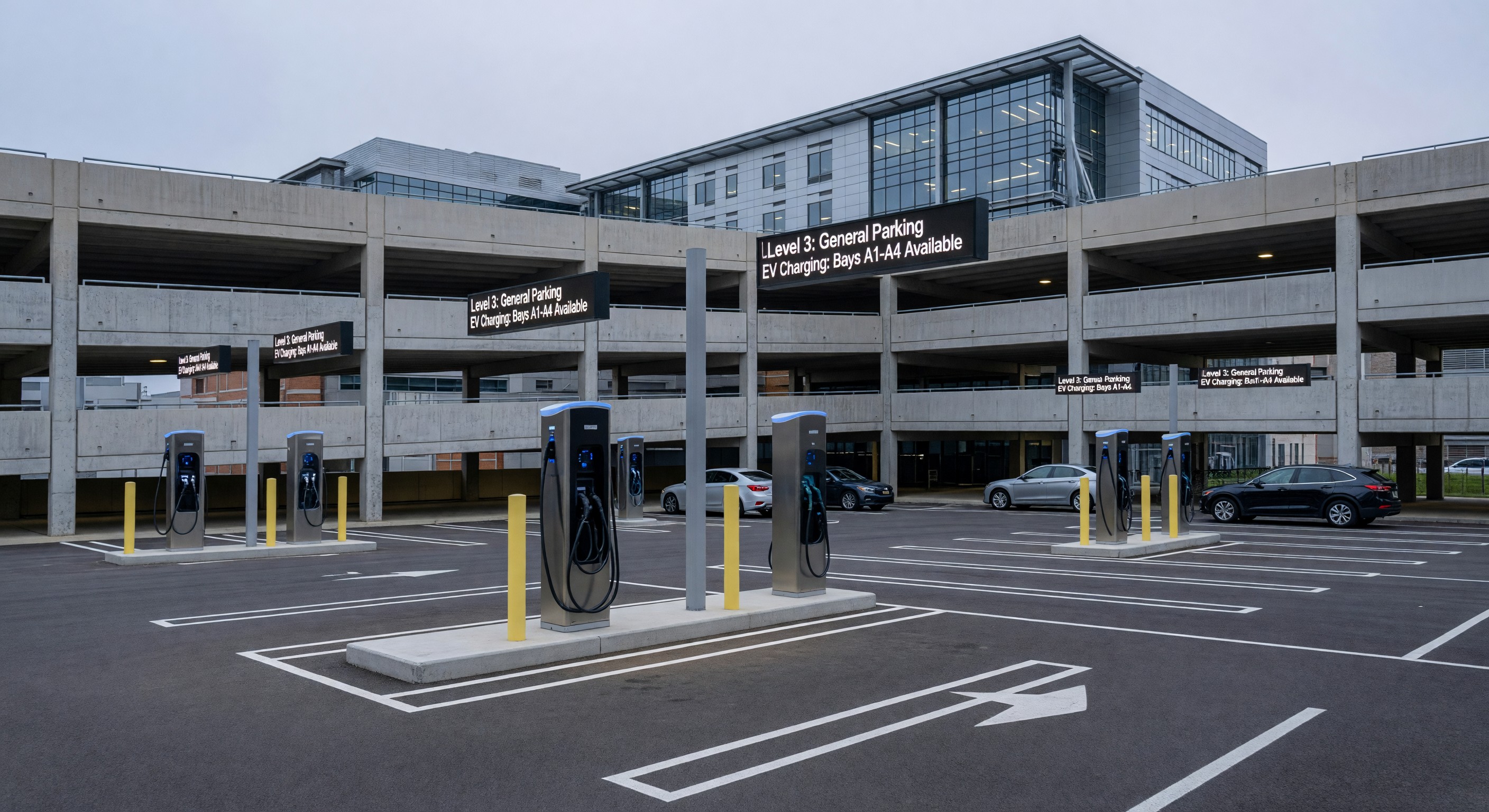
Healthcare facility parking is undergoing its most significant transformation in a generation. The combination of technology maturation, sustainability pressure, patient experience standards, and capital constraints is forcing hospital facility directors to rethink parking operations from the ground up. In 2025, the facilities setting the standard for healthcare parking operations share several common characteristics—and those that haven’t begun modernizing are facing growing gaps in performance and patient satisfaction.
Frictionless Access Is Now the Baseline Expectation
The concept of “frictionless” parking—where entry, session management, and exit happen without stopping to interact with kiosks, tickets, or booth attendants—has moved from aspirational to expected in most healthcare markets.
The driver is patient population demographics. Healthcare facility visitors include a growing proportion of patients and families who manage everything from prescription refills to specialist appointments through smartphone apps. For this demographic, a hospital parking experience that requires them to take a ticket at the entrance, find a pay station before they leave, and feed the ticket back into a gate is a friction point that registers as a failure of institutional modernity.
Frictionless parking in healthcare typically combines three technologies:
- LPR entry — cameras read plate numbers at entry, eliminating ticket dispensing
- Pay-by-phone or automated billing — patients are billed through a connected payment method without stopping at a kiosk
- LPR exit — cameras verify payment status and trigger automatic gate release
Implementations that integrate with patient billing platforms allow parking to be settled as part of the overall visit bill, which patients increasingly prefer to making a separate payment at the time of their visit.
EV Infrastructure Has Moved from Amenity to Operational Requirement
Electric vehicle charging in hospital parking is no longer a sustainability amenity—it’s an operational requirement in most major markets. In 2025, the pressure comes from multiple directions:
Employee Expectations Healthcare workers adopting EVs expect their employer to provide charging at their primary work location. Hospital systems competing for nursing, clinical, and administrative talent in tight labor markets increasingly include EV charging access in their employee benefits and facilities communications.
Patient and Visitor Demand In major metropolitan markets and technology corridors, EV ownership rates among the demographics that visit hospitals regularly have reached 20–30%. Facilities without adequate EV charging generate complaints that show up in patient satisfaction data and social reviews.
Regulatory Requirements Several states with California, Washington, and Colorado leading have implemented EV charging requirements for new parking structures and major parking expansions. Healthcare organizations planning parking expansion projects must now design EV infrastructure from the beginning rather than retrofitting it later.
Federal Funding Availability The Inflation Reduction Act’s alternative fuel vehicle charging provisions and FHWA EV infrastructure programs have made grant funding available for healthcare organization EV charging installations, reducing the net capital cost for facilities that move quickly on applications.
For 2025 hospital parking operations, EV infrastructure planning means determining the right mix of Level 2 AC charging (appropriate for employee all-day parking) and DC fast charging (appropriate for visitor parking where shorter dwell times require faster charging cycles), and establishing the utility capacity infrastructure to support future growth.
Parking Is Being Integrated Into Patient Journey Platforms
The most forward-thinking healthcare systems in 2025 are treating parking as the first touchpoint in the patient journey rather than a separate operational function.
Patient journey platforms—digital tools that guide patients through appointment scheduling, pre-registration, wayfinding, and care navigation—are increasingly incorporating parking guidance and payment integration. Pre-visit communications now routinely include:
- Real-time parking availability at the specific campus the patient is visiting
- Directions to the recommended parking area based on the patient’s appointment location within the facility
- Option to pre-pay parking as part of appointment preparation
- Accessible parking guidance for patients with mobility limitations
This integration requires parking operations to expose real-time data through APIs that patient communication platforms can consume. The operational teams managing parking must coordinate with digital health and IT teams to implement the technical connections, representing a cross-functional collaboration that wasn’t typical of parking operations five years ago.
Sustainability Mandates Are Reshaping Surface Lot Design
Healthcare organizations with publicly stated sustainability commitments—which now includes most large health systems following the HHS Healthcare Sector Sustainability Pledge—are facing pressure to address the environmental impact of their parking assets.
Surface parking lots, which cover vast areas of many hospital campuses, present both challenges and opportunities in this context:
Solar Canopy Deployment Canopy-mounted solar arrays over surface lots generate renewable energy while providing shade cover that patients and staff value. Large health systems that have installed solar parking canopies report generation capacity equivalent to 5–15% of campus electrical load depending on lot size and local solar conditions.
Stormwater Management Upgrades Parking lot stormwater—carrying oil, heavy metals, and other contaminants—is a significant environmental liability for healthcare campuses. Organizations upgrading surface lots are installing bioswales, permeable paving sections, and underground retention systems to reduce stormwater runoff in compliance with increasingly strict state NPDES requirements.
Heat Island Mitigation Large asphalt surfaces contribute to campus heat island effects that increase cooling loads on adjacent buildings. Light-colored pavement, increased tree canopy, and strategic shade structure placement are reducing heat island impact on newer parking projects.
Technology Stack Consolidation
In 2025, healthcare facility directors are pushing back against the proliferation of separate technology platforms for parking management. The trend is toward platform consolidation—selecting parking technology partners that integrate access control, LPR enforcement, pay-by-phone, analytics, and permit management into a single system rather than stitching together five separate vendors.
The drivers for consolidation are operational (single pane of glass for operations staff, unified data for analytics) and financial (reduced per-platform licensing costs and fewer integration maintenance obligations).
Healthcare-grade parking management systems that cover the full operational stack—from barrier gate access control through analytics and mobile payment—are gaining preference over point solutions that require extensive custom integration.
Frequently Asked Questions
How are hospital parking operations addressing the gap between EV charging supply and demand as EV adoption grows? Most facilities are implementing managed charging programs that prioritize access for employees with longer shifts and highest charging need, combined with time limits on charging sessions and pricing structures that encourage vehicles to move once charging is complete. Load management systems that coordinate charging levels across multiple stations prevent grid capacity overload during peak demand.
What’s the state of autonomous vehicle preparation in hospital parking design? Very few healthcare facilities have implemented operational AV-ready parking features in 2025, though design standards are evolving. Organizations planning new structured parking projects are incorporating design flexibility for AV integration—wider travel lanes, simplified wayfinding, and AV drop-off lanes near building entrances—without committing to specific AV systems that haven’t yet reached mainstream deployment.
How are smaller community hospitals keeping up with the technology investments major health systems are making in parking? Community hospitals are increasingly participating in GPO purchasing programs and partnering with regional health systems to access technology platforms at rates negotiated for larger volumes. SaaS-based parking management platforms have significantly reduced the upfront capital requirement compared to traditional on-premises PARCS installations.
What role is artificial intelligence playing in day-to-day parking operations in 2025? AI applications in mature 2025 implementations include demand forecasting (predicting peak occupancy 24-48 hours out), automated LPR enforcement verification, predictive maintenance alerts for gate and kiosk equipment, and dynamic pricing adjustments based on real-time occupancy. Fully autonomous parking management without human oversight remains an aspiration rather than an operational reality.