The FY2027 capital cycle is the one where a facility director either has condition data or does not. The distinction matters more than it used to, because the finance side has started to notice the gap: a 2025 ASHE capital planning benchmark found that 67% of healthcare CFOs report limited or no visibility into actual maintenance cost history and real-time asset condition at the point when annual capital budgets are assembled.
Read that from the facility side and it is not a criticism of finance. It is an unclaimed opening. Two-thirds of the people allocating capital are doing it without the information that facilities departments are best positioned to supply, and the department that supplies it stops being a cost centre submitting requests and starts being the source of the numbers the budget is built on.
That is the real business case for predictive maintenance in this cycle. The technology argument is secondary and, on its own, rarely wins.
Frame It as a Capital Argument, Not a Maintenance One
The common mistake is presenting predictive maintenance as a way to do maintenance better. That framing puts the request in the operating budget conversation, where it competes against every other operating line and where the benefits are diffuse.
The stronger frame is that predictive maintenance is a capital forecasting instrument. Its output is not fewer breakdowns; its output is a defensible statement about which assets need replacing in which year and why. That is a document the capital committee needs and currently does not have, and it changes what the department is asking for.
Three numbers support that frame and they are worth having at hand.
Reactive work costs three to five times what planned preventive work costs. This is the base ratio underneath every other argument, and it is the one that translates a maintenance posture into a dollar figure a finance audience recognizes immediately.
The deferred maintenance backlog across U.S. hospital systems averages around $11 per square foot. For any given facility, multiplying that by gross square footage produces a number large enough to be taken seriously, and it reframes the conversation from “should we buy monitoring” to “what is our actual exposure and how do we quantify it.”
Data-driven capital planning has been associated with eliminating roughly $340,000 to $780,000 in avoidable emergency capital replacement per 300-bed facility per year. Emergency capital replacement is the specific pain a capital committee has felt directly — it is the unplanned request that blows a quarter — so this is the figure most likely to land.
What the Return Actually Looks Like
The equipment-level economics are more favourable in healthcare than in most sectors, and there is a structural reason for it: hospital assets run continuously, failure carries clinical consequence, and the cost of an unplanned outage is not merely the repair.
The commonly cited pattern for a monitored asset class is a reduction of unexpected failure costs by around half, combined with deferring replacement by one full cycle over five years. On a worked example with roughly $100,000 in implementation and $10,000 in annual operating cost, that yields a net benefit in the neighbourhood of $115,000 a year after the first year. Healthcare organizations are also reported to reach return on these programs 10 to 16 months faster than other industries.
Two cautions belong with those figures. They describe monitored critical assets, not a whole plant, and they assume the monitoring output actually changes a decision. A predictive program that generates condition data nobody acts on produces cost without benefit, and this is the most common way these programs disappoint.
Start With the Assets Where the Case Is Provable
A facility director asking for a plant-wide program in a single budget cycle is asking for a large number against a general argument. A director asking for instrumentation on a defined set of assets, with a stated measurement plan, is asking a question the committee can say yes to.
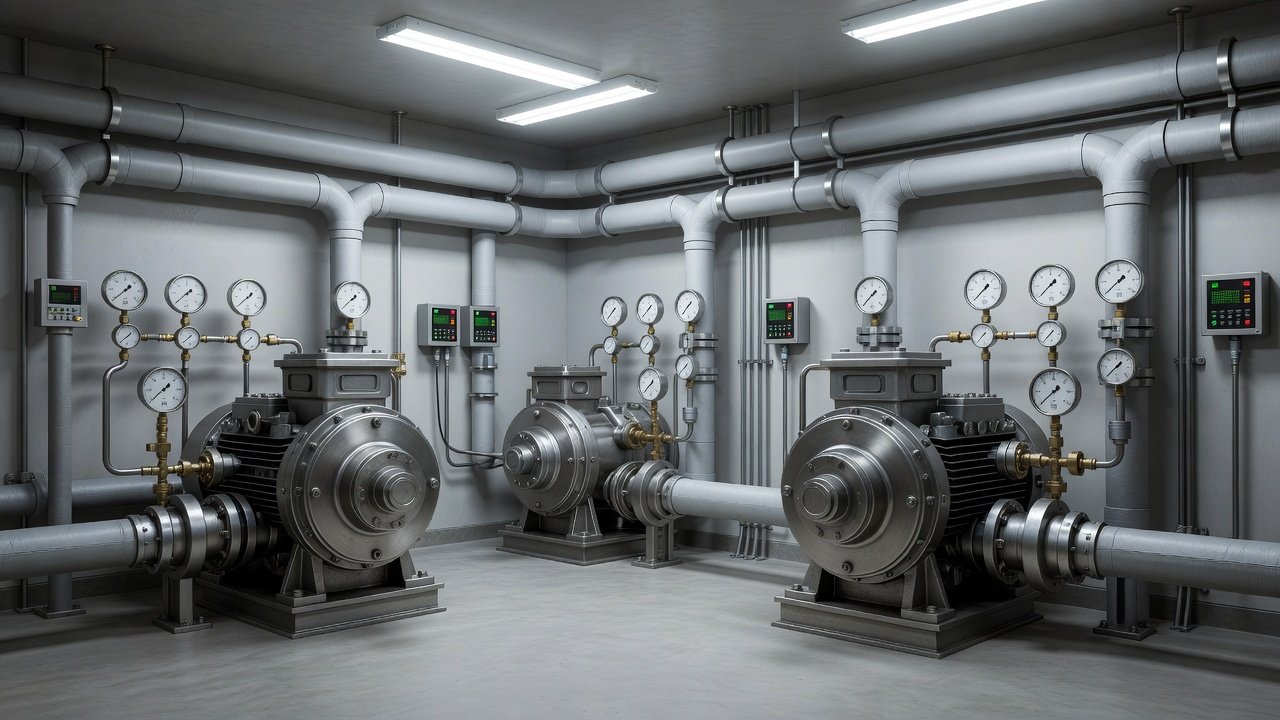
The assets that make the best first case share three properties: they are expensive to replace unexpectedly, their failure has clinical or compliance consequence, and their degradation is detectable before failure. Chillers, air handlers serving critical areas, medical air and vacuum systems, emergency power components, and large pumps and motors generally qualify. The established condition-monitoring techniques for these — infrared thermography, ultrasound testing, vibration analysis, and oil analysis — are the same ones ASHE’s own reliability-centred maintenance material has covered for years, which is useful when a committee asks whether this is speculative.
Selecting a first cohort also solves the measurement problem. A defined set of instrumented assets can be compared against a matched set that is not, and the second budget cycle’s request is then supported by the organization’s own data rather than by industry averages.
The FY2027 Timing Argument
There is a specific reason to make this request in this cycle rather than the next.
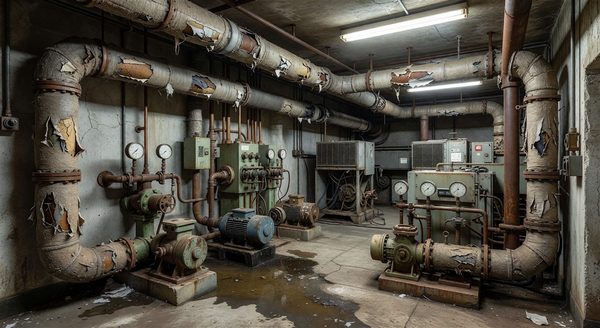
Capital budgets assembled without condition data default to age-based replacement schedules and to whatever was loudest last year. That produces two errors simultaneously — replacing assets that had years of service left, and missing assets that were about to fail — and both errors are invisible until they are expensive. Every cycle run that way also compounds the backlog, because the assets that should have been addressed are pushed while the ones that did not need addressing consume the available capital.
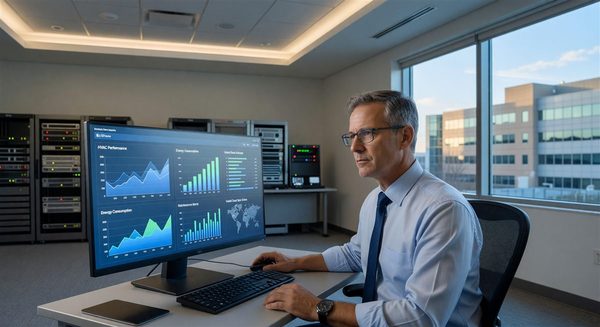
A facility director who arrives at the FY2027 cycle able to say which assets are degrading, at what rate, and what the failure cost profile looks like, is offering the capital committee something it demonstrably lacks. That is a much better position than arriving with a list of requests and a narrative.
What to Bring to the Meeting
Bring the square-footage-adjusted backlog exposure for your own facility, not the industry average. Bring the last three years of emergency capital replacements with their costs and whether each was foreseeable. Bring the proposed first cohort of assets with replacement values and the specific monitoring technique proposed for each. Bring the measurement plan — what will be compared, against what, and when the committee will see the result.
Leave out the vendor material. The case is about the organization’s own exposure and its own decision quality, and the moment it becomes a product evaluation it moves to a different meeting with a longer queue.
The department that becomes the source of the capital committee’s asset-condition information does not have to argue for its budget in the same way again. That, rather than any individual avoided failure, is what this cycle is worth.