Summer is peak construction season for healthcare facilities — lower census periods create the operational room for renovation work, and deferred maintenance projects held over winter frequently get scheduled for the warmer months. It’s also the season when HVAC trades are most likely to be actively on site, whether for planned upgrade work or the routine mechanical maintenance that accompanies peak cooling-load season. ASHE’s Infection Control Risk Assessment (ICRA) matrix is the industry-standard framework for managing infection-control risk during construction and renovation, and both Joint Commission standard IC.02.01.01 and CMS Conditions of Participation require documented infection-control protocols for construction and renovation projects — but the framework only protects patients if it’s actually applied with the rigor the risk level demands, not treated as a paperwork formality that happens after the real planning is already done.
What the ICRA Matrix Actually Does
The ICRA matrix is a structured decision framework that combines two inputs — the type of construction activity and the risk group of patients in the affected and adjacent areas — to determine a required precaution class, ranging from minimal precautions for low-risk activity in low-risk areas up to the most stringent barrier and containment requirements for major construction activity near the highest-risk patient populations (immunocompromised patients, for example). The framework’s value is that it forces an explicit, documented risk determination before work begins, rather than relying on a contractor’s general practice or a facility team’s informal judgment about what precautions seem reasonable.
Getting the risk-group determination right matters as much as getting the construction-type classification right — a moderate construction activity adjacent to a high-risk patient population can require the same stringent precautions as major construction, and misclassifying either input produces an ICRA permit that understates the actual risk.
Why HVAC Trade Work Specifically Elevates Risk
HVAC and mechanical trade activity carries infection-control risk profiles that differ from other construction categories in ways facility teams should plan for specifically:
- Duct and mechanical room work can disturb accumulated dust and debris directly into the air distribution system, with the potential to spread contamination well beyond the immediate work area if containment isn’t properly established before ductwork is opened.
- Work that requires taking an air handling unit offline, even temporarily, affects pressure relationships in every room served by that unit, not just the room where the physical work is happening — a facility team needs to map the full extent of affected spaces before approving an HVAC shutdown window, not just the room adjacent to the mechanical room.
- Filter changes and coil cleaning generate particulate that needs proper containment and disposal protocols, since this routine maintenance activity is sometimes treated as too minor to warrant the same ICRA rigor as major construction, even though it can generate a meaningful particulate release if not properly contained.
- Rooftop and exterior mechanical work can affect building pressure and outdoor-air intake conditions in ways that aren’t always obvious from inside the building, making it easy to underestimate the interior infection-control implications of exterior mechanical activity.
Building the ICRA Into the Project Timeline From the Start
The most common failure pattern in ICRA implementation isn’t a missing barrier or a contractor cutting corners — it’s an ICRA determination made too late in project planning, after scope and schedule are already locked, forcing infection prevention into a reactive role rather than a planning partner. A better sequence:
- Involve infection prevention in project scoping before construction documents are finalized, not after a contractor is already selected and mobilized, so that ICRA-driven requirements (containment barriers, negative air machines, scheduling around occupied adjacent spaces) can actually influence project design and budget rather than being bolted on afterward.
- Complete the ICRA risk-group and construction-type determination as a formal, documented step with infection-prevention sign-off, using the current ASHE matrix version, before any permit is issued to begin work.
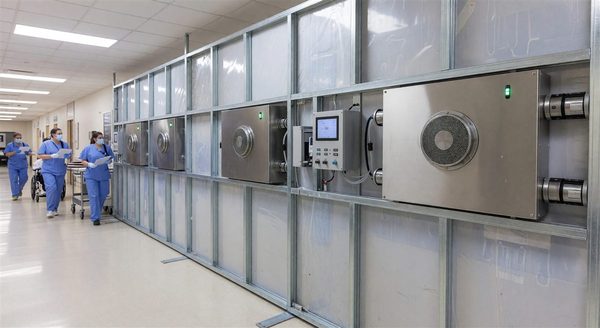
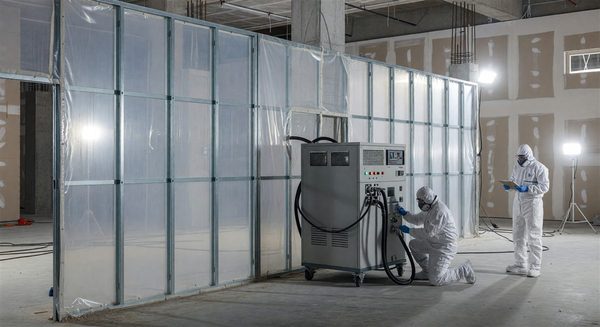
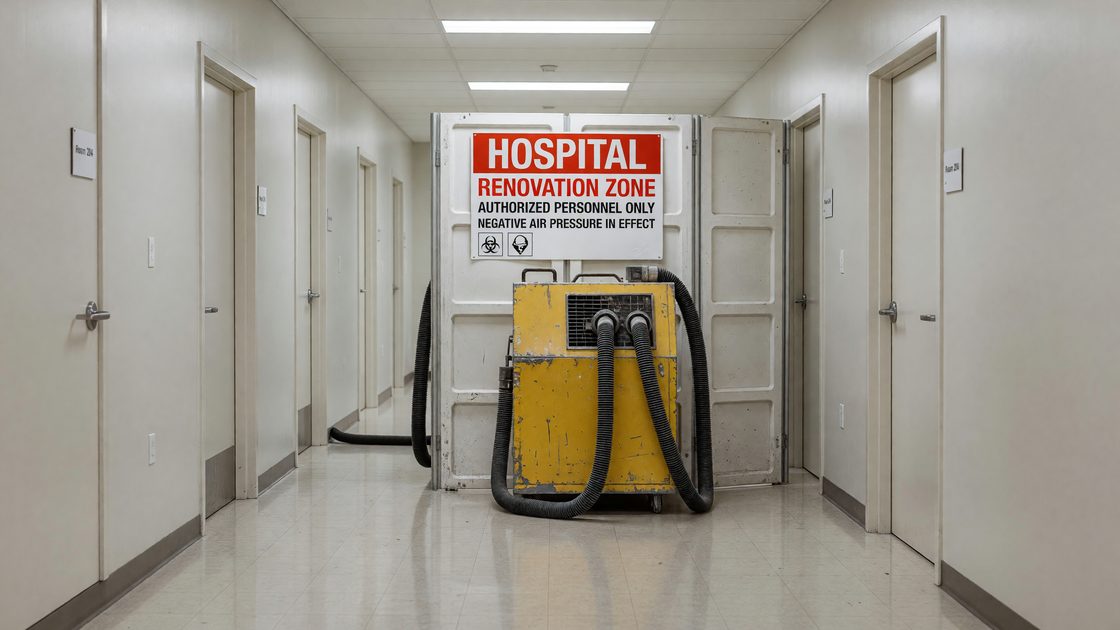
- Specify containment measures explicitly in the construction documents and contractor scope, not as a verbal expectation — negative air machine requirements, barrier construction standards (rigid versus poly), and daily cleaning protocols for the work zone should all be contractually specified.
- Establish a monitoring and verification protocol for the duration of the work, not just at project completion — differential pressure monitoring of the containment zone, visual inspection of barrier integrity, and a clear escalation path if containment is compromised mid-project.
- Plan HVAC shutdown windows around a full map of affected downstream spaces, coordinating with clinical departments served by the affected air handling unit well before the shutdown date, not as a last-minute notification.
Common Execution Gaps Even With a Documented ICRA in Place
Even when a facility has a properly completed ICRA permit, execution gaps commonly undermine the protection it’s supposed to provide:
- Barrier integrity degrading over the course of a multi-week project without regular re-inspection, particularly at floor-to-ceiling seals and around temporary doors that see repeated foot traffic.
- Negative air machines running but not properly verified — a facility team should periodically confirm actual negative pressure in the containment zone with a manometer or smoke test, not assume the machine is working correctly simply because it’s powered on.
- Contractor staff moving between the containment zone and clean areas without following the specified decontamination or PPE protocol, particularly as a project drags on and initial vigilance relaxes.
- Debris and waste removal routes that weren’t specified in advance, leading to contractors improvising a path that passes through occupied clinical areas rather than following a pre-designated route.
Don’t Skip the Close-Out: Reopening a Space Safely
The ICRA discipline that most often lapses is the close-out at the end of a project, when schedule pressure to return a space to clinical use is highest. Removing containment barriers is itself a dust-generating activity that needs to be done under controlled conditions rather than as a quick teardown, and the space should be terminally cleaned and, where relevant, have its ventilation and pressure relationships re-verified before it is handed back for patient care. A space that was contained perfectly throughout construction can still be reoccupied unsafely if the barrier comes down in a way that releases accumulated dust into a now-open clinical area.
A documented close-out step — barrier removal protocol, terminal cleaning sign-off, and confirmation that any affected air handling unit is back to its designed pressure relationship and airflow — closes the loop that an ICRA permit opens. Tying reoccupancy approval to infection-prevention sign-off, rather than to the contractor simply declaring the work finished, keeps the final and easily rushed stage of the project inside the same framework that governed its start.
Making ICRA a Standing Operational Discipline
Facilities that handle summer construction season well treat the ICRA process as a standing operational discipline with infection prevention as a genuine planning partner from the earliest project stages, rather than a compliance checkpoint inserted late in the process. Given that summer is both peak construction season and a period when HVAC trades are especially likely to be actively working across a facility, the mid-year window is a reasonable time for facility directors to confirm the ICRA process is functioning as designed — infection prevention involved early, containment specified explicitly in contracts, and verification happening throughout a project’s duration rather than only at its start and end.
Frequently Asked Questions
Does routine HVAC maintenance like filter changes need a full ICRA permit, or only major construction? The ICRA matrix applies based on both construction-type classification and patient risk-group in affected areas — routine maintenance that generates particulate (filter changes, coil cleaning) should still go through a risk determination, even if it lands in a lower precaution tier than major construction, rather than being treated as too minor to require one.
Who should determine the ICRA risk-group classification for a project? Infection prevention staff should be directly involved in and sign off on the risk-group determination, ideally before construction documents are finalized, rather than the classification being made unilaterally by facilities or construction management staff without infection-control input.
How do you verify a negative air machine is actually creating proper containment, not just running? Periodic verification with a manometer or smoke test to confirm actual negative pressure in the containment zone, rather than assuming a powered-on machine is functioning correctly — this verification should happen throughout the project’s duration, not only at setup.
What’s the biggest risk specific to HVAC trade work compared to other construction types? Work that takes an air handling unit offline or disturbs ductwork can affect pressure relationships and air quality in every room served by that unit, not just the immediate work area — mapping the full extent of affected downstream spaces before approving a shutdown window is a step that’s easy to underestimate.
When should infection prevention be brought into a construction or renovation project? As early as project scoping, before construction documents are finalized — bringing infection prevention in only after a contractor is selected and mobilized forces ICRA requirements into a reactive add-on role rather than allowing them to influence project design, schedule, and budget from the start.
Further Reading from Authoritative Sources
- ASHE — American Society for Health Care Engineering — the Infection Control Risk Assessment matrix and construction infection-control guidance for healthcare facilities.
- CDC — Environmental Infection Control Guidelines — infection-control guidance covering construction and renovation activity in healthcare settings.