Hospital utility systems — electrical distribution, HVAC, plumbing, medical gas, and steam — are not merely mechanical conveniences. They are patient care infrastructure. Regulatory frameworks from The Joint Commission, CMS, and NFPA recognize this reality and impose detailed compliance requirements for utility system management, testing, and documentation.
Facility directors must navigate overlapping requirements from multiple authorities, manage a comprehensive inspection and testing program, and maintain documentation sufficient to demonstrate compliance during surveys. This guide provides a structured overview of the utility management compliance landscape.
The Joint Commission Utility Systems Management Standards
Joint Commission standard EC.02.05.01 defines the core requirements for hospital utility management. Key elements include:
Written utility management plan: Hospitals must maintain a written plan that describes how utility systems are managed. The plan must address procedures for planned and unplanned outages, criteria for risk assessment of utility systems, and criteria for identifying inspection, testing, and maintenance intervals.
Utility systems inventory: The hospital must identify all operating components of utility systems on the inventory. The inventory is used to determine which systems require inspection and testing, and at what frequency.
Risk assessment for inspection intervals: The 2016 revision to EC.02.05.01 introduced flexibility — hospitals may use risk-based criteria (similar to Alternative Equipment Maintenance programs for medical equipment) to establish inspection and testing intervals, rather than defaulting strictly to manufacturer recommendations. This risk assessment must be documented.
Documentation: Inspection, testing, and maintenance of utility systems must be documented. Records must be maintained and available for Joint Commission survey review. Documentation should include what was tested, the results, who performed the test, and the date.
CMS Conditions of Participation
CMS Conditions of Participation (42 CFR Part 482) require hospitals to maintain their physical plant and facilities in safe operating condition. The Physical Environment CoP (482.41) requires:
- Buildings that are constructed, arranged, and maintained to ensure safety of patients
- Emergency power systems that comply with applicable NFPA standards
- Maintenance programs for all utility systems affecting patient care
CMS surveyors use state health departments as their survey agents; state surveyors may apply more stringent state requirements in addition to federal CoP requirements. Hospitals subject to both Joint Commission and CMS oversight must satisfy whichever standard is more stringent.
NFPA 99 Utility System Requirements
NFPA 99: Health Care Facilities Code defines technical standards for utility systems beyond medical gas systems:
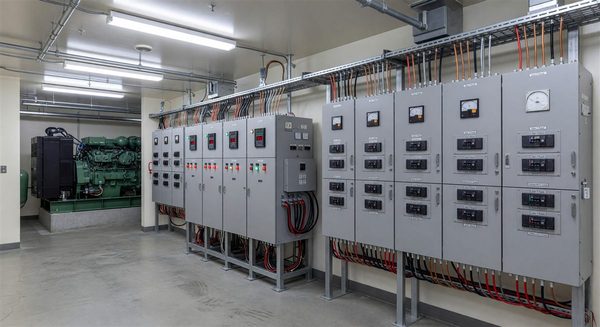
Emergency power: Chapter 6 of NFPA 99 governs essential electrical systems (EES), including transfer switch testing, generator load testing, and battery-backed lighting requirements. NFPA 99 requirements for EES are tied to the 2015 and later editions of NFPA 110 (Emergency and Standby Power Systems).
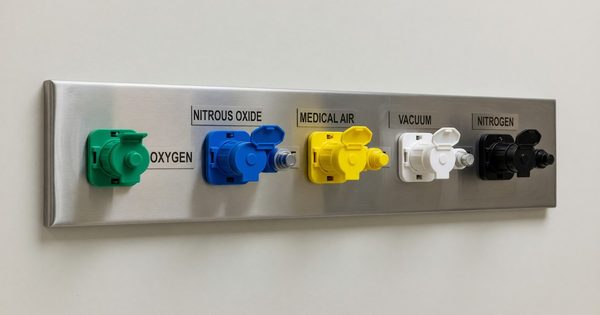
Medical gas and vacuum systems: As discussed in separate compliance guidance, NFPA 99 Chapter 5 governs medical gas system design, inspection, testing, and documentation under the risk-based categorization framework.
HVAC: NFPA 99 references ASHRAE 170 (Ventilation of Health Care Facilities) for HVAC design standards. Ventilation testing and balancing verification is required after construction and renovations affecting HVAC.
Electrical systems: Hospital electrical systems must comply with NFPA 70 (National Electrical Code) and NFPA 99 requirements for wet locations, patient care areas, and essential electrical system branch assignments.
Essential Electrical System (EES) Compliance
The essential electrical system is one of the most frequently cited utility compliance areas. NFPA 99 and NFPA 110 requirements include:
Monthly generator testing: Under load for at least 30 minutes, with written records of voltage, frequency, amperage, and battery state of charge at the start of the test.
Annual load bank testing: Transfer of load to generator with load bank testing if the generator does not reach 30% of nameplate rating during normal monthly testing. This prevents wet-stacking in diesel generators.
Transfer switch testing: Automatic transfer switches should be tested in conjunction with generator testing. Manual transfer switches require separate documented testing.
Life safety branch assignment: Critical systems must be on the correct EES branch (life safety, critical, or equipment branch) per NFPA 99 branch assignment requirements. Misassignment — placing non-essential loads on the life safety branch — is a recurring compliance issue.
30-second transfer requirement: NFPA 99 requires that the life safety branch restore power within 10 seconds of normal power failure. The critical branch must transfer within the first 30 seconds.
Preventive Maintenance Documentation
The Joint Commission and CMS both require that preventive maintenance (PM) be performed and documented. Best practices for utility PM documentation:
- Use a CMMS (Computerized Maintenance Management System) to schedule, assign, and document PM activities
- Link PM tasks to the utility systems inventory with documented inspection intervals and the rationale for those intervals
- Capture inspection results, including pass/fail status and corrective actions taken
- Maintain PM records for a minimum of 3 years or as required by state regulations
- Ensure contractor-performed PM activities are documented and retained in the same system
During Joint Commission surveys, surveyors frequently request PM records for life safety and utility systems. Incomplete or absent records for critical systems like fire pump testing, generator testing, and medical gas inspections are among the most common EC deficiency categories.
Building a Defensible Utility Management Program
Facility directors building or improving utility compliance programs should:
- Conduct a comprehensive inventory of all utility systems using the Joint Commission’s categories as a guide
- Document risk assessment for inspection and testing intervals — either using manufacturer’s recommendations or a documented risk-based alternative
- Implement a CMMS with PM schedules that align with regulatory requirements
- Create outage response procedures for each critical utility system type
- Conduct annual self-assessment against EC.02.05.01 using the Joint Commission’s assessment tools
- Train staff on emergency response to utility failures, including locations of shutoffs, transfer switch operations, and communication protocols
Frequently Asked Questions
What is the difference between a utility system and medical equipment for compliance purposes? For Joint Commission purposes, utility systems are fixed building systems — electrical, HVAC, plumbing, medical gas, and steam. Medical equipment is portable or mounted clinical devices. Each category has different compliance standards: EC.02.05 covers utility systems, EC.02.04 covers medical equipment. Some systems (like built-in sterilizers) may straddle both categories.
Can hospitals use risk-based intervals instead of manufacturer’s PM recommendations? Yes, as of the 2016 Joint Commission standards update. EC.02.05.01 allows risk-based criteria for establishing inspection and testing intervals for utility systems, similar to the Alternative Equipment Maintenance program for medical equipment. The risk assessment and resulting intervals must be documented.
What utility failures trigger a Joint Commission sentinel event report? An unexpected death or serious harm resulting from a utility system failure may qualify as a sentinel event requiring review and root cause analysis. Utility outages that do not result in patient harm are not typically reportable as sentinel events, but they must be analyzed internally to prevent recurrence.
How long must utility maintenance records be kept? The Joint Commission requires records to be available at the time of survey. CMS requires records sufficient to demonstrate ongoing compliance. Most state regulations require utility maintenance records for a minimum of 3 years; some require longer. Facilities should retain records for the longest applicable period.