Temperature and humidity in healthcare facilities are not simply matters of comfort — they are patient safety requirements with direct clinical implications. Improper temperature in an operating room affects infection control. Inadequate temperature control in a sterile storage area compromises package integrity. Temperature extremes in patient rooms affect vulnerable populations — neonates, elderly patients, and immunocompromised individuals who cannot self-regulate or self-advocate.
Facility directors are responsible for maintaining the thermal environment within regulatory limits across dozens of distinct clinical space types, each with different requirements defined by ASHRAE 170, FGI Guidelines, CMS, and Joint Commission standards.
ASHRAE 170: The Primary Technical Standard
ASHRAE Standard 170 (Ventilation of Health Care Facilities) is the definitive technical standard for temperature, humidity, and ventilation in healthcare buildings. ASHRAE 170 is adopted by reference in FGI Guidelines and referenced by The Joint Commission’s EC standards. It defines required conditions for each functional space type:
Operating Rooms: 68-75°F (20-24°C), 20-60% relative humidity. The temperature range is clinically driven — patients under anesthesia are highly susceptible to hypothermia, but excessive heat increases infection risk and staff fatigue. OR temperature control must be responsive and precise.
Recovery Rooms (PACU): 70-75°F (21-24°C). Post-anesthesia patients frequently experience shivering and temperature dysregulation; the recovery room environment must support rewarming.
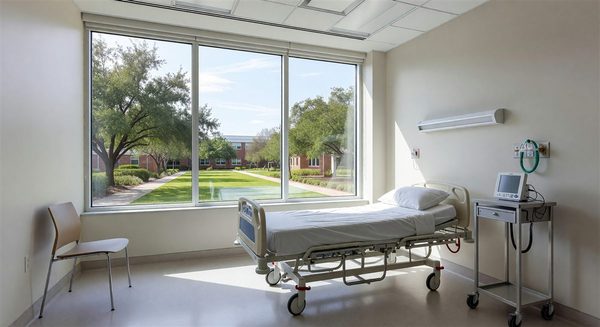
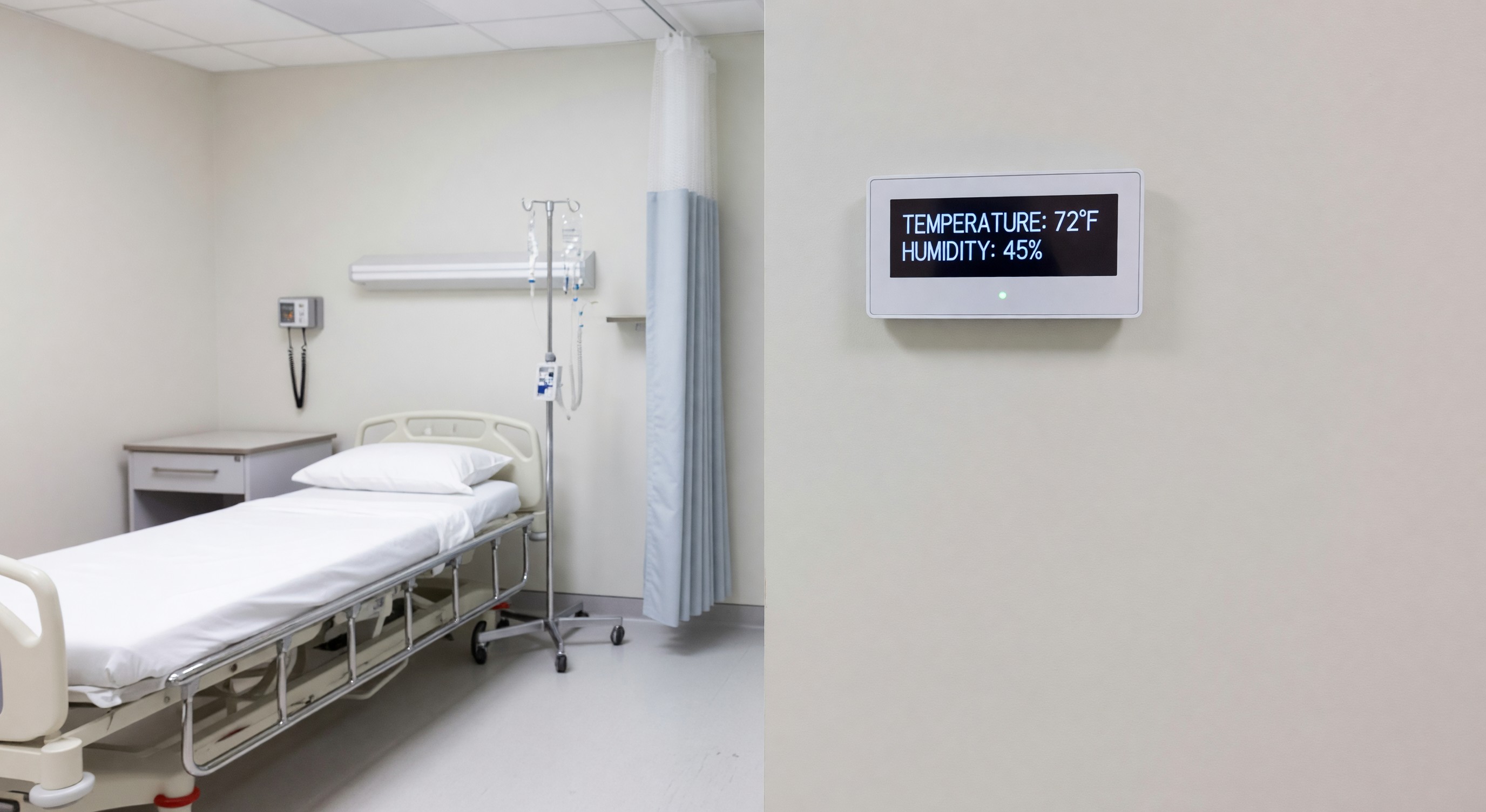
Patient Rooms: 70-75°F (21-24°C). Adjustable within a clinical range — ASHRAE 170 allows patient rooms to have user-adjustable controls within a defined band, supporting patient autonomy while maintaining clinical requirements.
Newborn Intensive Care (NICU): 72-78°F (22-26°C). Neonates have extremely limited thermoregulatory capacity; the NICU thermal environment is tightly controlled.
Sterile Processing/Decontamination: 60-65°F (16-18°C) for decontamination areas. Lower temperatures reduce bacterial growth during the decontamination process.
Sterile Storage: 75°F (24°C) maximum with 30-60% relative humidity. Conditions outside this range affect sterile package integrity.
Pharmacy: 68-75°F (20-24°C). Pharmaceutical storage requirements may mandate tighter temperature control in specific areas.
CMS Conditions of Participation and Patient Rights
CMS Conditions of Participation require hospitals to maintain a safe physical environment for patients. The Patient Rights CoP (42 CFR 482.13) includes the right to a safe environment, which CMS surveyors have interpreted to include reasonable temperature conditions.
While CMS does not specify a numerical temperature range in the CoP, surveyors cite temperature-related deficiencies when patient complaints or observed conditions indicate the thermal environment is outside a reasonable range. Extremes — patients shivering in inadequately heated rooms in winter, or patients in sweltering conditions during HVAC failures — can result in CoP citations.
Joint Commission Environment of Care Standards
Joint Commission EC.02.05.01 requires hospitals to manage utility systems including HVAC systems that maintain the required environment for patient care. This includes:
- Written policies and procedures for HVAC system management
- PM programs for HVAC equipment with documented inspection intervals
- Documented response procedures for HVAC failures that affect patient care areas
- Staff training on responding to thermal environment emergencies
EC.02.05.07 specifically addresses utility system failures, requiring documented procedures for managing the environment when utilities fail. This includes temperature management during HVAC system outages — a scenario that must be planned, not improvised.
Temperature Monitoring and Documentation
Regulatory compliance requires more than maintaining temperature — it requires demonstrating that temperature is monitored and maintained:
BAS-integrated monitoring: Building automation systems continuously monitor space temperatures against setpoints and generate alerts when temperatures drift outside acceptable ranges. BAS historical data provides documentation of temperature compliance and is reviewed during Joint Commission surveys and CMS inspections.
Manual monitoring logs: In areas not covered by BAS sensors, manual temperature logs document conditions. Sterile storage areas, medication refrigerators, and areas with patient-critical temperature requirements may require manual daily documentation.
Alarm thresholds and response times: Temperature alarm thresholds should be set within the ASHRAE 170 limits, with documented response procedures specifying who is notified, what immediate actions are taken, and how affected patients are managed if temperature cannot be restored promptly.
Managing Temperature During HVAC Failures
HVAC system failures inevitably occur. The facility’s response plan must address:
Immediate patient impact assessment: Which clinical areas are affected? What is the current temperature and the trajectory? Which patient populations are at highest risk?
Temporary conditioning options: Portable cooling units, supplemental fans, or space heaters can maintain acceptable conditions for limited periods. OR operations should be evaluated against temperature and humidity requirements before proceeding with procedures.
Patient relocation criteria: At what temperature deviation does patient relocation become necessary? This threshold should be defined in policy and coordinated with nursing leadership.
OR downtime criteria: Operating rooms have the most sensitive thermal requirements. Define the temperature and humidity deviation thresholds at which elective procedures are postponed and what alternative arrangements are used for urgent cases.
HVAC repair prioritization: OR HVAC, NICU, and neonatal care areas should be prioritized for rapid repair over administrative areas. The priority sequence should be documented in the HVAC emergency response plan.
Humidity Compliance
ASHRAE 170 specifies both temperature and relative humidity requirements for clinical spaces. Humidity compliance is often more challenging than temperature:
OR humidity (20-60%): Low humidity increases static electricity risk and can desiccate tissues; high humidity promotes microbial growth. Humidity control requires properly functioning HVAC humidification and dehumidification systems.
Condensation prevention: Humidity too high relative to surface temperature causes condensation on cold surfaces — a significant infection control concern in clinical areas. Envelope and HVAC commissioning should verify that surface condensation does not occur under design conditions.
Monitoring: Humidity monitoring in critical areas (OR, NICU, sterile storage) should be continuous, with alarms and documentation requirements matching temperature monitoring.
Frequently Asked Questions
What temperature is required in hospital patient rooms? ASHRAE 170 specifies 70-75°F (21-24°C) for patient rooms. Patient-adjustable thermostats within a controlled range support patient autonomy. Some facilities allow a wider patient-adjustable range (68-78°F) in non-critical patient rooms while maintaining tighter limits in clinical procedure areas.
Who is responsible for temperature compliance — facilities or nursing? Facilities is responsible for the HVAC infrastructure and monitoring systems that maintain room temperature within required ranges. Nursing is responsible for identifying and reporting when rooms are out of range and for managing immediate patient care needs during temperature deviation events. Both are accountable — facilities for the system, nursing for the patient response.
What happens during a Joint Commission survey if temperature logs show deviations? Documented deviations from required temperature ranges that were identified, investigated, and corrected demonstrate an effective monitoring system. Surveyors look for evidence that the facility actively monitors temperatures, responds to deviations, and investigates root causes. Persistent deviations or absence of monitoring documentation are more concerning to surveyors than occasional deviations with documented response.
Are there specific temperature requirements for different medications stored in patient care areas? Yes. Pharmaceutical temperature storage requirements are defined by USP (United States Pharmacopeia) and manufacturer specifications. Controlled temperature ranges (refrigerator: 36-46°F; room temperature: 59-77°F) apply to medication storage in patient care areas. Pharmacy and nursing are responsible for medication storage temperature compliance; facilities provides the infrastructure (refrigerators, climate-controlled rooms) to meet these requirements.