Patient elopement — when a patient leaves a clinical setting without authorization, placing themselves at risk — is a significant patient safety event and a recurring focus of Joint Commission and CMS regulatory attention. Elopement risk is highest in behavioral health units, dementia care settings, and pediatric units, but it can occur anywhere in an acute care facility.
Facility directors play a central role in elopement prevention. While clinical protocols and staff training are essential, the physical environment — door hardware, alarm systems, egress design, and monitoring technology — provides the foundational layer of protection.
Regulatory Framework
Joint Commission: Elopement is classified as a sentinel event under the Joint Commission’s sentinel event policy when a patient elopes and suffers serious harm or death as a result. Facilities must conduct a thorough systems-based root cause analysis (RCA) and implement a corrective action plan following any sentinel event. Elopement risk assessment and prevention measures are evaluated under EC.02.01.01 (security risk assessment) and NPSG.15.01.01 (suicide risk reduction, which encompasses elopement risk in behavioral health settings).
CMS: CMS Conditions of Participation require hospitals to protect patients from harm. CMS surveyors view repeated elopement incidents without evidence of corrective action as evidence of a systemic patient safety failure. For behavioral health and dementia units, CMS has specific expectations around environmental safeguards and observation policies.
State regulations: Many states have specific elopement prevention requirements for psychiatric hospitals, long-term care facilities, and memory care units. These requirements vary significantly and may be more stringent than federal standards.
Risk Assessment and Population-Specific Considerations
Elopement risk varies significantly by patient population:
Behavioral health: Patients admitted involuntarily or in acute psychiatric crisis may attempt to leave against medical advice or without authorization. Risk assessment tools (validated scales like the AWOL tool) help identify high-risk patients at admission and ongoing reassessment.
Dementia and cognitive impairment: Patients with dementia in medical/surgical or geriatric units may wander and attempt to exit. Environmental design modifications — concealed door handles, delayed egress systems, and visual camouflage of exit doors — are evidence-based interventions for this population.
Pediatric: Children may attempt to leave due to fear or distress; adolescents in behavioral health settings may attempt purposeful elopement. Wander management RFID technology is widely deployed in pediatric and NICU settings to prevent infant abduction and child elopement.
Physical Environment Interventions
Access Control at Exit Points
Exit doors in high-risk units should be equipped with:
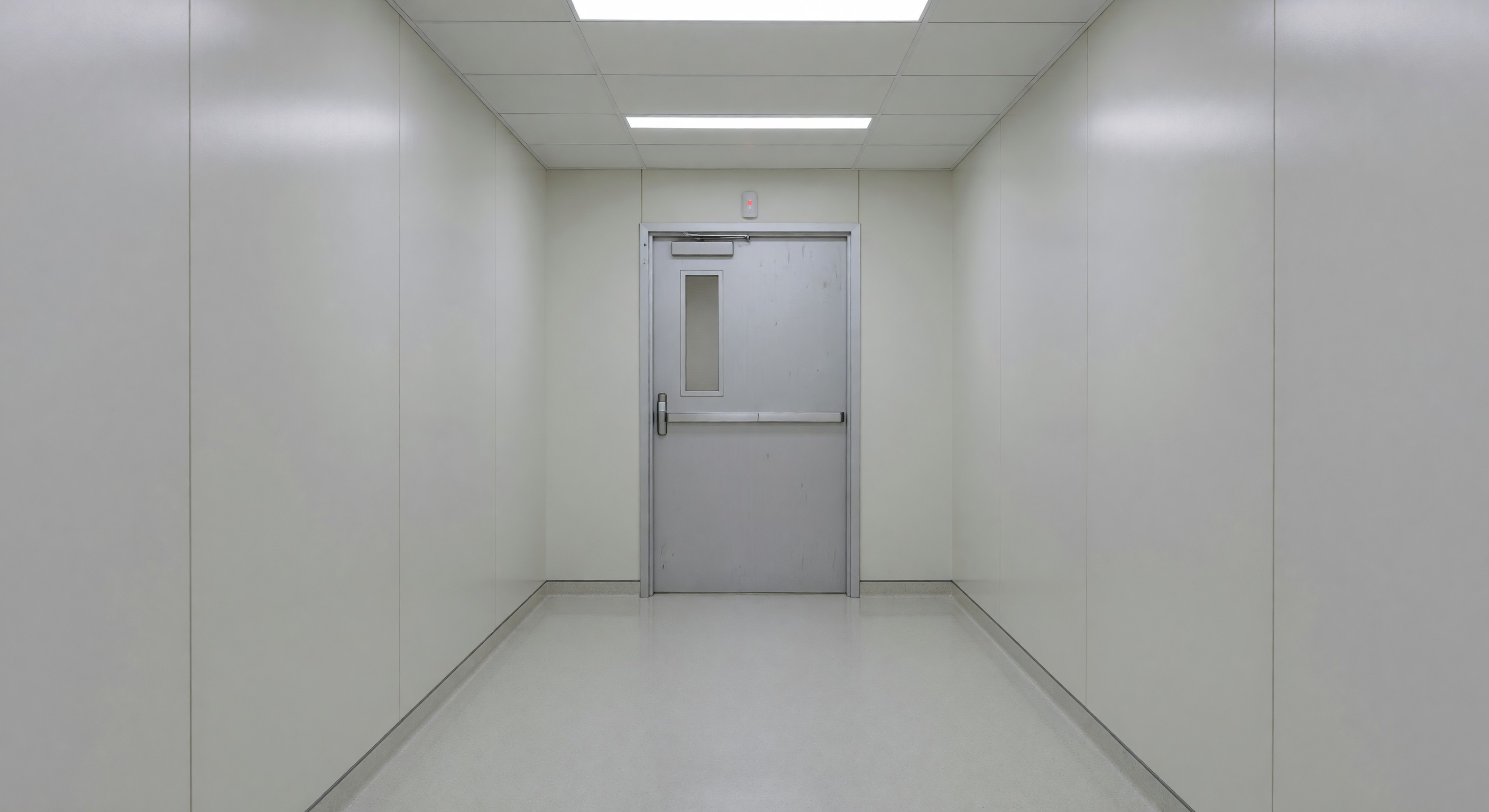
- Delayed egress hardware: Per NFPA 101 Section 7.2.1.6, delayed egress locks may be used in specific healthcare occupancy classifications. These locks delay egress by 15-30 seconds and trigger an alarm, allowing staff to intervene before a patient can exit.
- Alarmed doors: Door alarms that alert staff immediately when an exit is opened without authorization. These can be standalone alarms or integrated with the nurse call system.
- Access-controlled vestibules: Requiring badge or keypad access to exit certain units creates a second layer of containment.
Wander Management Technology
RTLS-based wander management systems use patient wristbands or anklets with RFID or infrared tags. When a tagged patient approaches a protected exit:
- An alarm sounds at the door and at the nursing station
- The egress door may be locked automatically (depending on system configuration and local fire code approval)
- Staff receive an alert identifying the patient and their location
These systems are widely deployed in memory care, behavioral health, and pediatric settings. NFPA 101 permits egress locking systems under specific conditions for healthcare occupancies where staff can provide immediate assistance.
Environmental Design
For dementia care settings, environmental design strategies reduce wandering toward exits:
- Visual camouflage of exit doors: Painting exit doors the same color as adjacent walls, or placing mirrors or murals over door panels, reduces visual recognition of exits
- Enclosed courtyards: Secure outdoor spaces allow patients to ambulate without elopement risk — a significant quality-of-life benefit
- Reduced signage near exits: Limiting “Exit” signage visible from patient areas while maintaining code-compliant emergency egress markings
Staff Response Protocols
Physical interventions are supported by documented staff response protocols:
- Real-time elopement response plan: Step-by-step procedure for unit staff when a patient is found missing, including immediate search of the unit, notification of security and charge nurse, facility-wide alert, and contact with law enforcement if the patient is not found within a defined timeframe
- High-risk patient management: Enhanced observation requirements, proximity checks, and documentation for patients identified as high elopement risk
- Handoff communication: Elopement risk status must be communicated at every care handoff — shift change, transfer to another unit, transport to procedures
Documentation and Performance Improvement
Elopement events — including near-misses — should be documented in the incident reporting system. Systematic analysis of elopement events drives facility-level improvements:
- Root cause analysis of all actual elopements (required if sentinel event criteria are met)
- Aggregate review of near-misses to identify environmental or process vulnerabilities
- Annual review of elopement risk assessment tools for currency and accuracy
- Environmental rounds focused on egress hardware functionality, alarm testing, and wander management system performance
Frequently Asked Questions
Is elopement from a medical/surgical unit a Joint Commission sentinel event? Elopement qualifies as a sentinel event when it results in serious harm or death to the patient. Elopement without harm is not automatically a sentinel event, but should trigger internal review. Facilities with repeated elopements may face scrutiny even in the absence of a formal sentinel event finding.
Are delayed egress locks permitted in all hospital units? NFPA 101 permits delayed egress locks in healthcare occupancies under specific conditions, including that staff can provide immediate assistance (within the 15-30 second delay). Not all units qualify. The local authority having jurisdiction (AHJ) must approve the use of delayed egress hardware in any specific application. Consult your fire marshal and life safety consultant before installation.
Do wander management systems require fire code review? Yes. Any system that automatically locks an egress door in response to a patient’s presence requires AHJ approval and must be designed to fail-safe in a fire alarm condition (doors automatically release when the fire alarm activates). Wander management system installations should always be reviewed by the fire marshal and the facility’s life safety consultant.
What is the facility director’s role versus the clinical team’s role in elopement prevention? The facility director is responsible for the physical environment — exit hardware, alarm systems, wander management infrastructure, and environmental design. The clinical team is responsible for patient risk assessment, observation protocols, and response procedures. Effective elopement prevention requires both to work together through the Environment of Care committee.