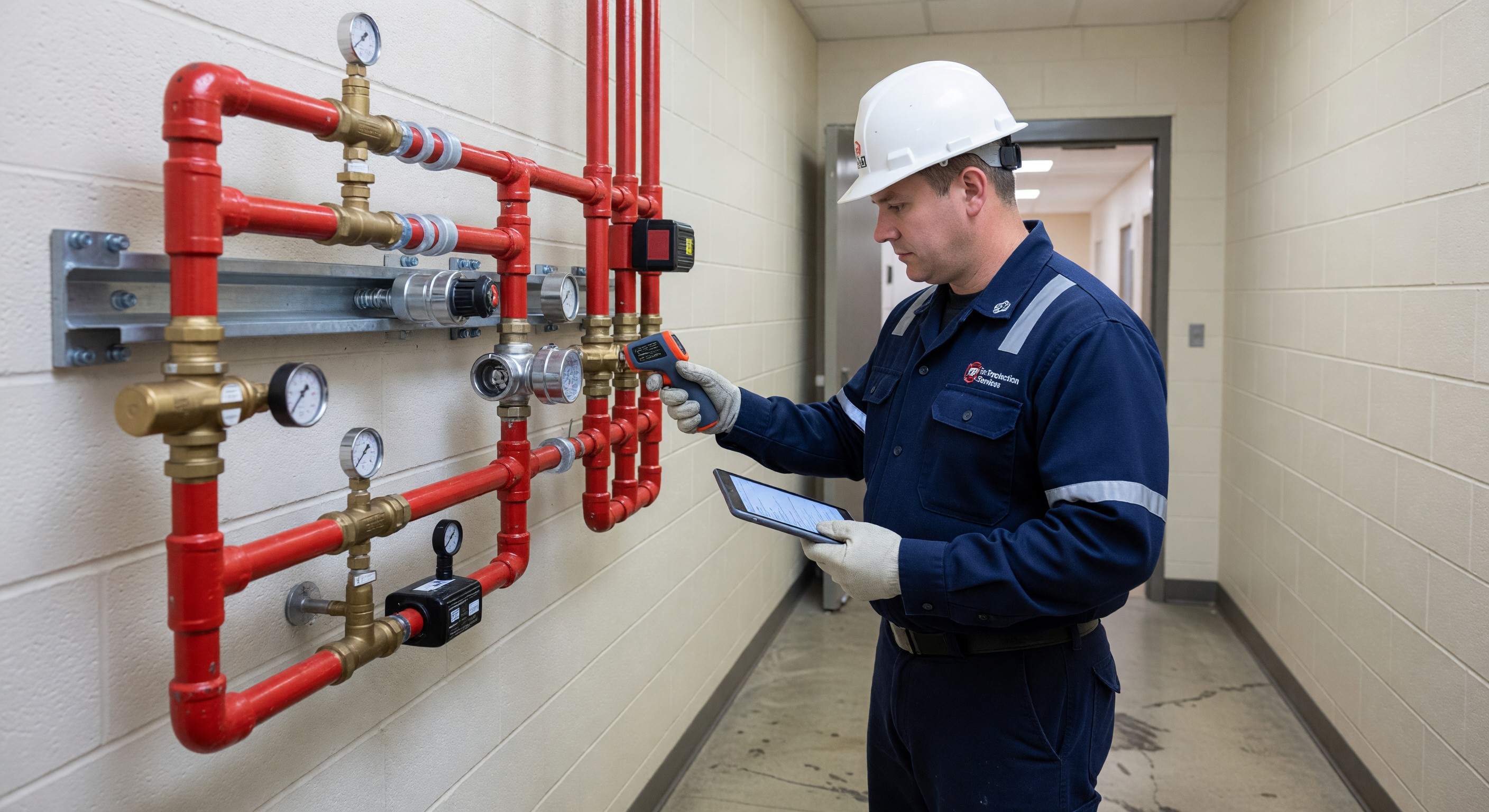
NFPA 25, the Standard for the Inspection, Testing and Maintenance of Water-Based Fire Protection Systems, governs how healthcare facilities must maintain their sprinkler systems, standpipes, fire pumps, and related water-based suppression equipment. The standard establishes specific frequencies, procedures, and documentation requirements that healthcare facility directors must implement and maintain.
Compliance with NFPA 25 is not optional for healthcare facilities—The Joint Commission references it in EC.02.03.05, CMS references it through the Life Safety Code incorporation in Conditions of Participation, and state health facility licensing programs reference it in fire protection requirements. Gaps in NFPA 25 compliance are among the most consistently cited findings during healthcare accreditation surveys.
NFPA 25 Inspection Schedule Overview
The complete NFPA 25 inspection, testing, and maintenance schedule spans multiple frequency levels:
Weekly
- Gauges on wet pipe systems: Verify pressure readings are normal
- Control valves: Verify all control valves are in the open position (physically observed and logged)
Monthly
- Waterflow alarm devices: Test and verify alarm activation
- Supervisory signal devices: Verify tamper switches are functional on all control valves
- Gauges on dry, pre-action, and deluge systems
Quarterly
- Control valve inspections (internal): Confirm open position, proper sealing, accessibility
- Waterflow alarm test with timing verification
- Anti-freeze loop testing (where installed)
Annual
- Full sprinkler head inspection (visible inspection of all accessible heads for corrosion, paint, loading, physical damage, improper orientation)
- Main drain test: Full-flow open, measure static and residual pressure, compare to baseline
- Fire pump annual test: Verify rated capacity at rated pressure
- Backflow preventer inspection
- Hydraulic nameplate verification
Five-Year
- Internal pipe inspection for obstruction evidence (minimum sample locations per NFPA 25 procedures)
- Dry pipe system: Internal inspection for corrosion, foreign material
- Sprinkler head sample testing (for heads 50+ years old)
Twenty-Year
- Fire pump impeller and wearing rings inspection
Documentation Requirements
NFPA 25 requires documentation that is detailed enough to allow comparison of current condition to prior inspections and to demonstrate a consistent inspection program. Required documentation includes:
Inspection Reports Each inspection must produce a written report that includes: date of inspection, inspector name and credentials, systems inspected, findings (pass/fail for each inspection item), and deficiencies noted. Reports must be retained by the property owner.
Test Records Waterflow alarm tests, main drain tests, and fire pump tests must be documented with specific data: flow rates, pressures, timing measurements, and comparison to prior test results and acceptance criteria.
Impairment Records When systems are taken out of service for maintenance, testing, or repair, impairment records must document: date and time of impairment start and end, system(s) affected, reason for impairment, compensatory measures implemented, and notification of parties required to be notified (fire department, insurance carrier, occupants).
Contractor Qualifications The licensed contractor conducting ITM services must provide documentation of their state contractor license, and qualified personnel must be used for all testing and inspection activities.
Common NFPA 25 Deficiencies in Healthcare
Sprinkler Head Deficiencies Sprinkler head deficiencies are the most frequently identified NFPA 25 compliance issues in healthcare inspections:
- Paint overspray (from painting activities that didn’t protect sprinkler heads)
- Dust accumulation that may affect head sensitivity
- Corrosion on heads in high-humidity environments (kitchen, mechanical spaces, outdoor areas)
- Physical damage from equipment contact
- Missing escutcheon plates that leave gaps in the ceiling membrane
- Improperly oriented heads (pendent heads installed upright, or vice versa)
Storage Clearance Violations NFPA 25 and NFPA 13 require 18 inches of clearance below sprinkler heads for unobstructed discharge. Storage in utility areas, supply rooms, and mechanical spaces that grows over time frequently violates this clearance requirement. Regular inspection of storage areas for clearance compliance is a fundamental facilities maintenance responsibility.
Control Valve Documentation Gaps Control valves must be inspected weekly and any valves not in the fully open position must be immediately investigated and corrected. Documentation gaps—missed weeks, incomplete records—are frequently cited findings. Automated supervisory alarm monitoring that alerts when valves are moved from the open position helps ensure prompt detection and correction.
Dry System Deficiencies Dry pipe systems (used in unheated spaces, parking structures, outside areas) require specific maintenance:
- Air pressure must be maintained within specified range
- Water in the system from prior operations must be fully drained to prevent ice formation in cold climates
- The dry pipe valve must be maintained and tested annually
- Trip test must be performed annually (for systems not in cold-weather environments where tripping would cause freezing)
Joint Commission Survey Implications
NFPA 25 compliance is a focused area of Joint Commission Environment of Care surveys. Surveyors may:
- Request ITM records for the past 12–36 months
- Review impairment documentation for any systems taken out of service
- Physically inspect sprinkler heads for common deficiencies (paint, corrosion, clearance)
- Review waterflow alarm test records and main drain test records with pressure data
- Verify that any prior findings have been corrected and re-inspected
Healthcare facilities that maintain organized, complete NFPA 25 records and conduct proactive internal inspections to identify deficiencies before surveys are significantly better positioned during Joint Commission review of fire protection compliance.
Frequently Asked Questions
Does NFPA 25 require the same testing contractor to perform all services, or can different contractors perform different activities? NFPA 25 requires that qualified, licensed contractors perform required ITM activities, but doesn’t require a single contractor. Different licensed contractors can perform different activities (annual inspection, fire pump test, backflow preventer inspection). Healthcare facilities should document the qualifications of each contractor performing NFPA 25 services as part of their compliance record.
What’s the required response time when a sprinkler head deficiency is identified? NFPA 25 requires that deficiencies be corrected. Deficiencies that compromise system function (clogged or impaired heads, damaged components that could affect operation) should be treated as impairments requiring immediate corrective action and compensatory measures. Cosmetic deficiencies (minor corrosion, dust accumulation) that don’t affect function should be documented and corrected on a scheduled basis.
Can healthcare facilities perform their own NFPA 25 inspections, or do they require outside contractors? Many NFPA 25 inspection activities can be performed by qualified in-house personnel who meet the competency requirements described in NFPA 25 Chapter 4. In-house inspection is common for weekly and monthly activities (control valve observation, gauge checks). Annual and five-year inspection activities often involve outside licensed contractors who have the specialized equipment and documentation systems required for comprehensive compliance. Healthcare facilities should verify their state licensing requirements, as some states require licensed contractor involvement for certain inspection activities.
How should healthcare facilities handle a situation where the annual sprinkler inspection identifies significant deficiencies affecting multiple heads or sections? Significant deficiencies affecting system integrity should be treated as impairment conditions—implement required compensatory measures (increased security rounds, smoke detection enhancement, notification of occupants in affected areas) immediately. Develop a corrective action plan with a defined timeline for repair, and have repairs completed and re-inspected before closing the impairment. Document all actions taken from deficiency identification through verified correction.