NFPA 101, the Life Safety Code, is one of the most consequential regulatory documents in healthcare facility management. It governs the design and maintenance of buildings to protect occupants from fire and related emergencies — and in healthcare, where patients may be non-ambulatory, sedated, connected to life-sustaining equipment, or otherwise unable to self-evacuate, the requirements are among the most stringent of any occupancy type.
Both The Joint Commission and CMS reference NFPA 101 in their accreditation and compliance frameworks. For healthcare facility directors, working knowledge of NFPA 101’s healthcare occupancy chapter is not optional.
Healthcare Occupancy Classification
NFPA 101 Chapter 18 (new healthcare occupancies) and Chapter 19 (existing healthcare occupancies) apply to facilities that provide sleeping accommodations for inpatients and provide care for four or more patients who are incapable of self-preservation. This classification applies to:
- Acute care hospitals
- Critical access hospitals
- Long-term acute care hospitals
- Inpatient rehabilitation facilities
Ambulatory care facilities, outpatient clinics, and medical office buildings are classified differently (ambulatory health care occupancy in Chapter 20/21) with somewhat less stringent requirements reflecting the ambulatory patient population.
Construction Requirements
NFPA 101 requires that healthcare occupancies be constructed of specific construction types based on the number of stories in the building:
New healthcare occupancies above two stories must be constructed to Type I or Type II construction (noncombustible or limited-combustible construction). This means structural steel, concrete, or masonry — not wood frame construction.
Existing healthcare occupancies built under earlier codes may have grandfathered construction that would not meet new construction requirements. However, renovation or addition work triggers current-standard compliance in the affected areas.
Sprinkler requirements — All new healthcare occupancies must be fully sprinklered. Existing unsprinklered healthcare occupancies above a single story must complete sprinkler installation. CMS has established deadlines for existing unsprinklered compliance.
Smoke Compartments: The Core Strategy
The NFPA 101 strategy for protecting patients who cannot self-evacuate is “defend in place” — rather than total evacuation (which is impractical for ICU or surgical patients), the building is divided into smoke compartments that can contain a fire and its products while patients remain in place or are moved horizontally to an adjacent smoke compartment.
Smoke compartment size is limited to 22,500 square feet per compartment in new healthcare occupancies (40,000 square feet for existing), ensuring that no compartment is too large to defend.
Smoke barrier requirements — Walls forming smoke compartment boundaries must:
- Extend from floor to the underside of the structural deck above (not just to a dropped ceiling)
- Have a minimum 1-hour fire resistance rating
- Contain only permitted openings (doors, penetrations with approved fire-stops)
- Be maintained as continuous barriers (no unauthorized penetrations)
Smoke barrier doors — Doors in smoke barrier walls must:
- Be minimum 1 3/4-inch thick solid-bonded wood core or equivalent
- Have automatic self-closing or automatic closing upon smoke detection
- Latch upon closure (the door must actually engage the latch, not just touch the frame)
- Not be propped open unless held open by an automatic closing device tied to the fire alarm system
Surveyor identification of propped or non-latching smoke barrier doors is extremely common. Enforce a no-propping policy consistently and train staff on its importance.
Means of Egress Requirements
NFPA 101 requires that healthcare occupancies maintain adequate, unobstructed, clearly marked egress routes:
Corridor width — Minimum 8 feet in corridors serving as the primary means of egress in new healthcare occupancies. Existing occupancies must maintain minimum widths per the code edition under which they were built (typically 6–8 feet).
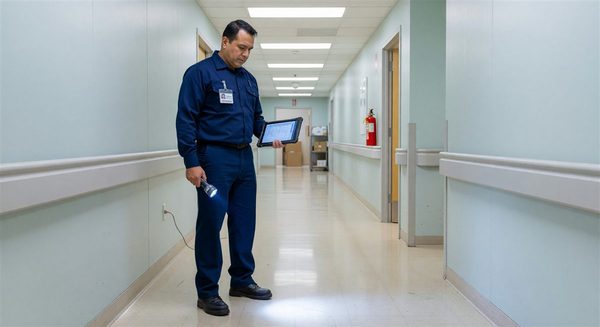
Corridor clearance — Corridors used for egress must be kept clear. NFPA 101 does allow temporary placement of equipment in corridors under specific conditions (the “temporary” provisions), but these are strictly defined:
- Items in use must be attended or in immediate use
- Medical emergency equipment (crash carts) may be parked in corridors
- IV poles, wheelchairs, and equipment actively in use with specific patients may be in corridors
The common citation — Storage in corridors is one of the most frequently cited life safety deficiencies. Linen carts, soiled utility carts, supply carts, and equipment parked in corridors between uses are commonly found violations. A culture of corridor cleanliness must be actively maintained.
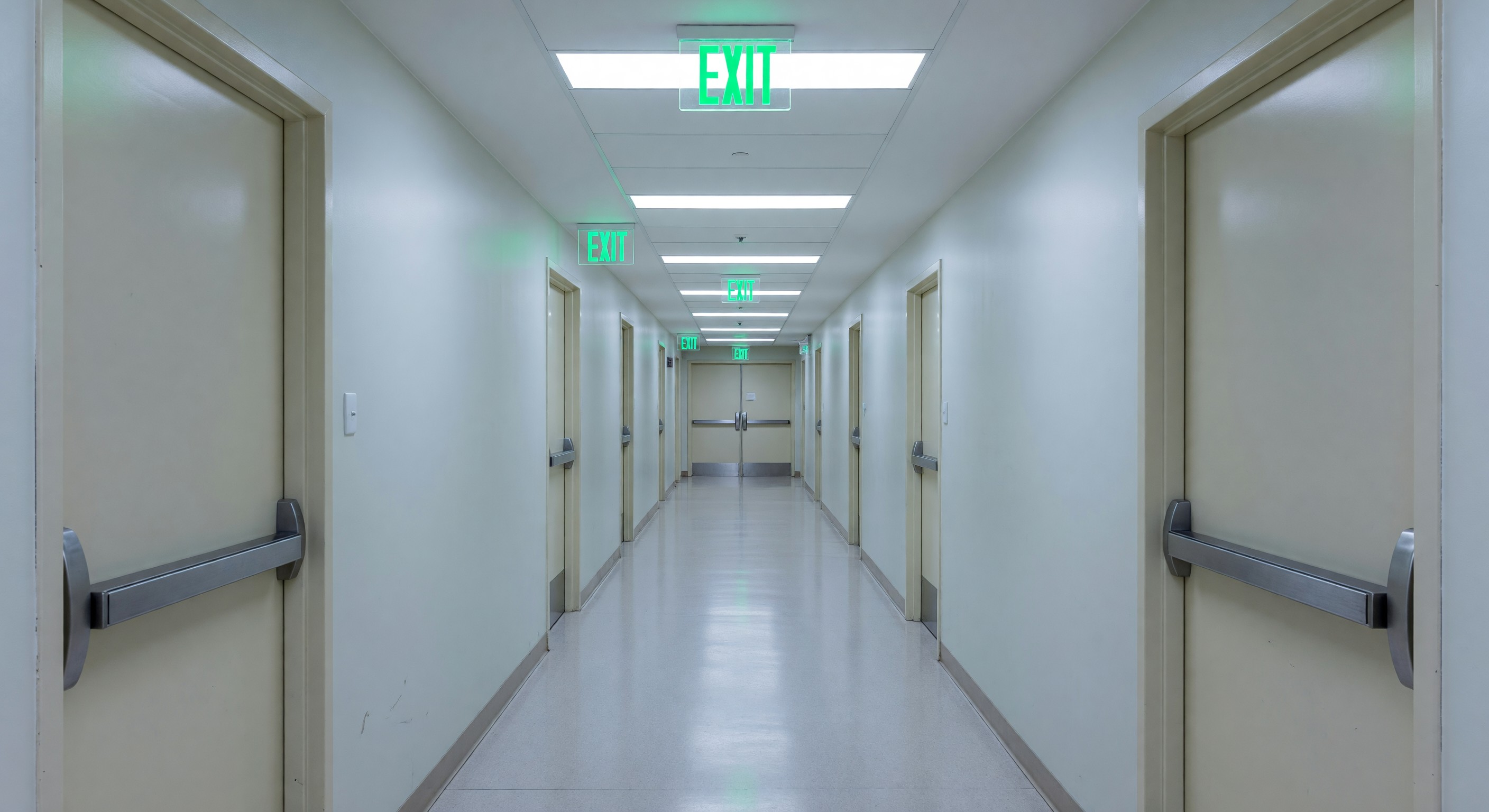
Exit signs — Must be illuminated at all times and visible along the egress path. Battery-backed illumination ensures visibility during power failures. Tested monthly and annually per NFPA 101 requirements.
Exit discharge — All exit stairs must discharge directly to the exterior or through a protected path to the exterior. An exit stair that discharges into a lobby or other interior space must meet specific requirements for the lobby area.
Hazardous Areas
NFPA 101 has specific requirements for hazardous areas within healthcare occupancies — areas where the stored materials or activities present an elevated fire or explosion risk:
Hazardous areas must be protected by one of two means:
- Separated from the remainder of the floor by 1-hour fire-rated construction, or
- Sprinklered, with walls forming the area boundary (not necessarily rated)
Common healthcare hazardous areas:
- Soiled utility rooms
- Trash collection rooms
- Medical records storage
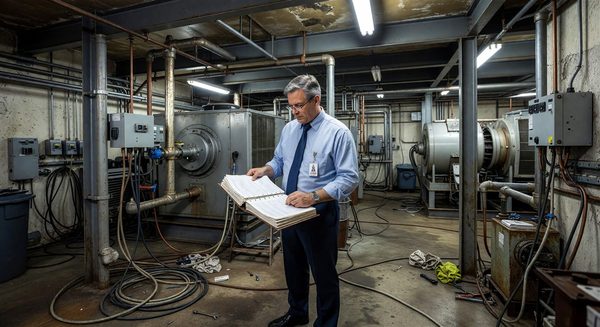
- Maintenance shops with flammable materials
- Paint storage and boiler rooms
Identifying all hazardous areas in the facility and verifying their compliance is a routine element of internal life safety surveys.
Interim Life Safety Measures (ILSM)
When construction, renovation, or other activities temporarily impair Life Safety Code compliance, Interim Life Safety Measures must be implemented to compensate. NFPA 101 does not itself define ILSMs, but Joint Commission and CMS have established ILSM requirements for accredited facilities.
Typical ILSMs include:
- Additional fire patrol (fire watch) in affected areas
- Temporary fire barriers
- Increased fire drills in affected areas
- Temporary additional exit lighting
- Patient relocation if necessary
ILSMs must be documented at the time of implementation, monitored throughout the construction period, and discontinued upon resolution of the life safety impairment.
Frequently Asked Questions
What is the difference between NFPA 101 Chapter 18 (new) and Chapter 19 (existing)? Chapter 18 applies to healthcare occupancies built after the effective date of the currently adopted code edition. Chapter 19 applies to existing occupancies — those built before the current code adoption. Existing occupancies are generally held to less stringent standards in specific areas (corridor width, construction type) but must meet current standards for any major renovation work.
Can we use an ILSM to cover an improperly fire-stopped penetration while we arrange repair? An ILSM is not a long-term solution for life safety deficiencies — it is a temporary measure during planned construction activity. An existing, uninvited deficiency (such as an unsealed penetration) should be corrected promptly rather than covered by an ongoing ILSM. Surveyors distinguish between construction-related ILSM use and ILSM as a substitute for deficiency correction.
How does NFPA 101 address wireless fire alarm systems? NFPA 72 (National Fire Alarm and Signaling Code) governs fire alarm systems and addresses wireless systems. NFPA 101 references NFPA 72 for fire alarm requirements. Wireless fire alarm systems meeting NFPA 72 requirements are code-compliant. As with any fire alarm, annual testing, maintenance, and documentation requirements apply.
What is the significance of the 2012 NFPA 101 edition referenced by CMS? CMS regulations reference a specific edition of NFPA 101 (currently the 2012 edition). This means that CMS surveys assess compliance with the 2012 requirements, not newer editions, unless and until CMS updates the referenced edition through rulemaking. Facilities should track the referenced edition and be aware that a newer NFPA 101 edition may have different requirements in some areas.