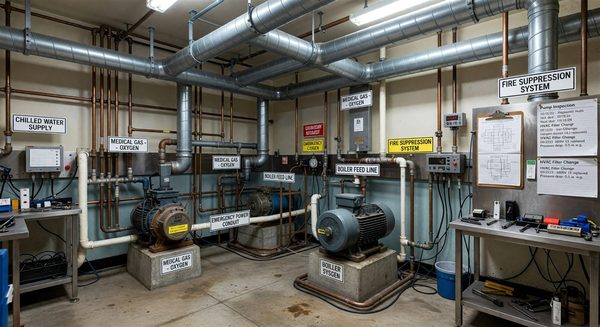
Effective January 1, 2026, the Joint Commission merged the Environment of Care (EOC) and Life Safety (LS) chapters into a single Physical Environment (PE) chapter under its Accreditation 360 restructuring — cutting compliance standards from more than 1,500 to roughly 700 while introducing a new Survey Process Guide. Facility directors who memorized old EC and LS numbering need a plain map of what moved, what merged, and what surveyors prioritize when they walk your building in 2026.
Why the Merge Happened
Accreditation 360 responds to hospital feedback: duplicate documentation, overlapping committees, and survey fatigue from parallel EOC and LS tracers. Consolidating PE aligns physical environment risk — fire, utilities, medical gas, security interfaces — under one narrative instead of two binders that rarely spoke to each other.
Fewer standards does not mean fewer obligations. Many requirements consolidated wording; some elevated evidence expectations under the new Survey Process Guide scoring methodology.
What Facility Directors Own in PE
The PE chapter spans traditional facility domains:
Life safety and egress — doors, corridors, smoke compartments, construction barriers during renovation (ICRA still applies — see our infection control construction protocols).
Utilities and emergency power — generator testing under NFPA 110, transfer switch logs, fuel contracts. Cross-reference our NFPA 110 generator testing piece.
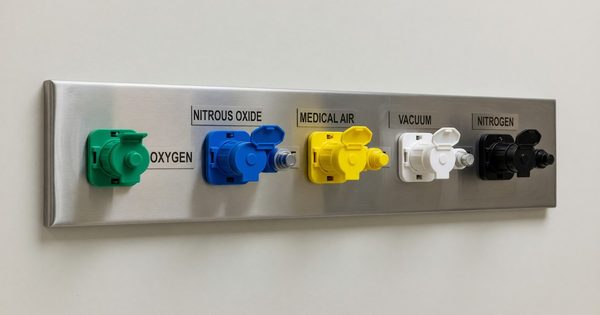
Medical gas and vacuum — outlet testing, alarm panels, zone valve access.
HVAC and ventilation — pressure relationships in ORs, isolation rooms, pharmacy prep; summer surge loads on surgical suites.
Security and hazardous materials interfaces — EC.02.06.01 themes now PE-framed.
Directors should map old EC/LS index cards to new PE elements before survey — gap analysis templates from Joint Commission Connect (subscription) accelerate the crosswalk.
Survey Process Guide Changes
Surveyors use tracers tying patient care areas to physical environment observations — following a patient from ED to inpatient unit while checking door latches, ceiling tiles, and utility clutter in corridors.
Documentation shift: Point-in-time checklists move toward continuous readiness — work order closure rates, PM compliance percentages, and interim life safety measures (ILSM) logged when construction opens walls.
Scoring emphasis: High-risk findings (impaired egress, failed fire door, negative pressure failure in isolation) trigger immediate time frames; lower-risk clutter may cluster as standards-level improvements.
Train department heads that PE is not “Facilities’ chapter alone” — nursing owns corridor clutter, IT owns cable management in clinical spaces, materials management owns storage in egress paths.
Practical Preparation Checklist
- Crosswalk old binders — label retired EC/LS tabs, insert PE equivalent references.
- ILSM packet refresh — every open construction job needs current ILSM forms posted and staff briefed.
- Door inspection blitz — fire doors fail more than any other PE element; use third-party inspectors if in-house staff is thin.
- Emergency power exercise logs — 30-day, 90-day, annual load tests documented with named responsible parties.
- Mock tracer — follow one patient path monthly; photograph violations with closure dates.
Our 2026 EOC survey focus article predates the merge — use it for thematic continuity, then validate against PE numbering.
Relationship to CMS Conditions of Participation
CMS still expects physical environment compliance through deemed status or direct survey. PE consolidation does not relax CMS interpretive guidelines — Joint Commission alignment is streamlining, not deregulation.
Document when local fire marshals and TJC surveyors disagree on interpretation; cite NFPA edition adopted by your state.
Staffing and Committee Structure
Merged chapters suggest merged safety committees — one Physical Environment committee with sub-tracks instead of parallel EOC and LS meetings consuming the same directors’ calendars. Reduce meeting count only if action item tracking improves; consolidation that hides open issues fails surveys faster.
Benchmark maintenance labor against our tight staffing market piece — PE findings spike when PM backlogs grow.
Bottom Line for 2026 Surveys
Accreditation 360 PE is the same hospital basement, fewer duplicate standards, sharper tracer logic. Facility directors who crosswalk documentation now, run mock tracers on merged criteria, and keep ILSM discipline current will tell surveyors a coherent story — one chapter, one team, one readiness model.
Those still running separate EC and LS binders in July 2026 are studying for last year’s test.