HIPAA’s Security Rule is often thought of as an IT compliance obligation—data encryption, access controls, audit logs. But the Security Rule includes a Physical Safeguards standard (45 CFR § 164.312(a)(2)(ii)) that directly affects the physical environment of healthcare facilities and falls squarely within facility management’s sphere of responsibility.
Physical safeguards under HIPAA are required specifications that covered entities must implement to protect electronic protected health information (ePHI) from unauthorized access in the physical environment. For healthcare facility directors, understanding which physical environment decisions have HIPAA implications—and what the standard actually requires—is increasingly important as ePHI pervades more of the physical care environment through workstations, mobile devices, and digital patient room systems.
What HIPAA Physical Safeguards Cover
The HIPAA Security Rule Physical Safeguards standard covers four implementation specifications:
Facility Access Controls Covered entities must implement policies and procedures to limit physical access to electronic information systems that contain ePHI, while allowing access for authorized individuals. This specification encompasses:
- Access control for server rooms, data centers, and locations housing ePHI systems
- Access control for clinical areas where workstations with ePHI access are located
- Visitor access to areas containing ePHI systems
- Emergency access procedures for systems containing ePHI
Healthcare facility directors are responsible for the physical access control infrastructure (badge readers, door hardware, video surveillance) that makes HIPAA facility access control possible. When IT identifies that a server room or clinical area needs access control to protect ePHI systems, facilities implements and maintains the physical infrastructure.
Workstation Use Covered entities must implement policies and procedures that specify the proper functions to be performed by electronic workstations, the manner in which those functions are to be performed, and the physical attributes of the surroundings of specific workstations that can access ePHI.
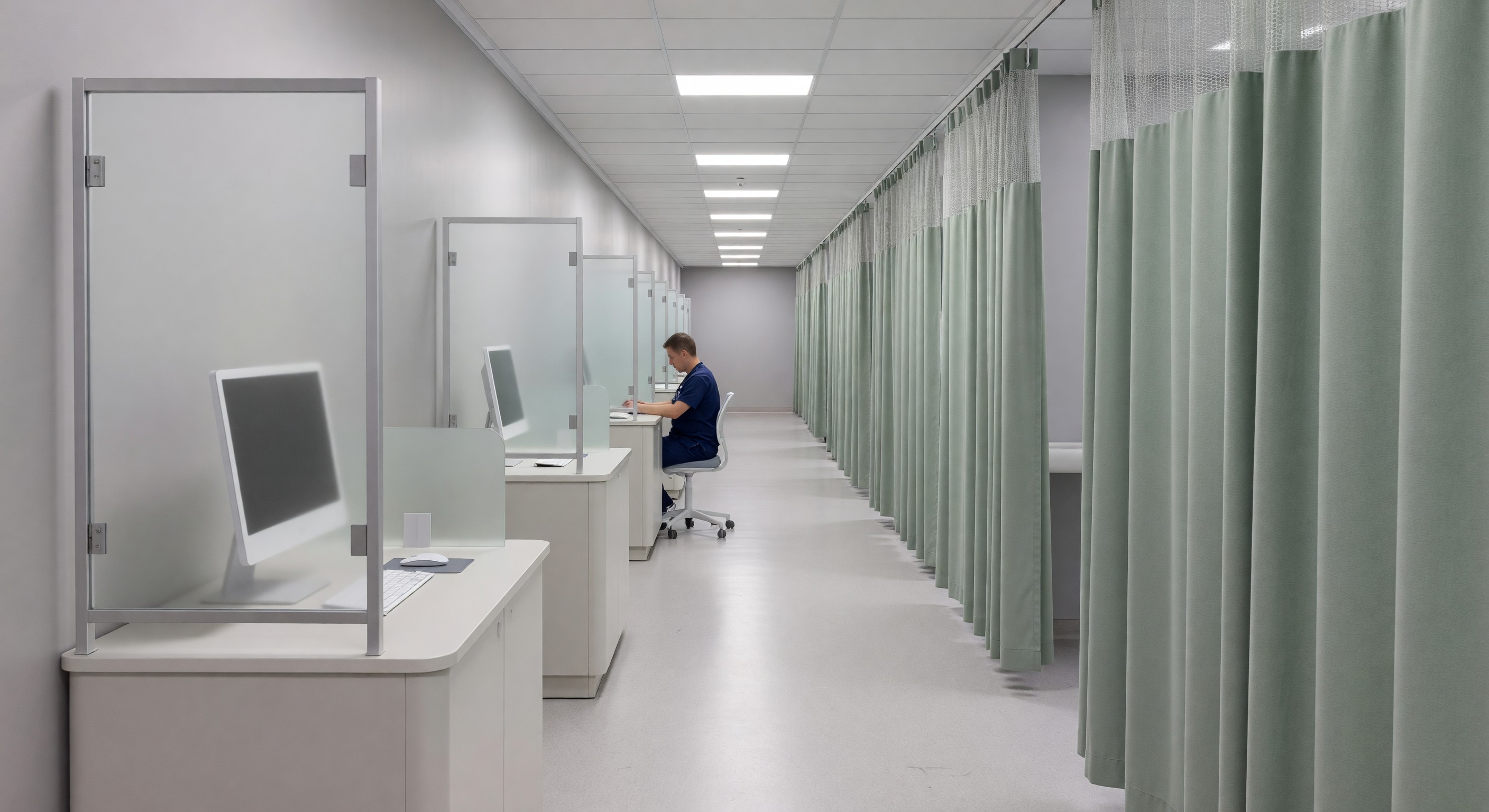
The physical environment dimension of this specification is most relevant in areas where workstations are accessible to unauthorized viewers. A workstation in a high-traffic public area where passers-by can read the screen displaying patient information fails this requirement. Workstation placement, screen orientation, privacy screens, and visual barriers are facility design elements that affect workstation use compliance.
Workstation Security Covered entities must implement physical safeguards for workstations that access ePHI to restrict access to authorized users. Physical security for workstations includes: location in areas accessible only to authorized personnel, cable locks or mounting hardware that prevent removal of portable devices, and workstation access control (screen locks that activate automatically after inactivity).
Healthcare facility directors may be responsible for the physical mounting and security of workstations and for ensuring that workstation locations meet the requirements established in the covered entity’s workstation security policy.
Device and Media Controls Covered entities must implement policies and procedures governing the receipt and removal of hardware and electronic media that contain ePHI. The physical environment dimension includes secure storage for media containing ePHI and secure disposal of media before disposal or reuse.
Facility Design Implications
HIPAA physical safeguards affect healthcare facility design in several specific ways:
Clinical Workstation Placement Workstations in nursing stations, medication rooms, and clinical offices must be positioned to minimize the risk of unauthorized viewing of ePHI. Screens should face away from waiting areas, public corridors, and high-traffic zones. Where workstation placement cannot prevent unauthorized viewing, privacy screens (optical filters that limit the viewing angle) should be specified.
Clinical Area Access Control Areas where ePHI is regularly accessed—clinical offices, medical record storage, server rooms, medication dispensing areas—require physical access control that limits access to authorized personnel. The access control must be consistent with the HIPAA access control policies that IT and privacy officers develop.
Data Center and Server Room Security Server rooms, data centers, and network equipment rooms housing systems that store or process ePHI require enhanced physical security: card access or PIN-protected entry, surveillance camera coverage of entry points, visitor logs for all access, and potentially biometric access for highest-security installations.
Mobile Device and Laptop Security Portable devices containing ePHI require physical security measures when not in use: locked storage cabinets in clinical areas, cable locks when in use in semi-public areas, and secure transport bags when moved between locations.
The Facility Director’s Role in HIPAA Physical Compliance
Healthcare facility directors are not the primary HIPAA compliance officer for their organization—that responsibility sits with the Privacy and Security Officers. But facility directors implement the physical infrastructure that makes physical safeguard compliance possible:
Infrastructure Implementation When the Privacy or Security Officer specifies physical security requirements for ePHI protection—access control for server rooms, camera coverage of data center entries, workstation mounting requirements—facility management implements these specifications.
Access Control Administration Facility management often administers the physical access control system (badge access) for the entire campus. When HIPAA policy specifies who should have access to which areas, facility management configures the access control system to implement those policies.
Design Review Participation Facility directors should participate in design reviews for new construction and renovation projects to ensure that HIPAA physical safeguard requirements are addressed in space planning, workstation placement, and access control design. This prevents the costly retrofits required when ePHI protection requirements are discovered after construction.
Incident Response Support When physical security incidents that may affect ePHI occur—unauthorized access to a server room, theft of a workstation, discovery of unauthorized access to a clinical area—facility management’s physical security capabilities (camera footage, access logs, door event records) are essential inputs to the HIPAA breach investigation process.
Frequently Asked Questions
Is facility management required to sign a Business Associate Agreement with their healthcare organization employer? No. HIPAA Business Associate Agreements are required for external entities that create, receive, maintain, or transmit ePHI on behalf of a covered entity. Internal employees (including facility management staff) are workforce members subject to the covered entity’s workforce training and privacy policies rather than BAA requirements.
What physical safeguards are required for healthcare facility HVAC and BAS systems that have network connections? BAS and HVAC systems that are network-connected may have network access to clinical IT networks or may share network infrastructure with systems containing ePHI. The HIPAA Security Rule’s Technical Safeguards (not Physical Safeguards) govern network security controls, but the physical placement of BAS workstations, network connectivity equipment, and BAS control panels in areas that also house ePHI systems creates physical security considerations. IT security and facilities should coordinate on the physical security of facilities technology that is network-integrated with clinical systems.
Are patient waiting areas considered areas requiring HIPAA physical safeguard analysis? Patient waiting areas where staff may discuss patient information or where workstations may be visible present HIPAA privacy concerns under the Privacy Rule’s minimum necessary standard and reasonable safeguards requirement—though these are more properly characterized as privacy safeguards than Physical Safeguard specification compliance. Facility design should minimize the possibility of incidental disclosures in waiting areas through appropriate workstation placement, acoustic privacy measures in registration and check-in areas, and physical separation between waiting patients and clinical staff work areas.
How long should healthcare facilities retain physical access control logs from areas with ePHI systems? HIPAA requires covered entities to retain documentation of required policies and procedures for 6 years from the date of creation or the date when it was last in effect. Access control logs that document access to ePHI systems are part of the required documentation trail. Many healthcare organizations retain access logs for 6 years to align with HIPAA retention requirements, though specific state laws may require longer retention for certain records.