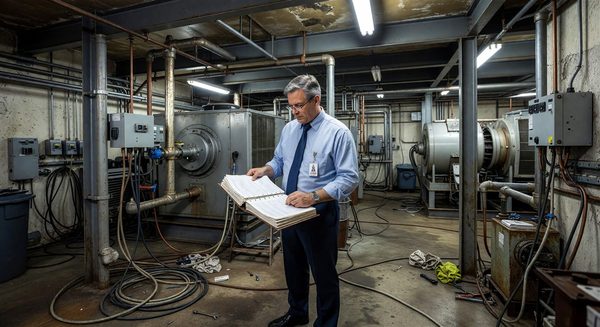
Risk management in healthcare facility operations is not a separate activity from day-to-day management—it is the framework through which effective facility management decisions are made. The Joint Commission’s Environment of Care standards are built on a risk-based model: identify the risks in the physical environment, assess their severity and likelihood, implement controls, and monitor the effectiveness of those controls. The facility director who understands risk management principles is equipped to make defensible decisions, communicate effectively with leadership and surveyors, and continuously improve safety performance.
The Risk Assessment Framework
Facility risk management follows the same fundamental framework as clinical risk management:
Hazard Identification What physical environment conditions could result in harm to patients, staff, or visitors? Comprehensive hazard identification in healthcare facilities covers:
- Building systems failures (HVAC, electrical, fire protection, medical gases)
- Physical environment conditions (slip/trip/fall hazards, lighting deficiencies, unsafe spaces)
- Security vulnerabilities (unauthorized access, inadequate lighting, workplace violence risk factors)
- Construction and renovation activities (infection control hazards, utility interruptions)
- Utility disruptions (water, power, medical gases, communications)
Risk Assessment For each identified hazard, assess two dimensions:
- Likelihood: How probable is it that this hazard will result in a harmful event?
- Severity: If a harmful event occurs, how serious is the likely consequence?
Combining likelihood and severity produces a risk rating that prioritizes which hazards require the most urgent attention. High-likelihood, high-severity risks (a failing emergency generator in a hospital with life-critical equipment) demand immediate resources. Low-likelihood, low-severity risks can be monitored with lower priority.
Control Implementation For each significant risk, identify and implement controls that reduce either likelihood (preventing the hazard from causing harm) or severity (limiting harm when an event occurs). Healthcare facility risk controls follow the hierarchy of:
- Elimination: Remove the hazard entirely
- Engineering controls: Physical measures that prevent harm (redundant systems, guardrails, automatic shutoffs)
- Administrative controls: Policies, procedures, and training that reduce hazard exposure
- Personal protective equipment: Last resort when other controls are insufficient
Monitoring and Review Risk management is not a one-time exercise. Monitoring the effectiveness of implemented controls, identifying new hazards as the facility and its operations change, and conducting periodic comprehensive reassessments maintains the program’s relevance over time.
Proactive Risk Identification Tools
Healthcare facilities teams use several structured approaches to identify physical environment risks before they cause incidents:
Safety Rounds Regular inspection of all areas of the facility by facilities, infection prevention, safety, and clinical leadership identifies physical environment hazards while they can be corrected. The Joint Commission EC standards require healthcare organizations to conduct regular safety evaluations. Effective safety rounds use structured observation tools, generate findings reports, and track corrective actions to completion.
Near-Miss Reporting Near-miss events—incidents that could have caused harm but didn’t—are among the most valuable information sources for proactive risk management. When staff report near-misses related to physical environment conditions (a sprinkler pipe they noticed leaking before it failed, a tripping hazard they reported before anyone fell), facilities teams can correct conditions before an actual harm event occurs.
Root Cause Analysis When adverse events do occur, root cause analysis (RCA) identifies the underlying conditions that allowed the event to happen. For facilities-related adverse events—a patient fall related to a lighting deficiency, a medication error exacerbated by an inadequate workspace, an infection linked to HVAC failure—RCA generates corrective actions that prevent recurrence.
Failure Mode and Effects Analysis (FMEA) FMEA is a proactive risk analysis method that systematically evaluates potential failure modes in systems or processes and their consequences. Healthcare facilities teams use FMEA to analyze critical systems before events occur: evaluating all the ways an emergency power system could fail, the likelihood of each failure mode, and the effectiveness of existing safeguards.
Regulatory Risk: The Compliance Dimension
Healthcare facility risk management must account not only for physical harm risk but for regulatory risk—the risk of non-compliance with Joint Commission, CMS, OSHA, state licensing, and fire code requirements. Regulatory findings in healthcare facilities can have consequences that range from required corrective action plans to accreditation status changes that affect Medicare certification and reimbursement.
An effective compliance risk management approach for healthcare facilities includes:
Continuous Self-Assessment Rather than preparing for regulatory surveys reactively, high-performing facilities teams conduct regular self-assessments against the applicable regulatory standards. The Joint Commission’s “Tracer Methodology”—following a patient’s or staff member’s journey through the facility and evaluating every physical environment element they encounter—is a useful self-assessment framework.
Standards Monitoring Healthcare regulatory standards evolve. NFPA code editions are adopted on state-specific schedules. Joint Commission and CMS update standards through regular revision cycles. OSHA issues new rulemakings (as with the workplace violence prevention standard) that add new compliance requirements. Monitoring the regulatory landscape and anticipating compliance requirements before effective dates prevents the scramble of discovering new requirements during a survey.
Documentation as Defense When regulatory findings occur, documented evidence of proactive risk management—self-assessment records, corrective action documentation, training records—demonstrates good faith effort and often distinguishes between findings treated as isolated incidents versus systemic deficiencies.
Risk Communication to Leadership
Facility directors must communicate physical environment risks effectively to non-technical leadership who control capital budgets and operational resources. Risk communication that resonates with healthcare executives and boards addresses:
Patient Safety Impact Translate physical environment risks into patient safety terms that clinical leadership understands. An aging HVAC system isn’t just a facilities problem—it’s a risk of operating room temperature and humidity excursions that could require postponing surgical cases and expose the organization to regulatory findings.
Financial Exposure Quantify the financial exposure of unmanaged risks where possible. The cost of an emergency generator failure during a power outage—including patient transfer costs, regulatory consequences, and potential liability—significantly exceeds the cost of preventive maintenance or replacement.
Regulatory Consequence Be specific about the regulatory consequences of non-addressed risks. A Joint Commission finding in the Life Safety area can escalate to focused surveys; repeated findings can affect accreditation status. CMS findings can trigger enforcement actions affecting Medicare certification. These are concrete consequences that motivate resource allocation.
Frequently Asked Questions
How should healthcare facility directors prioritize risk management when resources are limited? Focus on risks that combine high severity with regulatory exposure. Life-safety system failures (fire suppression, emergency power, medical gases) have both the highest patient harm potential and the most direct regulatory consequences. Compliance risks that surveyors consistently find—lighting deficiencies, door hardware failures, impairment documentation gaps—deserve disproportionate attention relative to their actual harm potential.
What’s the facility director’s role in the hospital’s enterprise risk management program? Many healthcare organizations have formal Enterprise Risk Management (ERM) programs that consolidate risk information across financial, clinical, operational, and compliance domains. Facility directors should ensure that physical environment risks are represented in the ERM process—submitting risk register entries for significant facility risks and participating in cross-functional risk governance discussions. Physical environment risks are often underrepresented in ERM processes dominated by financial and clinical risk perspectives.
How should facilities teams document risk assessments for Joint Commission survey purposes? Joint Commission doesn’t prescribe a specific format for facility risk assessment documentation. Effective documentation identifies the hazard, describes the risk assessment process and findings (likelihood and severity ratings with supporting rationale), lists the controls implemented, and records the monitoring approach. Maintaining this documentation in a format that can be readily retrieved and presented during surveys is more important than the specific format.
What’s the most common facilities risk management gap found during Joint Commission surveys? Incomplete documentation of the risk assessment process is the most frequently cited gap—organizations that have implemented appropriate controls but cannot document that they went through a systematic risk assessment and control selection process. The Joint Commission wants evidence that controls were selected through a risk-based process, not just that controls exist.