Healthcare facility compliance management has long been labor-intensive: paper inspection forms, manually compiled EC Committee reports, spreadsheet-based corrective action trackers, and calendared reminders for the hundreds of inspection, testing, and maintenance activities required by NFPA standards and Joint Commission requirements. This manual approach works—barely—when compliance programs are limited to a single facility. It fails at scale, creates documentation gaps, and consumes time that facility professionals could spend on actual safety improvement.
Digital compliance management tools have matured to the point where they are transforming how healthcare facility departments manage the complexity of regulatory compliance. In 2026, the leading healthcare facility organizations are deploying integrated platforms that automate scheduling, capture inspection data on mobile devices, generate compliance reports, and apply AI analytics to identify compliance risks before they become survey findings.
The Compliance Management Technology Stack
Healthcare facility compliance technology has developed into a layered technology stack:
Computerized Maintenance Management Systems (CMMS) with Compliance Modules The foundation for most healthcare facility compliance programs is a CMMS that manages the preventive maintenance schedule and work order system. Modern CMMS platforms with healthcare-specific compliance modules (Accruent VFA, Infor EAM, IBM Maximo, eMaint) can:
- Schedule all NFPA-required inspection, testing, and maintenance activities with appropriate frequency
- Generate mobile work orders for field technicians
- Capture completion documentation (time, technician, findings, pass/fail status)
- Automatically alert when activities are overdue
- Generate compliance reports formatted for EC Committee review and Joint Commission survey documentation
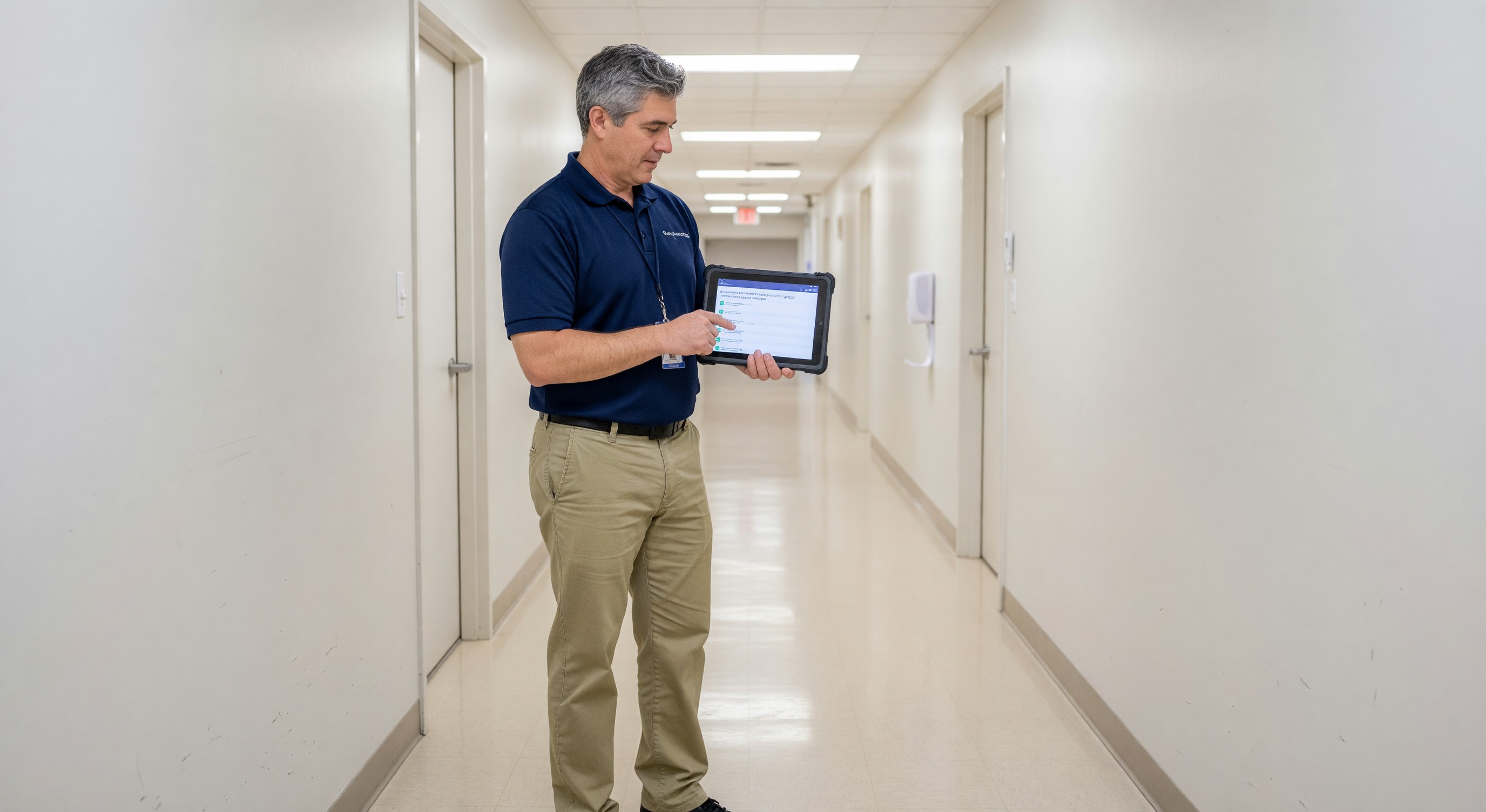
Mobile Inspection Applications Tablet and smartphone-based inspection apps allow facilities teams to conduct safety rounds, fire extinguisher inspections, emergency lighting tests, and other field inspections with digital forms that capture data in structured format. Results sync automatically to central platforms without manual data entry.
Leading mobile inspection platforms in healthcare include Rounding/TJC-specific modules in healthcare CMMS systems, standalone apps like Medically Home’s Rounding tools, and Accruent’s Inspection Management platform.
Water Management Program Platforms Specialized water management platforms (Legionella control monitoring, water temperature logging) provide continuous monitoring and automated alerting for water temperature excursions, chemical treatment drift, and biological testing result tracking. These platforms generate the documentation record required for ASHRAE 188/Joint Commission water management compliance.
Environmental Sensor Integration Building IoT sensor platforms that continuously monitor temperature, humidity, pressure differentials, and air quality in clinical spaces feed compliance monitoring dashboards. When an operating room temperature exceeds ASHRAE 170 setpoint tolerances, the monitoring platform generates an immediate alert and logs the excursion with timestamp and duration—creating the compliance documentation record simultaneously with the operational alert.
Document Management Systems Regulatory compliance documentation—management plans, training records, test reports, contractor certifications, equipment manuals—requires organized, retrievable storage. Document management systems integrated with CMMS and inspection platforms create a unified compliance record that can be assembled for survey in hours rather than days.
AI-Assisted Compliance Monitoring
Artificial intelligence is moving from innovation to mainstream in healthcare facility compliance in 2026:
Predictive Compliance Risk Identification AI analytics applied to historical inspection data can identify equipment with elevated failure probability before inspections reveal deficiencies. Sprinkler heads that have failed inspections in similar buildings or similar ages of equipment, emergency lighting units approaching failure based on test performance degradation, generators whose performance parameters are trending toward the limits of acceptable operation—AI pattern recognition applied to these data streams generates “compliance risk” alerts that allow proactive intervention.
Document Review Assistance AI document review tools can analyze regulatory documents (NFPA editions, Joint Commission standard updates, CMS rule changes) and compare them against current compliance program documentation to identify potential gaps. Rather than requiring facility staff to read every regulatory update in full and manually assess compliance implications, AI tools can flag sections of updated standards that differ from previous versions and identify documentation elements that may need updating.
Audit Trail Analysis AI analysis of maintenance work order completion patterns can identify systematic gaps—activities that are consistently completed late, technicians who consistently document inspections faster than physically possible, or equipment whose maintenance records show suspiciously regular “no findings” results that might indicate documentation fraud. These patterns are invisible to manual review but readily identified through machine learning analysis of large work order datasets.
Survey Readiness Assessment AI-powered survey readiness tools that analyze the organization’s complete compliance documentation against current Joint Commission standards can generate pre-survey gap assessments—identifying documentation gaps and overdue activities before surveyors arrive. These tools are becoming a standard pre-survey preparation resource for healthcare compliance teams.
Implementation Considerations for Healthcare Compliance Technology
Integration with Existing Systems Healthcare facility compliance technology must integrate with existing CMMS, BAS, access control, and building IoT platforms rather than requiring complete system replacement. Evaluate integration capability carefully during vendor selection—standalone compliance platforms that don’t connect to existing data sources require duplicate data entry and create reconciliation challenges.
Mobile-First Design Compliance technology that requires field staff to return to a workstation to enter data will not be adopted. Field-facing tools must be designed for mobile devices with offline capability for areas of the building with poor wireless coverage.
Regulatory Update Management Healthcare compliance requirements change frequently. Compliance technology platforms must have documented processes for updating inspection forms, scheduling requirements, and compliance checklists when NFPA standards, Joint Commission standards, or CMS requirements are updated. Confirm how the vendor manages regulatory updates before purchasing.
Training and Adoption Technology investment that isn’t adopted doesn’t deliver value. Budget for meaningful training programs that help field technicians, safety officers, and facilities administrators use the tools effectively. Adoption is significantly higher when staff understand why the tools exist and how they benefit their own work rather than just perceiving them as surveillance mechanisms.
Frequently Asked Questions
What’s the ROI case for healthcare facility compliance technology investment? The ROI has several components: reduced labor cost for compliance documentation and report preparation (30–50% reduction in compliance administration time is commonly reported); reduced regulatory finding rates (organizations with mature compliance technology programs consistently report fewer Joint Commission and CMS findings); and avoided cost of remediation from findings caught early versus discovered during surveys. For large health systems with high compliance management overhead, ROI is often achieved within 18–24 months.
Can compliance technology replace the need for facility compliance expertise? No. Compliance technology automates scheduling, documentation capture, and reporting. It cannot replace the facility professional’s judgment about whether an inspection finding is a serious deficiency or a minor issue, how to interpret ambiguous regulatory requirements, or how to design a corrective action that addresses the root cause rather than the symptom. Technology augments expertise; it doesn’t replace it.
How are smaller healthcare organizations without large IT budgets accessing compliance technology? SaaS-based compliance management platforms have significantly reduced the upfront cost of compliance technology. Many platforms offer per-user or per-facility pricing models that make them accessible to smaller organizations without large enterprise IT budgets. State hospital associations and group purchasing organizations sometimes negotiate healthcare facility management software contracts that provide member pricing benefits.
What cybersecurity considerations apply to healthcare facility compliance platforms? Compliance platforms that store regulatory documentation, inspection records, and facility data must meet appropriate security standards. Evaluate vendor security certifications (SOC 2 Type II), data encryption practices, access control policies, and breach notification procedures. Compliance platforms that integrate with clinical systems or process patient-identifiable data may have additional HIPAA compliance requirements.