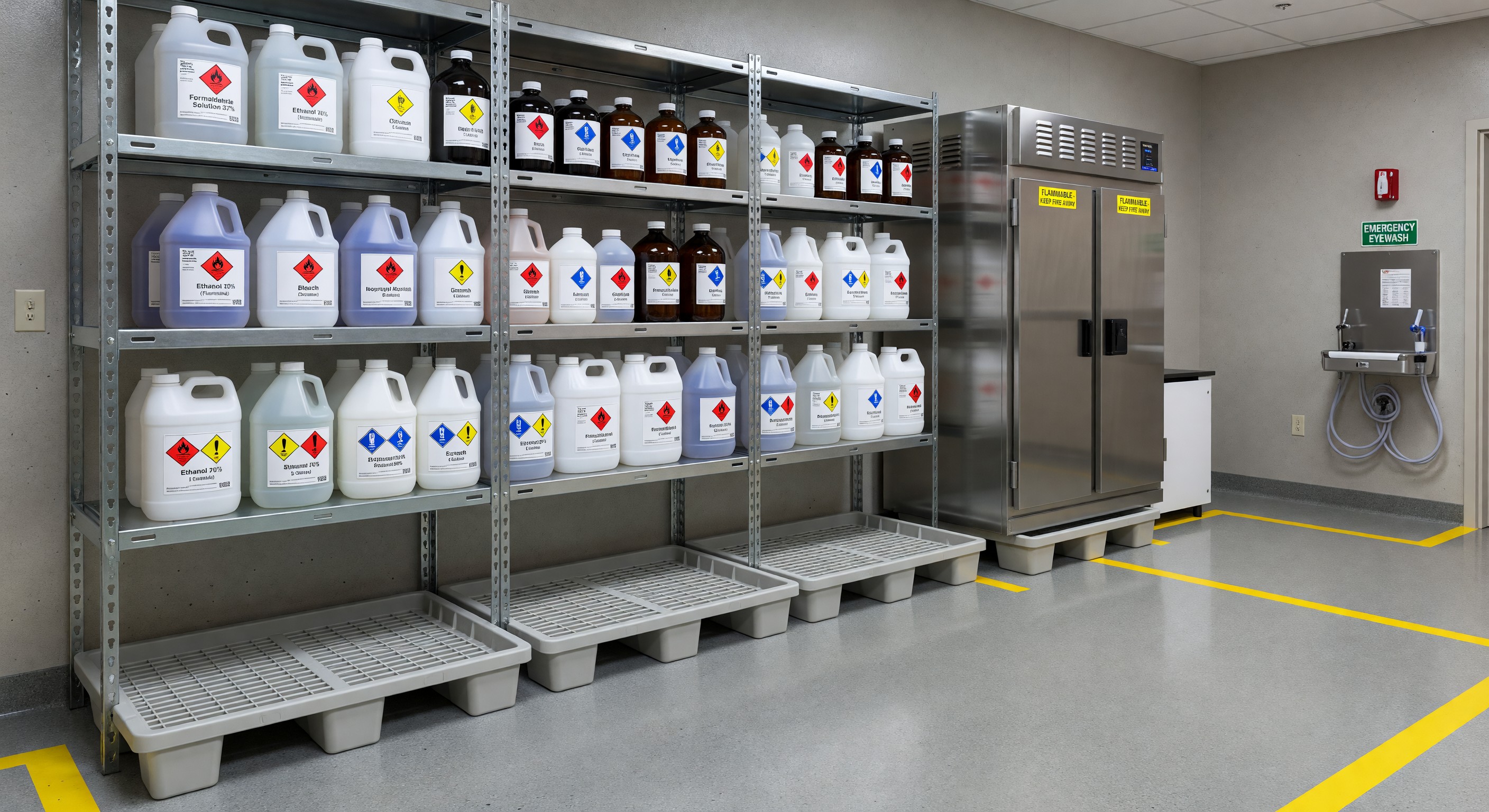
Healthcare facilities use thousands of chemicals across clinical, laboratory, housekeeping, and maintenance operations. Disinfectants, sterilants, laboratory reagents, anesthesia agents, hazardous drugs, cleaning chemicals, maintenance chemicals, and building systems treatment chemicals all require active chemical hazard management programs that comply with OSHA, EPA, and Joint Commission requirements.
The chemical management landscape in healthcare is complex because multiple regulatory frameworks apply simultaneously with different requirements for different chemical categories—and because the clinical mission creates situations where hazardous chemicals are used in close proximity to patients who cannot be moved away from the hazard. Facility directors who understand the regulatory framework and operational requirements for chemical hazard management can lead programs that protect staff and patients while maintaining compliance.
Regulatory Framework Overview
OSHA Hazard Communication Standard (29 CFR 1910.1200) The Hazard Communication Standard (HCS) requires that employers maintain a written hazard communication program, ensure that chemical containers are properly labeled, maintain Safety Data Sheets (SDS) for all hazardous chemicals, and provide training to employees who use or may be exposed to hazardous chemicals.
The HCS uses the Globally Harmonized System (GHS) for chemical classification and labeling—standardizing hazard communication labels and SDS format across the regulatory framework.
OSHA Laboratory Standard (29 CFR 1910.1450) Laboratories in healthcare facilities are subject to the OSHA Laboratory Standard, which requires a written Chemical Hygiene Plan (CHP) that addresses control measures for laboratory chemical hazards. The CHP must be developed with input from chemical hygiene officers and laboratory staff.
NFPA 101 and NFPA 30 (Flammable Liquids Storage) The Life Safety Code and NFPA 30 govern the storage of flammable liquids in healthcare facilities. Quantity limits for flammable liquid storage in occupied buildings are strictly controlled, and flammable liquid storage above de minimis quantities requires approved flammable storage cabinets or dedicated hazardous material storage rooms.
Joint Commission EC.02.02.01 (Managing Hazardous Materials and Waste) The Joint Commission’s hazardous materials and waste management standard requires that healthcare organizations identify hazardous materials, implement processes to reduce risks, and document safe handling practices. The standard covers OSHA chemical hazards and EPA hazardous waste, and requires that organizations maintain an inventory of hazardous materials used in the facility.
Chemical Inventory Management
A current, accurate chemical inventory is the foundation of a compliant hazard communication program. The inventory must identify:
- All hazardous chemicals used or stored in each area of the facility
- The SDS for each chemical in the inventory
- The location(s) where each chemical is stored or used
- Quantity limits that apply to specific storage locations
Healthcare facility chemical inventories are typically managed through one of two approaches:
Area-Based Inventory Each department or area maintains a chemical inventory for its specific area, with a facility-wide consolidated inventory compiled from department submissions. This approach works well for decentralized organizations but requires active management to stay current.
Centralized System Larger healthcare organizations often use chemical management software (Verisk 3E, MSDSonline, Cority) that maintains a central chemical database with location tracking, SDS management, and regulatory reporting capabilities.
The inventory must be actively maintained. New chemicals brought into the facility must be added before use. Discontinued chemicals must be removed from inventory and from storage areas. Annual or semi-annual inventory audits verify accuracy.
Safety Data Sheet Management
SDS must be readily accessible to employees who may be exposed to hazardous chemicals during their work shifts. Healthcare organizations meet this requirement through:
Electronic SDS Systems Most healthcare organizations use electronic SDS management platforms (or the SDS management module within broader chemical management software) that provide web-based or app-based SDS access from any computer or mobile device. Electronic systems simplify keeping SDS current (vendors update SDS on manufacturer changes) and support searching by chemical name or hazard type.
Backup Access Electronic systems should have a backup access method for system outages—printed binders in each area with current SDS for chemicals used in that area, updated quarterly or when chemicals change.
Employee Access Training Staff must know how to access SDS for chemicals they use. Hazard communication training should include a demonstration of the SDS access system, not just a statement that SDS “are available.”
Flammable Liquid Storage Compliance
Flammable liquid storage in healthcare facilities is one of the most frequently cited Life Safety Code deficiencies in Joint Commission surveys. Common violations:
Excess Quantity Storage NFPA 30 and NFPA 101 limit the quantities of flammable liquids stored outside of approved storage cabinets or rooms. The limits depend on liquid flash point category. Many healthcare facilities store excessive quantities of isopropyl alcohol, acetone, or other flammable liquids in clinical or laboratory areas without approved storage.
Improper Containers Flammable liquids must be stored in approved safety containers outside of storage rooms—not in glass bottles, not in non-safety containers.
Inadequate Storage Cabinets Approved flammable storage cabinets must meet UL 1275 standards. Standard metal file cabinets or general storage cabinets are not acceptable substitutes.
Storage Adjacent to Ignition Sources Flammable liquids must not be stored near ignition sources—electrical equipment, open flames, or areas where sparks may occur.
Hazardous Drugs Handling
Healthcare facilities that compound, prepare, or administer hazardous drugs (many chemotherapy drugs, hormone preparations, and certain other pharmaceuticals) must comply with USP <800> requirements, which include facility requirements for:
- Separate hazardous drug storage areas with appropriate ventilation
- Negative pressure rooms for hazardous drug compounding (if applicable)
- HEPA-filtered ventilated cabinets for drug preparation
- Appropriate personal protective equipment
- Decontamination and cleaning protocols for areas where hazardous drugs are handled
USP <800> is referenced by state pharmacy boards and The Joint Commission—compliance is effectively required for healthcare facilities that handle hazardous drugs.
Frequently Asked Questions
How frequently should healthcare facilities conduct chemical inventory audits? Annual comprehensive inventory audits are standard practice, with more frequent spot audits in high-risk areas (pharmacy, laboratory, maintenance shops). Audits should verify that all chemicals present in each area are in the inventory, that SDS are current for all inventoried chemicals, and that storage conditions comply with requirements for each chemical category.
What are the Joint Commission survey expectations for hazardous materials management documentation? Surveyors typically request: a written hazardous materials and waste management program, chemical inventory documentation, evidence of staff HazCom training completion, evidence of SDS access capability, and documentation of inspections for proper storage conditions. Surveyors may physically inspect storage areas for labeling, storage cabinet use, and quantity compliance.
Do waste disposal chemicals require the same management as operational chemicals? Waste chemicals may require more stringent management if they meet the criteria for EPA hazardous waste. Healthcare facilities should evaluate whether waste chemicals from laboratory, pharmacy, and maintenance operations are RCRA hazardous wastes and manage them through licensed hazardous waste disposal contractors with appropriate manifest documentation.
What’s the responsibility of facility management versus clinical/laboratory departments for chemical hazard compliance? Facility management is typically responsible for building-level chemical management: flammable storage rooms and cabinets (construction and maintenance), hazardous material storage infrastructure, spill response equipment positioning, ventilation in chemical storage areas, and disposal contractor arrangements. Clinical and laboratory departments are responsible for chemical inventory management, SDS access, staff training, and proper use practices in their areas. This shared responsibility model requires clear definition of roles to prevent gaps.