Fire prevention in healthcare facilities presents a unique challenge: the primary strategy elsewhere — evacuate the building — is not always feasible in a hospital. Patients in surgical suites, on mechanical ventilation, or in the ICU cannot simply walk out the door when a fire alarm sounds. The healthcare fire safety model is built around containment, defend-in-place, and horizontal evacuation to adjacent smoke compartments rather than total building evacuation.
Understanding NFPA 99 (Health Care Facilities Code), NFPA 101 (Life Safety Code), and the Joint Commission’s fire prevention management standards is fundamental for healthcare facility directors and plant operations managers.
NFPA 99: Health Care Facilities Code
NFPA 99 is distinct from NFPA 101 in scope: where NFPA 101 governs means of egress and fire resistance construction, NFPA 99 governs the health-specific systems within the facility — medical gas and vacuum systems, electrical systems in patient care areas, HVAC requirements for healthcare, and fire protection systems in specific healthcare settings.
Key NFPA 99 fire-related provisions for facility directors:
Patient care areas — NFPA 99 defines patient care areas by level of risk and specifies electrical, HVAC, and fire protection requirements by risk category. Category 1 (highest risk, including critical care) has the most stringent requirements.
Ground fault circuit interrupter (GFCI) protection — NFPA 99 specifies where GFCI protection is required in patient care areas to prevent electrical shock hazard in wet clinical environments.
Isolated power systems — In certain anesthetizing locations and other high-risk areas, NFPA 99 has historically required isolated power systems with line isolation monitors. Current editions have modified these requirements; confirm applicable requirements for your facility vintage and jurisdiction.
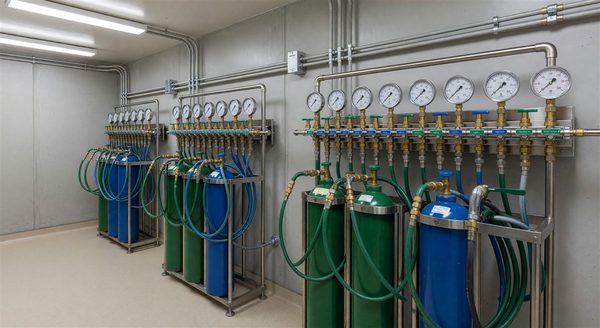
Medical gas storage and handling — Fire hazard from oxygen-enriched environments is a specific NFPA 99 concern. Storage of compressed gas cylinders, oxygen manifold areas, and bulk oxygen storage all have specific fire safety requirements.
Sprinkler System Management
Sprinkler systems are the most effective single fire suppression measure in healthcare buildings. NFPA 13 (Standard for the Installation of Sprinkler Systems) governs sprinkler system design and installation, while NFPA 25 (Standard for the Inspection, Testing, and Maintenance of Water-Based Fire Protection Systems) governs ongoing maintenance.
NFPA 25 inspection requirements — Sprinkler systems require:
- Weekly inspection of wet pipe gauges and alarm valves
- Monthly inspection of sprinkler heads for damage, paint, or obstruction
- Annual full inspection by a qualified sprinkler contractor
- 5-year internal pipe inspection
- Various pressure and flow tests at defined intervals
Common sprinkler deficiencies found in healthcare facilities:
- Sprinkler heads covered with paint or other coatings (reduces sensitivity and voids listing)
- Obstruction within 18 inches of a sprinkler head (furniture, equipment, or stored materials)
- Sprinkler heads missing from areas that require coverage (after-construction modifications that were not coordinated with the fire protection contractor)
- Incomplete coverage in newly renovated areas
Construction coordination — Any renovation project that modifies walls, ceilings, or room configurations must include sprinkler coverage review and modification. Failure to coordinate renovation work with the fire protection contractor routinely results in sprinkler coverage gaps.
Fire Alarm Systems: NFPA 72
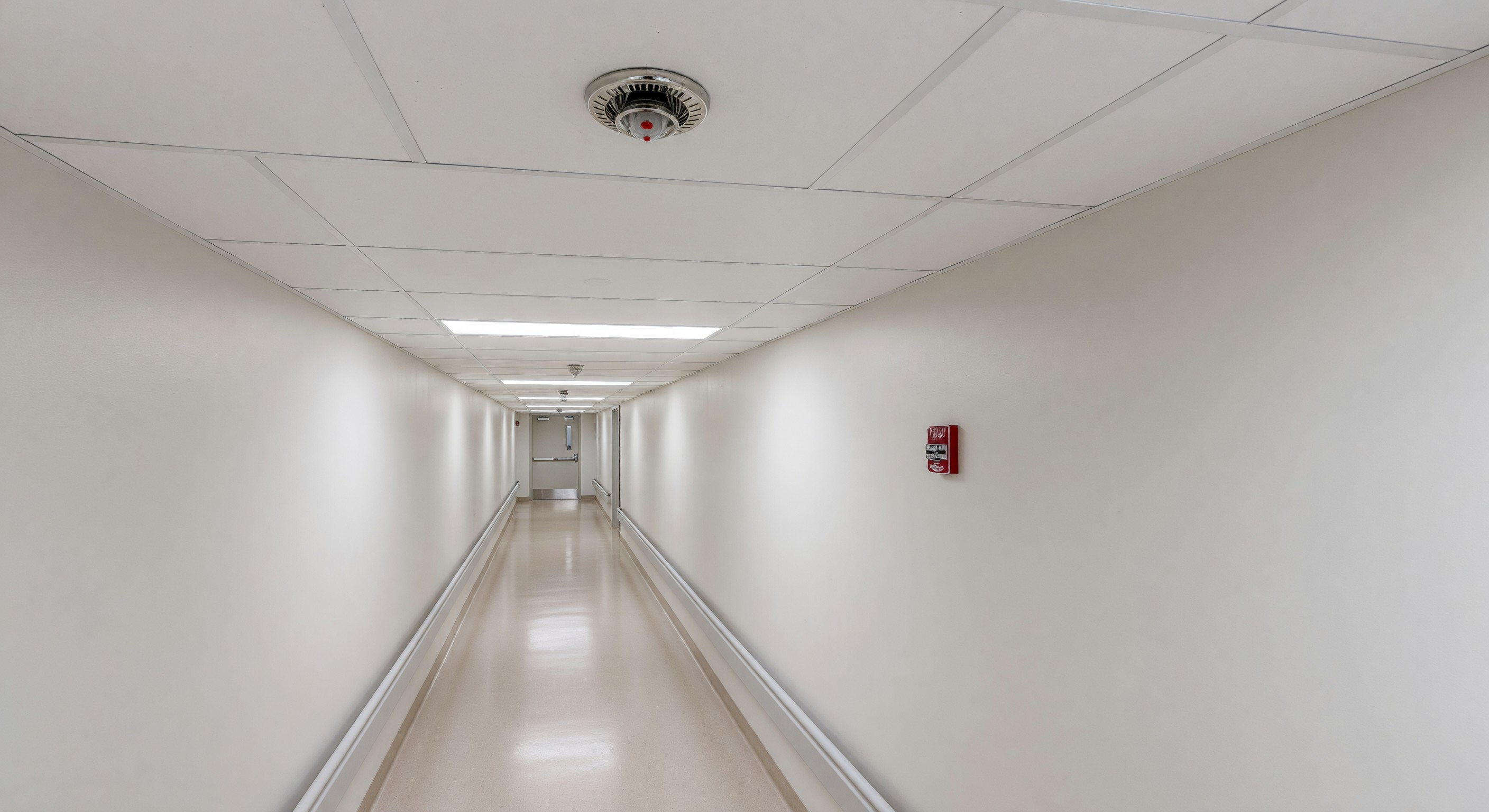
NFPA 72 (National Fire Alarm and Signaling Code) governs the design, installation, maintenance, and testing of fire alarm systems. Healthcare facilities with addressable fire alarm systems should be performing:
Monthly testing — Functional test of a representative sample of notification appliances and initiating devices, with full test of all devices over the course of the year.
Annual inspection and testing — Complete system inspection, test, and certification by a licensed fire alarm contractor. All devices tested, documentation generated, and any found deficiencies corrected or documented.
Testing documentation — NFPA 72 requires that test documentation include the date, responsible parties, and results for each device. This documentation must be retained and available for inspection by authorities having jurisdiction and accreditation surveyors.
Integrated systems — Fire alarm systems in hospitals are integrated with sprinkler systems, HVAC controls (smoke control dampers), elevator recall, door holders, and potentially access control. Integration points must be tested as part of the annual inspection to confirm that all connected systems respond appropriately to fire alarm activation.
Healthcare-Specific Challenges: Corridor Obstructions
One of the most persistently common fire code compliance problems in healthcare facilities is corridor obstruction. NFPA 101 requires that means of egress corridors be maintained clear of obstructions that would impede evacuation.
Healthcare facilities have significant operational pressure to use corridor space for equipment staging, linen carts, medication carts, and supplies. NFPA 101 includes limited exceptions for specific items:
- Medical emergency equipment that must be immediately accessible (crash carts, code carts)
- Equipment being used with specific patients (IV poles, monitoring equipment at point of use)
- Patient care equipment in continuous use (waiting for procedures, being transported)
The exception does not cover:
- Linen carts or laundry
- Supply or food service carts between use
- Equipment in storage or awaiting repair
- Furniture not in active use
Enforcing corridor clearance requires a cultural commitment from nursing and administrative leadership — this cannot be a facilities department-only effort.
Fire Drills: Frequency and Documentation
Joint Commission and NFPA 101 require fire drills at each healthcare occupancy:
- Minimum four drills per year in each occupied building
- At least one drill per shift per year
- Drills must test the facility response procedures (staff use RACE protocol, check their zone, close doors)
- Actual patient evacuation during drills is generally not performed for patient safety reasons — staff demonstrate knowledge and procedures rather than physically evacuating beds
Drill documentation must include:
- Date, time, building, and floor of drill
- Personnel present and participating
- Critique of drill performance and any deficiencies noted
- Corrective actions taken
Joint Commission surveyors commonly review drill documentation and may ask staff to demonstrate knowledge of the facility’s fire response procedures.
Frequently Asked Questions
What does RACE stand for in hospital fire response? RACE is the widely used mnemonic for hospital fire response: Rescue (remove any patients in immediate danger), Alarm (activate the nearest fire alarm pull station and call the facility emergency number), Contain (close doors to contain smoke and fire), and Extinguish or Evacuate (use a fire extinguisher if the fire is small and contained; if not, evacuate the area). Some facilities add an “E” for Evacuate as a separate step, making it RACER.
How often should fire extinguishers be inspected? NFPA 10 requires monthly visual inspections (documented) and annual maintenance by a qualified service contractor. Every 6 years, dry chemical extinguishers must be emptied, inspected internally, and recharged. Hydrostatic testing of the cylinder is required at 12-year intervals.
What is a means of egress lighting test? NFPA 101 requires that emergency lighting for egress be tested monthly for a minimum of 30 seconds and annually for a full 90 minutes to confirm battery capacity. Fixtures that fail the 90-minute test must be repaired or replaced. Documentation of testing is required.
How do we manage fire safety during construction or renovation that disrupts fire protection systems? Any work that disables or impairs the sprinkler system, fire alarm, or means of egress in a healthcare occupancy requires implementation of Interim Life Safety Measures (ILSMs) immediately. This includes notifying the authority having jurisdiction, establishing a fire watch, conducting additional fire drills, and implementing other compensatory measures defined in the facility’s ILSM policy. Authority having jurisdiction permission may be required before disabling any life safety system.