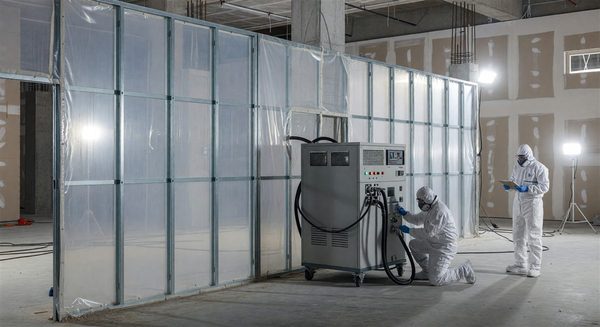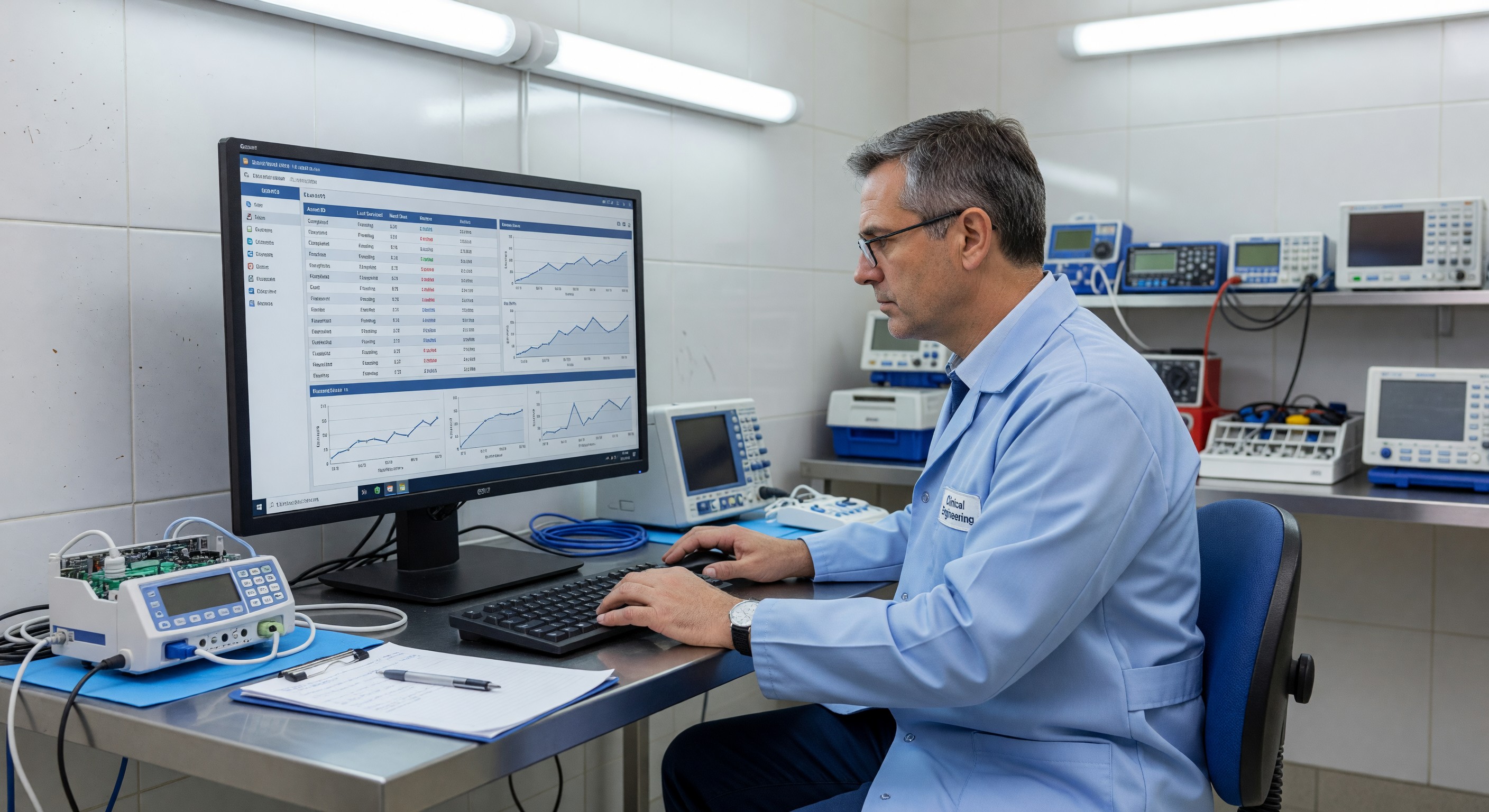
Alternative Equipment Maintenance (AEM) programs allow healthcare facilities to adjust the preventive maintenance intervals for medical and utility equipment based on risk assessment and performance data, rather than following manufacturer-specified intervals rigidly. For hospitals managing thousands of equipment assets across aging infrastructure, AEM programs offer both operational flexibility and a systematic approach to maintenance prioritization.
The Joint Commission’s EC.02.04.01 (medical equipment) and EC.02.05.01 (utility systems) standards permit AEM programs under specific conditions. Understanding both the opportunity and the compliance requirements of AEM implementation is essential for facility directors and clinical engineers.
What AEM Programs Allow
Without an AEM program, the default position is that all equipment is maintained per manufacturer recommended intervals (or at least annually, whichever is more frequent for EC.02.04.01 requirements). AEM programs allow:
- Extended intervals for low-risk equipment with good reliability history
- Reduced scope PM procedures for equipment where some inspection elements are clinically unnecessary
- Condition-based intervals where PM is triggered by measured condition rather than calendar time
- Elimination from PM program for certain categories of equipment with very low risk
AEM programs are risk-based: the reduction in PM frequency or scope must be justified by a documented assessment that demonstrates the modified program does not increase patient safety risk.
Equipment Categories and AEM Eligibility
Life safety equipment — Cannot be included in AEM interval reductions. NFPA-required maintenance intervals for emergency generators, fire alarm systems, sprinkler systems, and medical gas systems are code requirements, not manufacturer recommendations. AEM does not override code-required maintenance.
High-risk medical equipment — Equipment used in direct patient care or where failure could cause patient harm is inappropriate for AEM programs. Ventilators, infusion pumps, defibrillators, and monitoring equipment should be maintained per manufacturer specifications.
Utility systems equipment — HVAC components, plumbing equipment, and electrical distribution equipment may be candidates for AEM if risk assessment supports interval adjustment. A fan-coil unit serving an administrative office is a different risk than an air handling unit serving an OR.
General clinical support equipment — Patient beds, stretchers, wheelchairs, and similar equipment with good reliability history and low failure consequence may be appropriate for extended PM intervals.
Joint Commission AEM Requirements
To operate an AEM program in compliance with TJC standards, the facility must:
Establish a written AEM policy — Documenting the criteria for including equipment in AEM, the risk assessment methodology, and the oversight process.
Conduct risk assessment for each AEM determination — A documented assessment for each equipment type or category included in AEM, evaluating the consequences of failure, probability of failure, and adequacy of the modified PM approach.
Monitor performance — Track equipment failure frequency, PM completion rates, and any patient safety events associated with equipment included in AEM. The monitoring program must be defined in the AEM policy.
Review and respond to adverse events — Any equipment failure or patient safety event associated with AEM-covered equipment must trigger a review to determine whether the AEM parameters require adjustment.
Annual program evaluation — Evaluate the AEM program annually, including performance data, and make adjustments as indicated by the data.
Document everything — The risk assessments, monitoring data, review activities, and annual evaluation must be documented and available for surveyor review.
The EC Committee should oversee the AEM program and review performance data regularly.
Risk Assessment Methodology
AEM risk assessment typically uses a quantitative or semi-quantitative scoring approach evaluating:
Consequence of failure — What happens if this equipment fails? Ratings might range from:
- 1 — No patient impact, administrative inconvenience only
- 2 — Minor patient inconvenience, no safety risk
- 3 — Potential for patient harm with early detection likely
- 4 — Serious patient harm possible if failure occurs
Probability of failure — Based on equipment type, age, usage history, and reliability data:
- 1 — Very rare failure history, inherently reliable equipment type
- 2 — Occasional failures, typically non-critical
- 3 — Known failure mode with moderate reliability
- 4 — Frequent failures or aging equipment with declining reliability
Risk score = Consequence × Probability
Equipment with low risk scores (1–4) may be appropriate for AEM. High risk scores (9–16) should not be included in AEM. Mid-range scores require judgment.
PM Reduction vs. PM Elimination
AEM programs should distinguish between:
Interval extension — Extending PM frequency (from annual to biennial) for low-risk equipment with good reliability. Maintains PM activity but at reduced frequency. Most appropriate entry point for AEM.
Scope reduction — Reducing the inspection elements in a PM procedure by eliminating checks that are not safety-relevant or that have never detected deficiencies. Requires careful review to ensure retained elements adequately address safety risks.
Removal from PM inventory — Eliminating an equipment category from scheduled PM entirely, relying on operator observation and reactive maintenance. Appropriate only for the very lowest-risk, most reliable equipment categories with documented justification.
Frequently Asked Questions
Do we need the Joint Commission’s approval to implement an AEM program? No pre-approval is required. You implement the AEM program according to the standards requirements and it is assessed during the accreditation survey. Joint Commission makes its AEM evaluation based on whether your documented program meets the standards requirements and whether your risk assessments and monitoring are adequate. Consulting The Joint Commission’s online resources and your accreditation survey coordinator for guidance before implementing a major AEM change is advisable.
Can we use our clinical engineering department’s failure data to justify AEM decisions? Yes — in fact, actual failure history from your facility is the strongest evidence for AEM decisions. An equipment category with zero failures in 10 years across 50 units presents a compelling case for interval extension. An equipment category with 15% failure rate provides counter-evidence. Use your CMMS data to extract failure frequency by equipment type and category.
How do we handle a failure of equipment included in our AEM program? Document the failure and assess whether it was preventable with the original PM interval or scope. If the failure is consistent with the risk profile and does not represent a new mode of failure not contemplated in the risk assessment, the AEM determination remains valid. If the failure represents an unanticipated mode or higher-than-expected frequency, revise the AEM determination for that equipment category.
What is the difference between AEM for medical equipment (EC.02.04.01) and utility systems (EC.02.05.01)? The AEM framework applies to both, but the scope is different. EC.02.04.01 covers medical equipment maintained by clinical engineering/biomedical departments. EC.02.05.01 covers utility systems maintained by the facilities/plant operations department. Both require the same documented risk assessment and monitoring approach, but the equipment categories, risk factors, and relevant standards differ between medical equipment and utility systems.