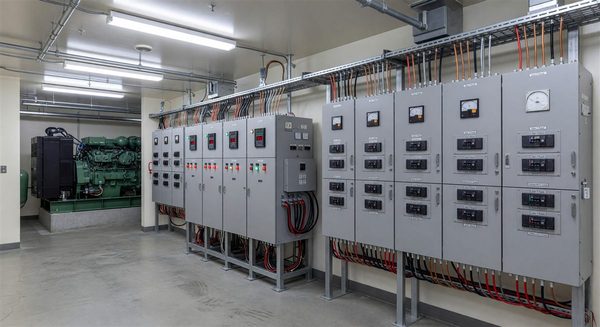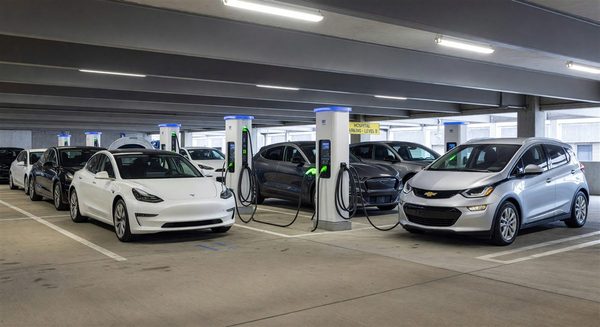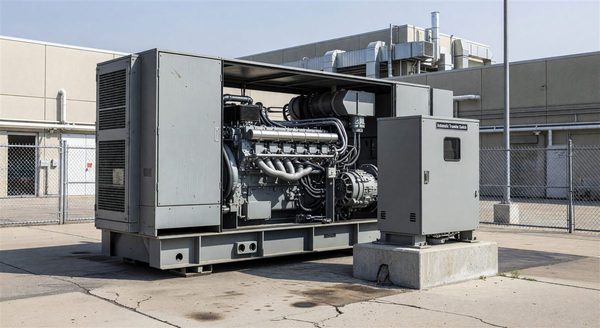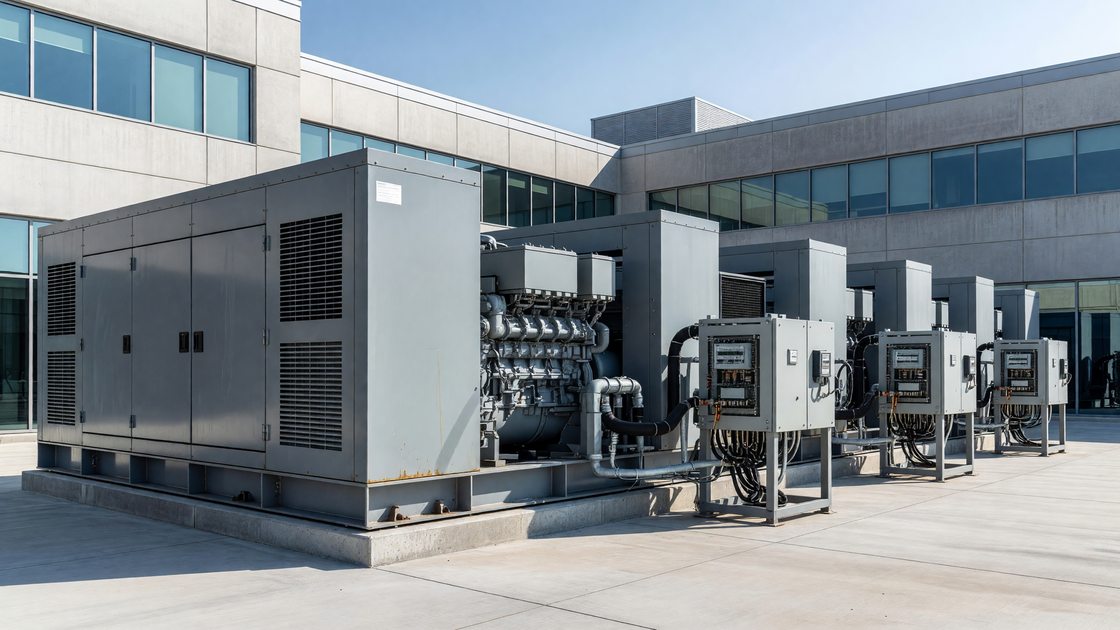
The emergency power supply system is the one building system a hospital facility director is never allowed to get wrong, and fall is when the attention concentrates. Cooler weather opens the window for the annual and supplemental testing that summer heat and census pressure pushed aside, surveyors are active, and capital planning for the next fiscal year is being finalized. In 2026 that seasonal routine is running into a newer pressure — the growth of electric-vehicle charging load on hospital campuses — which is prompting facility directors to revisit assumptions about emergency power capacity that have held for years. This is a plain-language reference for what NFPA 110 actually requires, how it is enforced, and where the EV question fits.
Why NFPA 110 Carries the Weight It Does
NFPA 110, the Standard for Emergency and Standby Power Systems, is not a standalone rule a hospital can choose to follow. It is referenced through NFPA 99 (Health Care Facilities Code) and NFPA 101 (Life Safety Code), and CMS adopts those codes at 42 CFR 482.41 as a Condition of Participation. That chain is what turns a testing schedule into a survey citation risk: a documented failure to meet NFPA 110’s testing requirements is not just a maintenance lapse, it is a potential physical-environment deficiency that a CMS or accrediting-organization surveyor can cite directly.
Most hospitals operate their emergency power supply system as a Level 1, Type 10, Class 96 installation — the most stringent classification, reflecting that patient safety depends on power being restored within 10 seconds (Type 10) and on the system being able to run for a minimum of 96 hours (Class 96) without resupply. Understanding your own system’s classification is the starting point for every capacity and testing decision that follows. The Class 96 designation in particular drives on-site fuel storage sizing and the fuel-quality program, because a system rated to run for 96 hours has to be able to prove it can actually be fueled and started for that duration, not merely wired for it.
The Testing Requirements Facility Teams Actually Have to Meet
Two overlapping code requirements govern how often and how hard a hospital exercises its generators:
- NFPA 110 §8.4.2 — monthly load exercise. The entire emergency power supply system must be exercised under load at least monthly for a minimum of 30 minutes. The generator must either reach the minimum exhaust gas temperature recommended by the manufacturer, or operate at not less than 30 percent of the EPS standby nameplate kW rating. Running an oversized generator against a small building load — a common situation as facilities add generator capacity faster than connected load — often fails to meet either threshold.
- NFPA 110 §8.4.2.4 — annual supplemental load-bank test. When a generator cannot meet the monthly loading requirement under building load, it must undergo a supplemental load-bank test annually: two continuous hours, structured as 30 minutes at 25 percent of nameplate rating, 30 minutes at 50 percent, and 60 minutes at 75 percent. This is the step that most often gets scheduled for fall, and the step most often deferred when a facility is short-staffed.
Layered on top, NFPA 99 requires 12 tests per year at 20-to-40-day intervals, including complete simulated cold starts and automatic transfer of all essential electrical system loads. The practical implication is that “monthly” is not simply the first of each month — the 20-to-40-day interval window has to be managed as its own compliance parameter, and a missed or clustered test schedule is itself a finding.
The failure patterns surveyors see most often are predictable, which makes them avoidable. The recurring ones are generators exercised with little or no connected load rather than at the required threshold, transfer switches that are not fully cycled during the test so the automatic-transfer function goes unverified, test intervals that drift outside the 20-to-40-day window when a run is skipped or clustered near month-end, and testing that is performed but poorly logged. Each of these is a records-and-scheduling problem more than an equipment problem, which means the fix is a disciplined annual calendar and a review of the log against the interval requirements before survey season — not new capital spending.
Documentation Is the Deliverable
Surveyors do not watch a generator start; they read the records. The compliance artifact that matters is a complete, contemporaneous log showing test dates within the required intervals, load levels achieved, run durations, transfer-switch operation, and corrective action for any anomaly. A facility that runs its tests faithfully but keeps thin records is, from a survey standpoint, in nearly the same position as one that skipped them. Fall is the right time to reconcile the year’s testing log against the interval requirements before a survey window opens, not after a surveyor asks for it. This documentation discipline is the same one that underlies the rest of a facility’s emergency power compliance program under NFPA 99.
Where EV Charging Load Enters the Picture
Electric-vehicle charging is growing on hospital campuses — staff and visitor chargers, and increasingly fleet and shuttle charging — and it is changing the electrical-capacity conversation in ways facility directors need to plan for deliberately:
- EV chargers are normal load, not emergency load, and should stay that way. Charging stations belong on the normal (utility) side of the campus electrical distribution, not on the essential electrical system served by emergency generators. Emergency power capacity is sized for life safety and critical patient care; adding discretionary charging load to that side of the system erodes the margin the code exists to protect. The planning task is to keep EV load on normal power while ensuring it does not compromise the switchgear, service capacity, or fault-current assumptions the emergency system shares.
- Rapid EV load growth can consume the spare service capacity a facility assumed it had for the next generator or building addition. A charging build-out that looks like a parking amenity can quietly use up the electrical headroom that emergency power expansion was counting on, which is why EV planning and EV infrastructure decisions belong in the same capacity study as emergency power, not in a separate parking project.
- Load management and metering matter. As EV load scales, active load-management systems that cap or stagger charging during peak demand protect the campus service and preserve capacity for facility operations — a control-layer decision that should be made before the chargers are energized, not retrofitted after a demand problem appears.
The through-line is that EV charging is not an emergency-power problem so long as it is deliberately kept off the emergency system — but it is very much an emergency-power capacity-planning problem, because it competes for the same finite campus electrical service.
Bringing It Together for Fall Planning
The facility director’s fall agenda for emergency power comes down to a short, high-value list: confirm the year’s NFPA 110 and NFPA 99 test intervals have been met and documented; schedule any required annual load-bank testing before the calendar compresses; verify fuel quality and quantity against the Class 96 runtime requirement; and fold any EV-charging expansion into an honest campus electrical-capacity study rather than treating it as a standalone parking upgrade. Handled together, these keep the emergency power supply system both survey-ready and genuinely reliable — which, for the one system that cannot fail, are the same goal. For the broader system context, our overview of hospital backup power systems covers how the generator, UPS, and essential-electrical-system branches fit together.
Frequently Asked Questions
How often does NFPA 110 require hospital generator testing?
NFPA 110 §8.4.2 requires a monthly load exercise of at least 30 minutes, and NFPA 99 requires 12 tests per year at 20-to-40-day intervals with simulated cold starts and automatic load transfer. Generators that cannot meet the monthly load threshold also require an annual supplemental load-bank test.
What is the annual load-bank test schedule under NFPA 110?
When a generator cannot reach the monthly loading requirement under building load, §8.4.2.4 requires a supplemental load-bank test of two continuous hours: 30 minutes at 25 percent of nameplate rating, 30 minutes at 50 percent, and 60 minutes at 75 percent. It is commonly scheduled in fall alongside other capital maintenance.
Should EV chargers be connected to hospital emergency generators?
No. EV charging is discretionary normal load and should be served by the normal utility side of the campus distribution, not the essential electrical system. Emergency power capacity is reserved for life safety and critical patient care, and adding charging load to it erodes the reliability margin the code is designed to protect.
How does CMS enforce NFPA 110 in hospitals?
CMS adopts NFPA 99 and NFPA 101 — which reference NFPA 110 — at 42 CFR 482.41 as a Condition of Participation. A documented failure to meet the testing requirements can be cited by CMS or an accrediting organization as a physical-environment deficiency, which is why contemporaneous testing records are the central compliance deliverable.
Further Reading
- National Fire Protection Association — NFPA 110 Standard for Emergency and Standby Power Systems
- American Society for Health Care Engineering (ASHE) — ashe.org
- Electronic Code of Federal Regulations — 42 CFR 482.41 Condition of Participation: Physical Environment