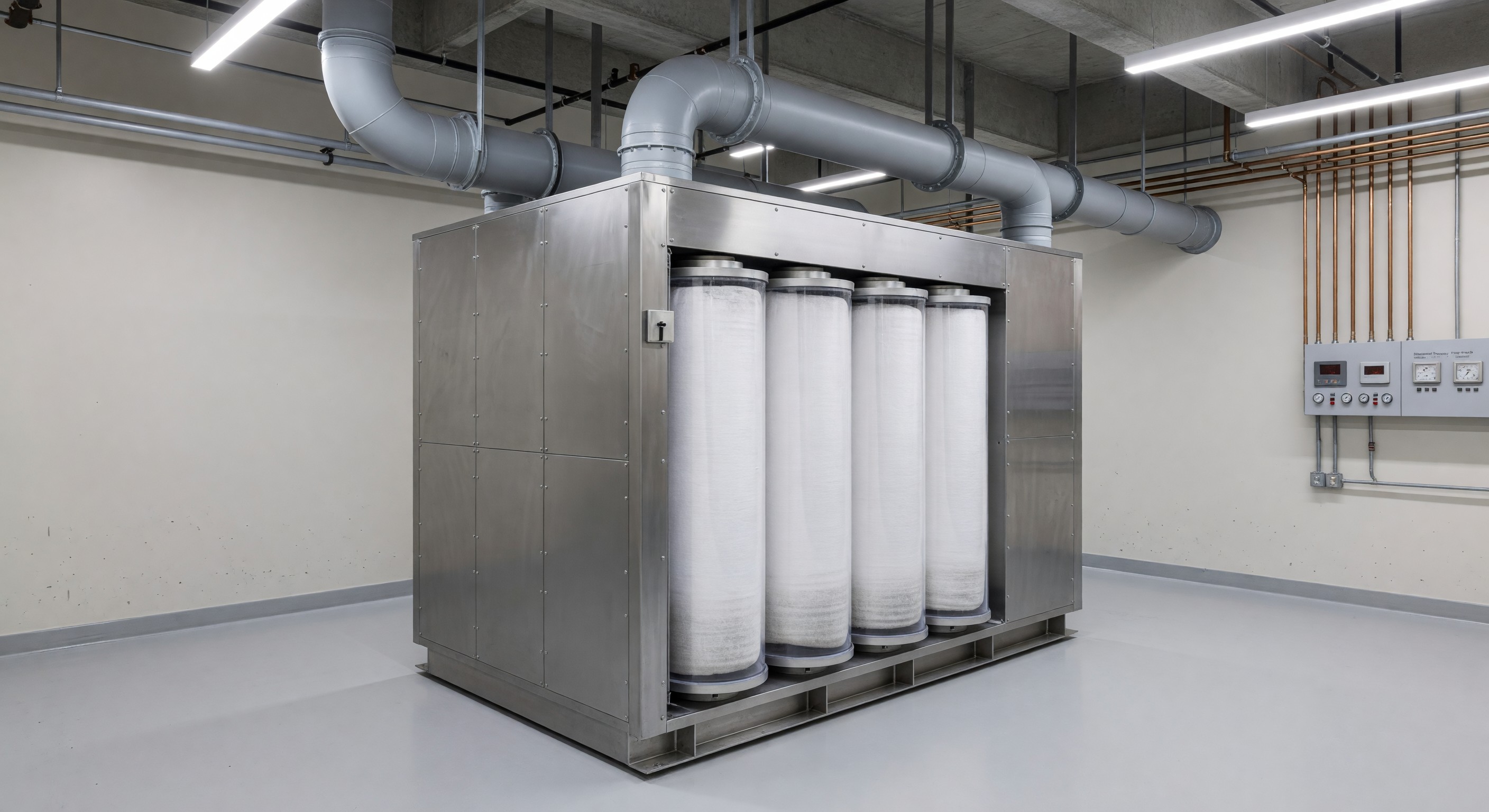
HVAC systems in healthcare facilities are not simply heating and cooling systems with better filters. They are precision infection control instruments that directly affect patient outcomes, surgical site infection rates, and regulatory compliance. For facility directors managing hospital campuses, understanding medical-grade HVAC requirements is essential — not optional.
Why Medical HVAC Is Different
Commercial HVAC is designed for occupant comfort and energy efficiency. Medical HVAC is designed for pathogen control, pressure management, and protection of immunocompromised patients. The two objectives create fundamentally different engineering requirements.
ASHRAE Standard 170-2021, Ventilation of Health Care Facilities, is the authoritative technical reference. It prescribes:
- Minimum air change rates by room type (ranging from 6 ACH for general patient rooms to 20+ ACH for surgical suites)
- Pressure relationships between adjacent spaces (positive, negative, or neutral)
- Temperature and humidity ranges by space type
- Filtration efficiency requirements (MERV 14 minimum for most clinical spaces)
- Exhaust requirements for hazardous areas (soiled utility rooms, biohazard spaces, isolation rooms)
The Joint Commission incorporates ASHRAE 170 by reference in its Environment of Care standards, and CMS Conditions of Participation reference ASHRAE 170 as the applicable standard for new construction and major renovation.
Pressure Relationships: The Core of Infection Control HVAC
Airborne infection control depends on directional airflow. Positive pressure rooms push air outward, preventing contaminants from entering. Negative pressure rooms pull air inward, preventing contaminated air from escaping.
Positive pressure rooms include:
- Operating rooms and surgical suites
- Bone marrow transplant and oncology patient rooms
- Pharmacy clean rooms (ISO 7 or ISO 8 classification)
- Central sterile processing clean side
Negative pressure rooms include:
- Airborne infection isolation (AII) rooms for TB, COVID-19, and other airborne pathogens
- Bronchoscopy and sputum induction rooms
- Emergency department triage areas (where communicable disease screening occurs)
- Soiled utility and biohazard rooms
The differential pressure between adjacent spaces must be measurable and monitored. ASHRAE 170 requires a minimum of 0.01 inches water column (2.5 Pa) across most pressure-differentiated boundaries. Facilities must continuously monitor pressure relationships in critical areas and alarm if differential falls below the required threshold.
COVID-19 dramatically elevated awareness of airborne infection isolation capacity. Facilities that had adequate AII room inventories were able to manage COVID-19 patient isolation appropriately. Those that lacked sufficient AII capacity were forced to use temporary solutions — portable HEPA units, anteroom retrofits, or entire-floor designation as COVID units.
Air Change Rates by Space Type
ASHRAE 170 Table 7-1 provides room-by-room air change rate requirements. Key spaces and their requirements:
| Space Type | Minimum Total ACH | Minimum Outdoor Air ACH |
|---|---|---|
| Operating room | 20 | 4 |
| ICU patient room | 6 | 2 |
| General patient room | 6 | 2 |
| Emergency department | 12 | 2 |
| Airborne infection isolation room | 12 | 2 |
| Sterile processing (clean side) | 4 | 2 |
| Radiology | 6 | 2 |
These are minimums. Some facility-specific risks or regulatory requirements may mandate higher rates.
Filtration Standards
Healthcare facilities must use filtration systems appropriate for the risk level of each space. ASHRAE 170 requires MERV 14 or better for final filtration in most clinical spaces. Surgical suites typically require HEPA filtration (MERV 17 or better, minimum 99.97% efficiency at 0.3 microns) at the supply air terminal.
Filter housings must be designed for safe filter change procedures. Changing filters in clinical settings without proper housing design can release captured contaminants into the space. Bag-in/bag-out housing configurations allow filter changes without exposing maintenance technicians to captured material.
Filter change frequency should be based on differential pressure monitoring across the filter bank, not calendar intervals. Tracking actual loading provides better filter life prediction and reduces both over-replacement waste and under-replacement risk.
Humidity Control in Clinical Spaces
ASHRAE 170 specifies humidity ranges by room type. Operating rooms must maintain relative humidity between 20% and 60%. General patient rooms between 30% and 60%. Pharmacy clean rooms may have tighter requirements.
Low humidity increases static electricity, which can affect electronic monitoring equipment and create fire risk in oxygen-enriched environments. High humidity promotes mold growth and bacterial proliferation on surfaces. Both extremes create risks that direct patient care environments cannot tolerate.
Humidity control requires dedicated humidification systems, particularly in cold climates where outdoor air in winter is extremely dry. Steam injection, ultrasonic, or electrode humidifiers are common in healthcare applications. Steam-based systems require regular inspection of steam quality to ensure no chemical contamination from boiler treatment compounds reaches patient areas.
Balancing and Verification
After installation and periodically during system life, HVAC systems in healthcare facilities must be tested, adjusted, and balanced (TAB). This process verifies that actual airflow meets design specifications. TAB reports become part of the facility’s compliance documentation.
Testing frequency requirements:
- AII rooms: Monthly pressure verification recommended, minimum annual
- Operating rooms: Annual TAB verification
- General clinical spaces: Annual verification or after any system modification
NFPA 99 Health Care Facilities Code also contains requirements for ventilation in hyperbaric chambers and areas with flammable anesthetics.
COVID-19 and the HVAC Upgrade Cycle (2020)
The COVID-19 pandemic triggered a re-examination of HVAC adequacy across virtually every healthcare facility in North America. The airborne transmission mode of SARS-CoV-2 made ventilation a clinical priority, not merely a comfort consideration.
Facilities undertook emergency assessments including:
- Inventory of AII room capacity and condition
- Review of general ward ventilation rates
- Assessment of recirculated air and filtration efficiency
- Evaluation of UV germicidal irradiation (UVGI) as a supplemental measure
ASHRAE issued specific COVID-19 guidance recommending increased outdoor air fractions, improved filtration, and increased ACH where possible. Many facilities increased outdoor air supply during the pandemic at the cost of significantly higher energy expenditure — a tradeoff their operations budgets absorbed under emergency authority.
Frequently Asked Questions
What is the difference between MERV and HEPA filtration? MERV (Minimum Efficiency Reporting Value) is a rating scale from 1 to 16 for standard filters. HEPA (High Efficiency Particulate Air) filters operate at MERV 17 and above, capturing 99.97% of particles at 0.3 microns. HEPA is required for highest-risk spaces (ORs, transplant rooms, pharmacy clean rooms). MERV 13–14 is adequate for most general patient areas.
How do we know if our HVAC system meets current ASHRAE 170 requirements? Commission a healthcare HVAC assessment by a licensed mechanical engineer with healthcare facility experience. The engineer will compare your installed system against current ASHRAE 170 requirements and identify gaps. Note that older facilities built under earlier codes may have grandfather provisions, but renovation triggers a requirement to bring affected systems to current standards.
What causes AII room pressure failures? Common causes include dirty filters (increased resistance reduces airflow), door sealing failures, corridor pressurization imbalances, and fan belt or motor degradation. AII room pressure should be monitored continuously with alarms, not simply checked periodically.
How much does upgrading from MERV 8 to MERV 14 filtration affect energy costs? Higher-efficiency filters create more resistance, increasing fan energy consumption. The actual impact depends on filter surface area, system design, and operating hours. Energy modeling before a filtration upgrade is advisable. In many cases, increasing filter surface area (larger filter banks) allows higher efficiency without proportional energy penalty.