Piped medical gas systems — delivering oxygen, medical air, nitrous oxide, carbon dioxide, and medical vacuum to clinical care areas — are critical life safety infrastructure. A failure in the medical gas system can directly threaten patient lives within minutes. The engineering, maintenance, and regulatory requirements that govern these systems reflect their life-safety classification.
NFPA 99 (Health Care Facilities Code), specifically Chapter 5 (Gas and Vacuum Systems), is the primary regulatory authority. The Joint Commission references NFPA 99 in its Environment of Care standards, and most state healthcare licensing authorities have adopted NFPA 99 by reference.
Medical Gases in Hospital Settings
Piped medical gas systems typically include:
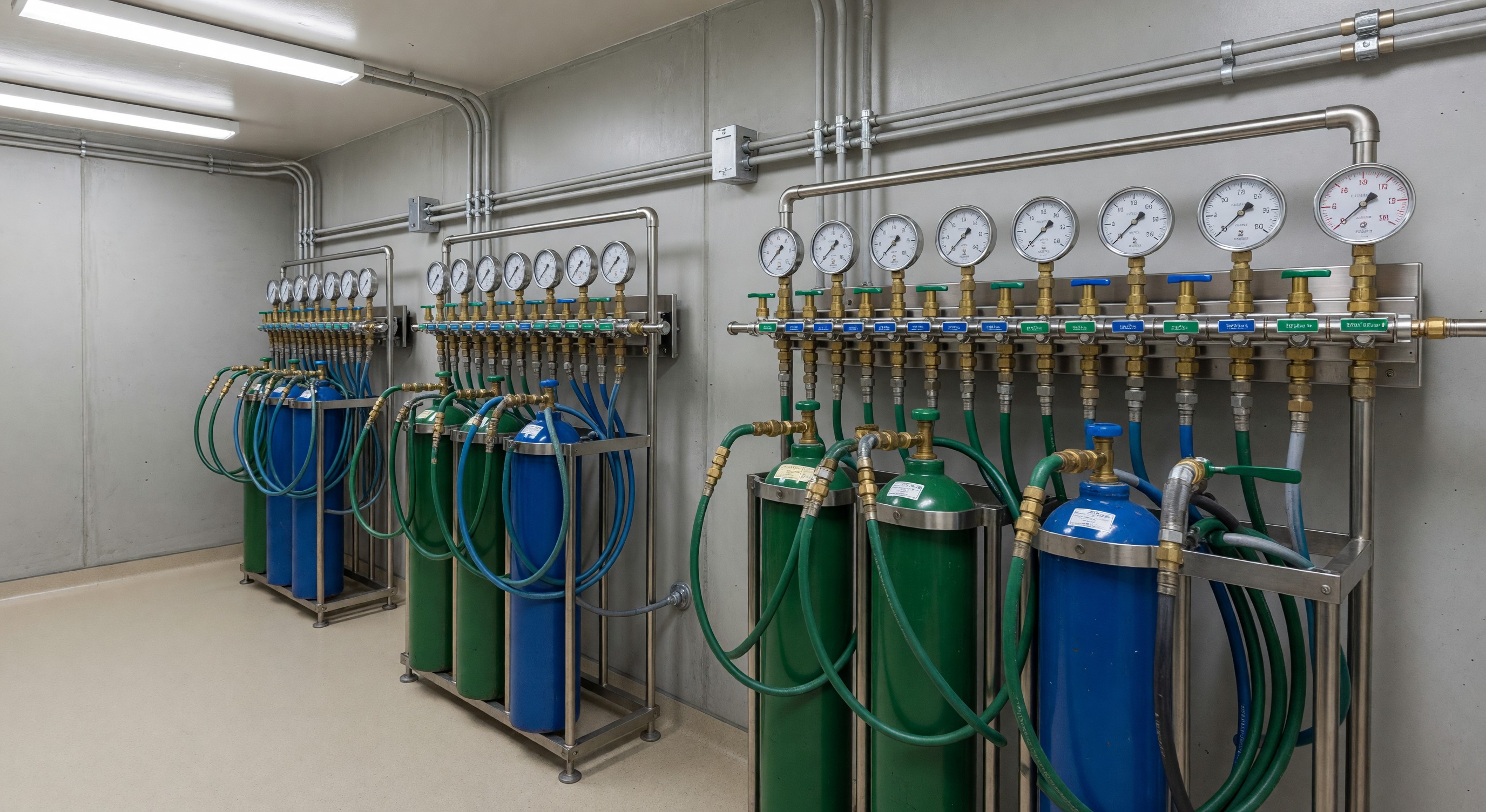
Medical oxygen (O₂) — The most critical medical gas. Delivered to patient care areas for respiratory support, administered via masks, nasal cannula, or mechanical ventilators. Sourced from bulk liquid oxygen storage, high-pressure cylinder manifolds, or oxygen concentrators.
Medical air — Filtered, dried, oil-free compressed air for ventilators, nebulizers, and anesthesia machines. Produced by dedicated medical air compressors — not tied to general building compressed air systems, which may contain oil contamination.
Medical vacuum — Negative pressure suction for wound drainage, secretion removal, and laboratory applications. Provided by centrally located medical vacuum producers.
Nitrous oxide (N₂O) — Used in anesthesia and procedural sedation. Stored in high-pressure cylinders and piped to operating rooms and procedure suites. Nitrous oxide exposure management is an occupational health concern; scavenging systems are required.
Carbon dioxide (CO₂) — Used in laparoscopic procedures for abdominal insufflation and some cardiac procedures. Typically stored in liquid form for facilities with significant surgical volume.
Nitrogen — Used to power pneumatic surgical instruments and some equipment. Stored as high-pressure gas.
Zone Valve Organization and Management
Medical gas piping is organized into zones served by zone valve boxes — shutoff valves that allow isolation of a specific area without interrupting the rest of the system. Zone valves are critical for emergency response and maintenance isolation.
NFPA 99 requires zone valve boxes to be:
- Labeled with the gas identity and the areas served
- Located outside the area they serve (so that the area can be isolated while staff remain in the zone to move patients if necessary)
- Accessible at all times (never blocked or locked without alternative access)
- Listed and labeled for the specific gas and pressure
Zone valve maps showing which valves serve which areas must be posted at each valve box and maintained current. These maps become critical during maintenance, emergencies, and Joint Commission surveys.
The life safety importance of zone valve knowledge cannot be overstated. In a case where an oxygen line is breached or a gas is delivering at incorrect pressure, the ability of staff to immediately identify and close the correct zone valve is the difference between a manageable incident and a catastrophe. Regular training exercises — where staff are required to locate and describe the zone valves serving their unit — are essential.
Alarm Systems
NFPA 99 requires medical gas systems to be equipped with alarm panels that monitor pressure in each zone and alert staff to conditions outside normal ranges.
Master Alarm Panels — Located in designated areas continuously monitored by responsible staff (often the engineering/facilities office and the nursing supervisor station). Monitor source pressure, reserve supply status, and system-level conditions.
Area Alarm Panels — Located at the entrance to each served area (nursing station, corridor near patient rooms). Monitor zone pressure and alert staff in the area to local conditions.
Alarm conditions include:
- High or low pressure in a zone (indicating a leak, shutoff error, or demand surge)
- Reserve supply being drawn upon
- Source equipment malfunction
Alarm panels must be tested as part of the required inspection protocol. Testing documentation is required and surveyed by Joint Commission.
Inspection Requirements
NFPA 99 requires a comprehensive inspection and testing protocol for medical gas systems. The most significant inspection required is the ASSE 6000 Inspection — performed by a qualified Medical Gas Inspector certified under ASSE International Series 6000.
Required ASSE 6000 inspections occur:
- At initial installation before first patient use
- After any modification or addition to the system
- At intervals required by the authority having jurisdiction (AHJ) — typically the state health department
The ASSE 6000 inspection covers:
- Purity testing of all gases at all outlet types throughout the system
- Pressure testing of all piping zones
- Verification of cross-connection protection (the most catastrophic failure mode — if oxygen lines and nitrous oxide lines are crossed, patients receive anesthetic gas instead of oxygen)
- Testing of all zone valves, alarms, and sources
- Verification of all labeling and signage
Facilities must maintain documentation of all ASSE 6000 inspections. Surveyor requests for inspection documentation are common.
COVID-19 and Medical Oxygen Demand (2020)
The COVID-19 pandemic created unprecedented demand for medical oxygen. Hospitals that had sized their oxygen supply systems for normal patient census found those systems overwhelmed when COVID-19 surges placed large numbers of critically ill patients simultaneously on high-flow oxygen therapy.
Multiple facilities across North America experienced oxygen pressure drops during peak COVID surges, requiring emergency operational responses including:
- Cylinder oxygen to supplement bulk liquid supply
- Equipment reconfiguration to reduce oxygen flow rates where clinically feasible
- Emergency resupply logistics with oxygen suppliers
- Conversion of additional patient areas to COVID care without the medical oxygen infrastructure to support high-density oxygen therapy
The pandemic has driven facility planning conversations about oxygen system sizing and surge capacity that did not previously occur. Many facilities are now performing oxygen demand analysis that accounts for mass casualty or pandemic surge scenarios and identifying the capital investments required to support those scenarios.
Maintenance Protocols
Routine maintenance of medical gas systems includes:
Monthly: Visual inspection of manifold areas and bulk storage; verification of alarm panel status indicators; documentation of cylinder inventory and replacement
Quarterly: Functional testing of alarm panels; inspection of zone valve box labeling and accessibility; documentation review
Annual: Comprehensive inspection per facility-specific program; hose and outlet maintenance; filter replacement per manufacturer schedule; source equipment PM per manufacturer requirements
Vendor maintenance contracts for medical gas equipment should specify ASSE-certified technicians and response time commitments for alarm conditions.
Frequently Asked Questions
What is a cross-connection in medical gas systems, and why is it so dangerous? A cross-connection occurs when two different gas supplies are connected to the same outlet — the most dangerous being oxygen outlets accidentally connected to nitrous oxide supply. A patient receiving pure nitrous oxide instead of oxygen will rapidly lose consciousness and can die. NFPA 99 requires multiple safeguards against cross-connection including DISS (Diameter Index Safety System) fittings that are physically incompatible between different gas types. ASSE 6000 inspections always include cross-connection testing for this reason.
Who is qualified to work on medical gas systems? Only ASSE 6000 Series certified personnel should perform installation, modification, testing, or significant maintenance on piped medical gas systems. General plumbers or HVAC technicians without specific medical gas certification should not work on these systems. Verify certification before authorizing any work.
Can we use the building compressed air system to supply medical air outlets? No. Building compressed air systems are not designed or maintained to medical air purity standards. They may contain oil from compressors, water from inadequate drying, and contamination from building uses. Medical air must be produced by dedicated medical air compressors with proper drying, filtration, and monitoring.
What should we do when a zone valve is opened in error during maintenance? If a zone valve is closed unexpectedly, clinical staff in the affected area should immediately switch to portable cylinder oxygen for any patients requiring oxygen support. Alert the charge nurse and facilities management immediately. Restore the zone valve only after confirming the affected area is safe. Post-incident review should identify the process failure that led to the inadvertent closure.