The COVID-19 pandemic produced an unprecedented examination of indoor air quality in healthcare facilities. What had been a technical compliance topic — ASHRAE 170 requirements, air change rates, pressure differentials — became a clinical priority with direct implications for patient and staff safety. Facilities that had maintained adequate ventilation systems faced COVID-19 transmission risks they could not have fully anticipated. Those with aging, inadequate systems faced emergency decisions that should have been addressed through routine capital planning.
As healthcare facilities moved through 2021, many undertook deliberate HVAC and air quality improvement programs informed by COVID-19 operational experience. The lessons from those programs are shaping ventilation planning across the industry.
The Airborne Transmission Evidence
Throughout 2020, the evidence base for airborne transmission of SARS-CoV-2 strengthened. WHO and CDC updated their guidance to acknowledge airborne transmission as a significant mode, particularly in indoor, poorly ventilated environments.
For healthcare facilities, this had several implications:
General ward ventilation — Wards not designed as airborne infection isolation (AII) environments were nonetheless housing COVID-19 patients. The ventilation rates (minimum 6 ACH for general patient rooms under ASHRAE 170) were designed for comfort and general infection control, not for managing highly contagious airborne pathogens in large volumes.
Recirculated air — HVAC systems that recirculate a significant portion of return air can potentially distribute aerosols from an infected space to other areas served by the same air handler. Understanding which areas share recirculated air became an immediate operational question.
Healthcare worker protection — Clinicians working in non-AII environments with COVID-19 patients were relying on N95 respirators rather than the ventilation environment. The ventilation environment’s role in reducing their exposure was newly appreciated.
Filtration Upgrade Programs
The most broadly implemented air quality upgrade during 2021 was filtration improvement — upgrading to higher-efficiency filters where air handling system capacity permitted.
MERV 13 as the minimum target — ASHRAE’s COVID-19 guidance recommended MERV 13 minimum filtration for systems that could accommodate higher-efficiency filters without significant pressure penalty. MERV 13 filters capture approximately 85% of particles in the 1–3 micron range (respiratory aerosol size).
System capacity assessment required — Higher-efficiency filters have greater resistance (higher pressure drop), which increases fan energy consumption and may reduce airflow if the fan cannot overcome the added resistance. Before specifying a filtration upgrade, a licensed mechanical engineer should assess the air handling unit’s fan curve and motor capacity.
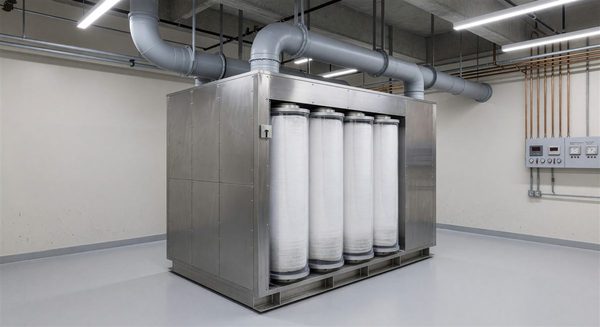
Filter bank size adjustments — In many cases, systems can accommodate higher-efficiency filtration by increasing the filter surface area (larger filter banks), which maintains acceptable pressure drop despite higher-efficiency media. This approach requires mechanical room modification but allows the efficiency upgrade without fan or motor replacement.
Outdoor Air Fraction Increases
Beyond filtration, increasing the proportion of outdoor air supplied to clinical spaces reduces the potential for aerosol accumulation by diluting indoor air with uncirculated outdoor air. COVID-19 guidance from ASHRAE and others recommended maximizing outdoor air fractions during high-transmission periods.
Energy implications — In climates with extreme temperatures, conditioning outdoor air is the dominant energy cost in HVAC operations. A hospital increasing outdoor air from 30% to 80% during a Midwest winter is incurring significant heating energy costs. Understanding the energy cost of increased outdoor air should be part of any policy decision to mandate higher outdoor air fractions.
Economizer operation — Systems with air-side economizers (dampers that allow 100% outdoor air when outdoor conditions are favorable) can provide high outdoor air fractions without energy penalty during mild weather. Economizer systems should be confirmed operational and calibrated during any HVAC assessment.
Demand control ventilation review — Systems that use CO2 monitoring to reduce outdoor air supply in unoccupied or lightly occupied spaces should be reviewed in light of infection control priorities. During an active outbreak, CO2-based demand reduction in occupied clinical spaces may not be appropriate.
UV Germicidal Irradiation (UVGI)
Ultraviolet germicidal irradiation has been used in healthcare settings for decades for surface disinfection and in some HVAC applications. COVID-19 renewed interest in UVGI as a supplemental air disinfection measure.
In-duct UVGI — UV lamps installed in air handling unit plenums or duct sections irradiate air passing through the system, inactivating biological particles including coronaviruses. Effectiveness depends on UV intensity, air velocity (exposure time), and lamp condition. In-duct UVGI supplements filtration and is not a substitute for adequate ventilation.
Upper-room UVGI — Fixtures mounted near the ceiling irradiate the upper zone of the room, where air circulation patterns carry respiratory aerosols. This approach is effective in rooms with adequate vertical air mixing. It does not require AHU modification and can be added to existing spaces as a supplemental measure.
Far-UVC (222nm) — Emerging technology that operates at a wavelength considered safer for human occupants than conventional 254nm UVGI. Research is ongoing, and regulatory status is still developing. Not yet standard practice but watching closely.
Limitations — UVGI does not improve filtration, does not increase outdoor air, and does not address all infection risk. It is most valuable as part of a layered approach — improved filtration, increased outdoor air, and UVGI together provide better protection than any single measure.
AII Room Capacity Expansion
Many facilities emerged from the COVID-19 surge period with plans to expand their airborne infection isolation room inventory. The operational experience of converting general patient rooms to makeshift isolation created momentum for capital investment in purpose-designed AII capacity.
Fixed AII rooms — The standard approach: permanently constructed rooms with all required features (negative pressure, minimum 12 ACH, exhaust to exterior, anterooms in some configurations). These rooms serve their intended purpose permanently but represent fixed capital investment.
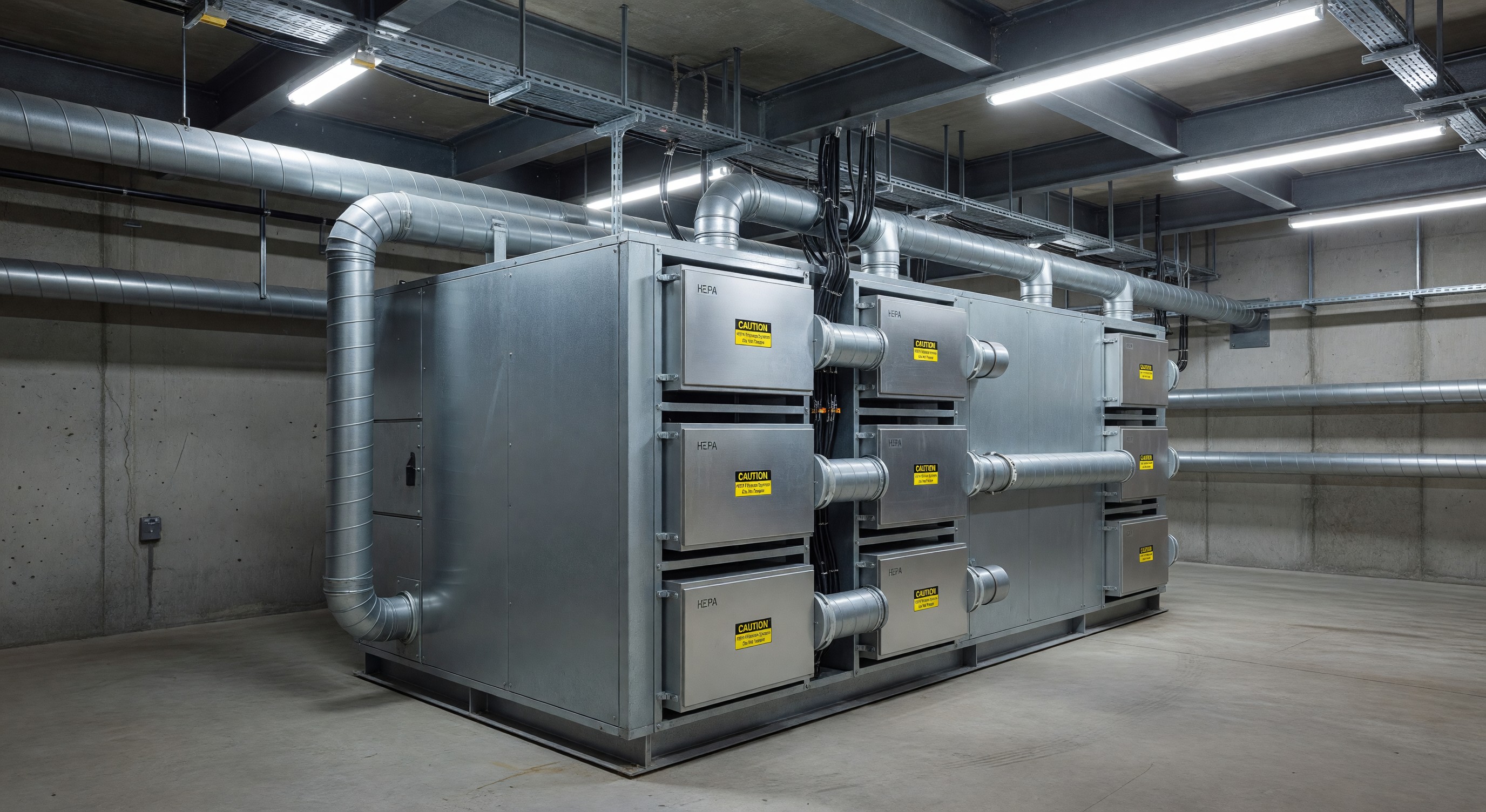
Flex rooms (convertible to AII) — Some newer hospitals are designing general patient rooms with infrastructure (exhaust connections, pressure monitoring provisions) that allows conversion to negative pressure operation when needed. Conversion requires portable HEPA exhaust units and some operational management, but the flexibility to surge AII capacity without structural renovation has obvious operational value after COVID-19.
Vaccine Administration Area HVAC
COVID-19 vaccine administration sites within hospital facilities required specific HVAC considerations during the 2021 rollout. Administration areas where dozens or hundreds of patients cycle through in close succession required:
- Adequate ventilation to maintain acceptable air quality under high occupancy
- Appropriate temperature and humidity for both patient comfort and vaccine storage
- HVAC performance that met the space’s new use classification (if repurposed from a lower-ventilation original use)
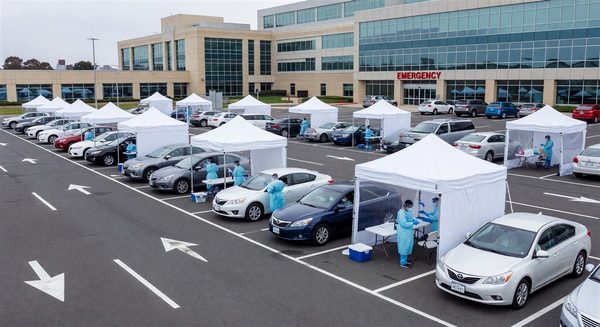
Facilities that used parking lots or tents for vaccine administration had no HVAC requirements to consider but did need to address temperature maintenance for vaccine product integrity.
Frequently Asked Questions
Does ASHRAE 170 address COVID-19 or similar airborne pathogen scenarios specifically? ASHRAE 170-2021 (the current edition) includes some updates informed by COVID-19 research, particularly around pressure relationships and air distribution in patient care areas. ASHRAE has also issued Position Documents and Design Guidance specifically addressing COVID-19 and similar airborne pathogen scenarios. These documents are not incorporated into the code by reference but provide best practice guidance that many facilities are adopting.
Should we install portable air cleaners in clinical spaces? Portable HEPA air cleaners (PACs) can provide meaningful supplemental filtration in spaces with inadequate HVAC performance, particularly during renovation or as interim measures while permanent upgrades are planned. ASHRAE’s guidance on PACs provides selection criteria based on Clean Air Delivery Rate (CADR) relative to room volume. PACs should not be used as a substitute for code-required HVAC performance but are recognized as a legitimate supplemental measure.
How do we evaluate whether our existing HVAC system can support filtration upgrades? Commission a mechanical engineering assessment that includes: review of original design documentation, field measurement of current airflow rates, fan curve analysis to determine available static pressure headroom, and evaluation of whether filter bank modifications are structurally feasible. This assessment is essential before specifying any filtration upgrade — an ill-considered upgrade can actually reduce airflow below minimums.
What is the appropriate outdoor air fraction for COVID-19 risk mitigation in general patient areas? ASHRAE guidance during the COVID-19 pandemic recommended maximizing outdoor air fractions in occupied spaces where system capacity permits. A practical target of 50–100% outdoor air in spaces with confirmed or suspected COVID-19 patients, balanced against energy cost and system capacity, was widely adopted. In well-vaccinated population periods with lower community transmission, standard ASHRAE 170 minimums are appropriate.