Windows and glazing systems in hospitals serve multiple functions simultaneously: natural light for patient healing, thermal barrier for energy performance, acoustic barrier for noise control, safety barrier for fall prevention, and infection control surface management. Each requirement creates constraints that must be balanced in the selection and specification process.
Facility directors involved in renovation or new construction projects need to understand how glazing specifications affect long-term operational performance, patient safety compliance, and energy costs.
Natural Light and Patient Outcomes
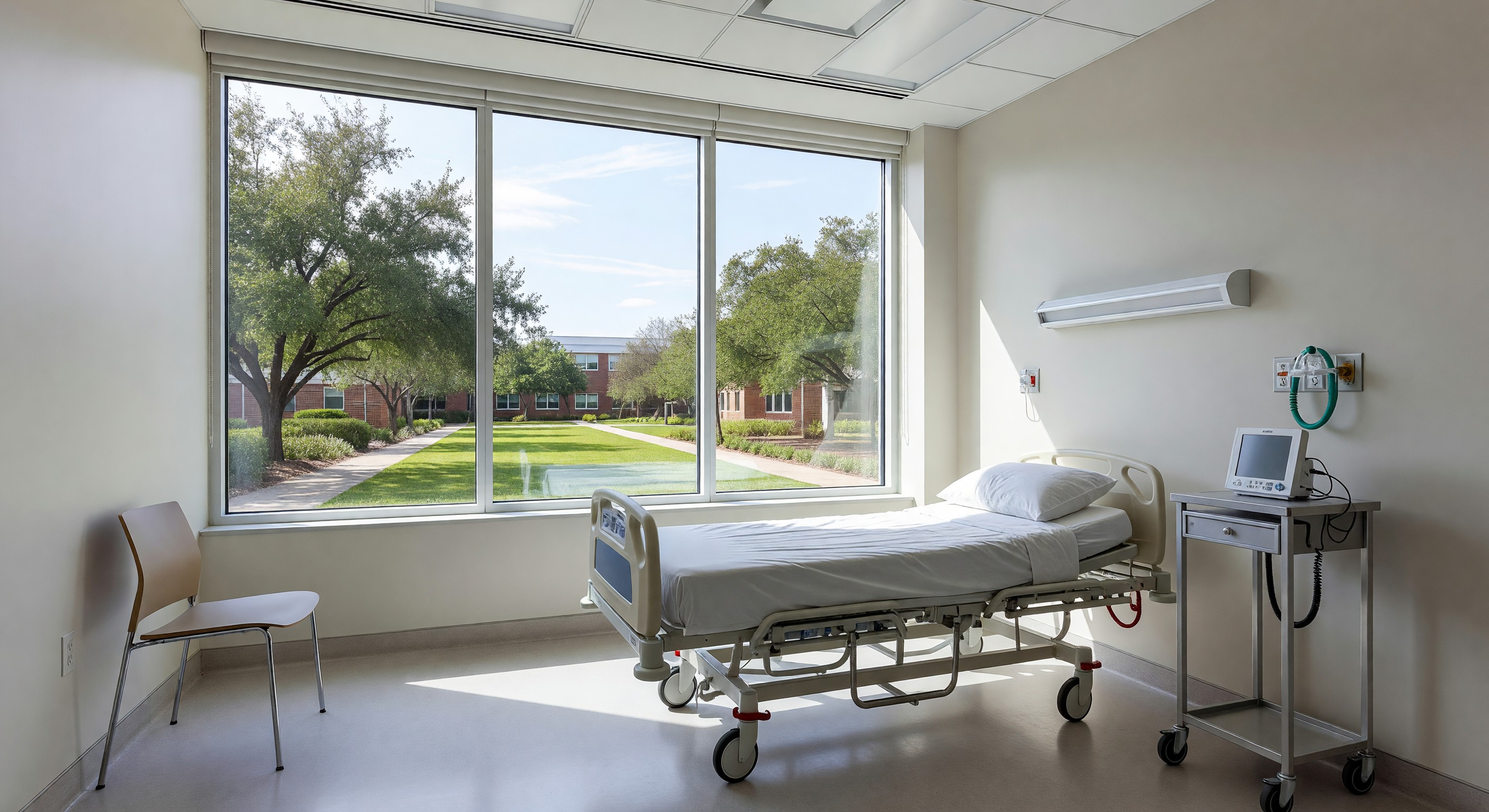
Research consistently links natural light exposure in hospital patient rooms to improved patient outcomes — shorter lengths of stay, reduced pain medication use, and better sleep quality. The FGI Guidelines for Design and Construction of Hospitals require that patient rooms have a window to the outside with a minimum glazing area of 8% of the floor area.
Window design for patient rooms should consider:
- View angle: Windows should allow patients in bed to see outside without sitting up. Sill height and window height must be coordinated with the bed position.
- Daylight penetration: Room depth and ceiling height affect how far natural light penetrates. Light shelves and high-performance glazing with high visible light transmittance (VT) maximize natural light reach.
- Glare control: Direct sunlight creates glare that patients find uncomfortable. Interior shading systems (roller shades, blinds) should be cleanable with hospital disinfectants — fabric roller shades that trap dust and moisture are problematic from an infection control perspective.
Patient Safety Requirements
Window safety requirements in healthcare facilities are driven by ligature resistance and fall prevention:
Behavioral health units: Windows in behavioral health patient rooms must be ligature resistant. Window hardware — handles, locks, cranks — must meet ligature resistance standards. Fixed glazing is preferred where ventilation requirements allow. Operable windows, if used, must have opening limiters restricting opening to no more than 4 inches, meeting requirements per NFPA 101 and Joint Commission behavioral health environment standards.
General patient rooms: Fall prevention at windows requires that the window sill height be above the center of gravity for an adult patient, or that windows be fixed or limited-opening. Opening limiters are required when operable windows are present at height.
Impact resistance: Windows in areas subject to storm exposure (hurricane-prone regions) must meet impact-resistant glazing requirements per state building codes. Security glazing requirements for high-risk areas (psychiatric units, ED behavioral health holding) may require laminated or polycarbonate glazing systems resistant to forced entry.
Thermal Performance Requirements
Hospital windows represent significant energy loss potential due to the large glazing areas in modern healthcare design. Key thermal performance specifications:
U-Factor: Measures heat transfer rate through the glazing assembly. Lower U-factor = better insulating performance. High-performance hospital windows target U-factors of 0.30 or below for most climate zones.
Solar Heat Gain Coefficient (SHGC): Measures solar heat admitted through glazing. Lower SHGC reduces cooling loads in summer but also reduces passive solar heating benefit in winter. Climate and building orientation should drive SHGC selection — a southern-exposure window in a northern climate may benefit from higher SHGC.
Low-E Coatings: Low-emissivity coatings on glass surfaces reduce radiative heat transfer. Different coating positions (surface #2 or #3 in insulated glazing units) optimize for different performance priorities.
Triple Glazing: In cold climates or high-performance facilities, triple-pane insulated glazing units achieve U-factors below 0.20, significantly reducing perimeter heating requirements.
ASHRAE 90.1 (Energy Standard for Buildings) sets minimum window performance requirements by climate zone. Healthcare facilities must meet or exceed these minimums; high-performance facilities target significantly better performance.
Acoustic Performance
Hospital windows must provide adequate sound attenuation between exterior noise sources and patient rooms. Urban hospitals near highways, flight paths, or rail lines face significant acoustic challenges:
STC (Sound Transmission Class): Standard measure of airborne sound attenuation. Patient room windows should achieve STC 45 or higher in high-noise environments. Triple-pane glazing and laminated glass configurations can achieve STC 50-55.
Window-wall assembly performance: The glazing unit’s rated STC is only achieved when the full window-wall assembly — including frame, perimeter sealing, and through-wall connections — is installed correctly. Air gaps around window frames dramatically reduce effective STC.
Infection Control at Window Surfaces
Window surfaces and hardware in patient care areas must withstand repeated cleaning with hospital disinfectants. Considerations:
- Frame materials: Aluminum frames with powder coat finish provide good chemical resistance. Vinyl frames may be acceptable in low-acuity areas but can be damaged by some disinfectants with repeated use.
- Hardware: Window locks, latches, and limiters should have smooth, cleanable surfaces without crevices that trap contamination. Stainless steel hardware is preferred in high-acuity clinical areas.
- Shading systems: Integral blinds (between glass panes) eliminate the infection control problem of exposed fabric blinds while maintaining adjustability. Higher initial cost but preferred in ICUs and isolation rooms.
- Interior sills: Deep window sills become horizontal surfaces that collect dust and equipment. Minimal or sloped sills reduce contamination accumulation.
Window Maintenance and Lifecycle
Window systems require planned maintenance to maintain performance:
- Insulated glazing unit seal integrity — failed seals allow moisture to condense between panes, reducing performance and visibility. Annual inspection identifies failed units for replacement.
- Opening limiter function — annual testing of opening limiters in operable windows confirms patient safety function
- Frame caulking and perimeter seals — deteriorated perimeter sealing allows air infiltration and water intrusion; inspection every 2-3 years
- Hardware function — locks, cranks, and limiters should be exercised and lubricated annually
Glazing replacement is a capital project that should be anticipated in the facility condition assessment. Window systems typically have 25-30 year service lives with appropriate maintenance.
Frequently Asked Questions
Are opening limiters required on all hospital windows? Opening limiters are required on operable windows in behavioral health units (typically limiting to 4 inches) per NFPA 101 and Joint Commission behavioral health environment standards. In general patient rooms, limiting devices are required if the window can open to a degree that presents a fall hazard. Fixed windows are common in high-rise hospital towers where fall risk is elevated.
What glazing is required for hospital isolation rooms? Negative pressure isolation rooms typically do not have requirements for special glazing, but they require sealed perimeters — no air infiltration paths around window frames that could compromise pressure differential. Vision panels between isolation rooms and corridors are often specified with laminated glass for sound attenuation.
How do hospitals manage window replacement during occupied operations? Window replacement in occupied hospitals requires careful infection control planning (construction barrier installation, dust control) and coordination with unit nursing leadership to minimize disruption. Night and weekend work scheduling may be required for high-acuity units. The Infection Control Risk Assessment (ICRA) process applies to window replacement projects as it does to any construction activity.
What is the facility director’s role in window specification during design? Facility directors should review window specifications for cleanability, hardware maintenance requirements, and compatibility with the facility’s disinfectant products. Long-term performance and maintenance cost perspective is the facility director’s unique contribution to the design team — preventing specifications that look good on paper but create operational problems over decades of use.