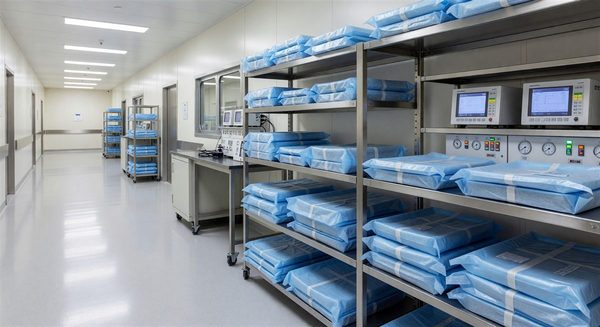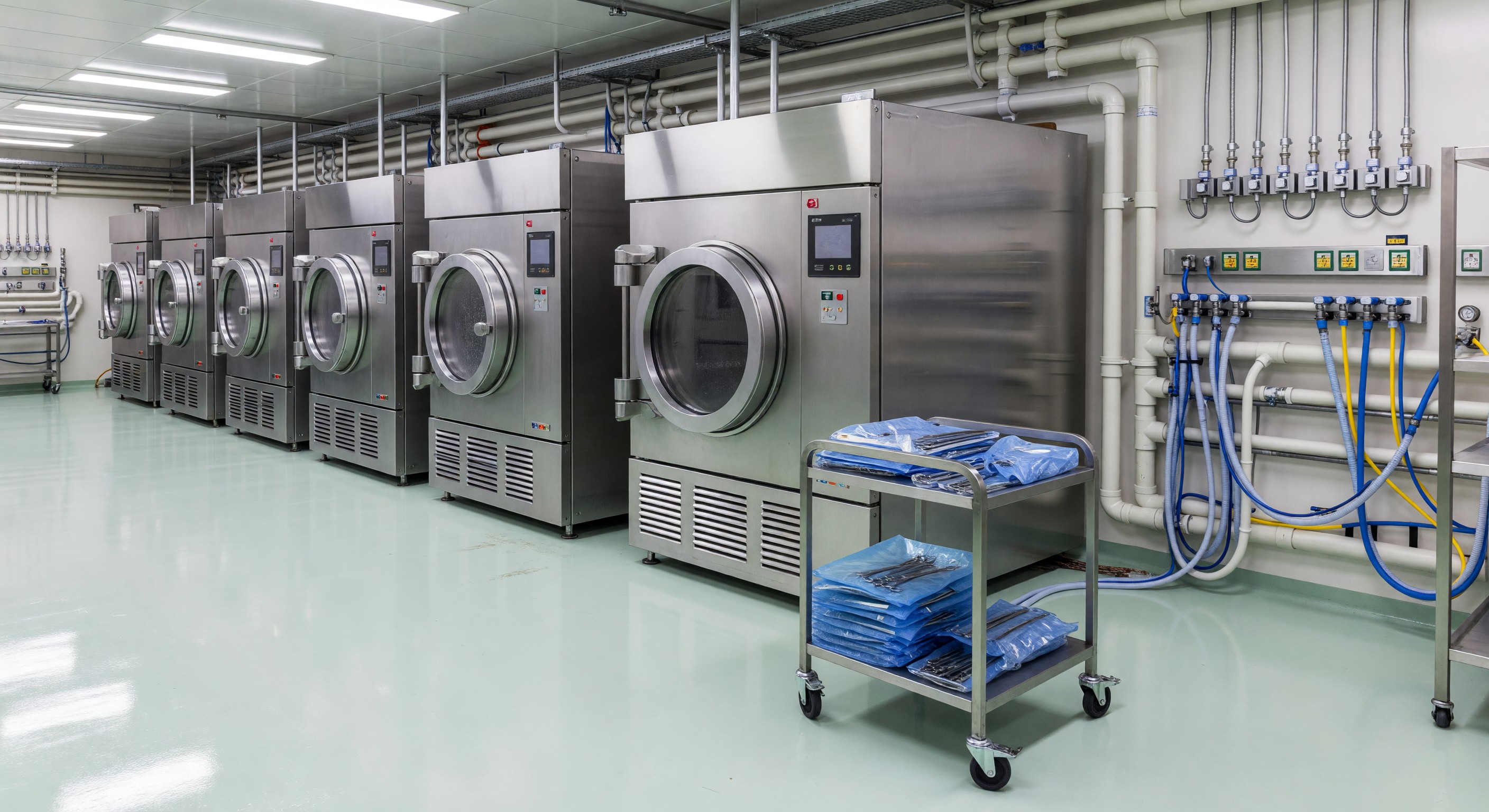
Steam sterilization is the backbone of surgical instrument reprocessing in hospitals. While clinical staff and sterile processing technicians manage the operational aspects of sterilization, facility directors are responsible for the infrastructure that makes sterilization reliable: steam supply quality, equipment installation, utility system design, and the physical environment of the sterile processing department (SPD).
Infrastructure deficiencies in the sterilization environment can cause sterilization failures — potentially resulting in unsterilized instruments reaching patients. This makes SPD infrastructure one of the highest-stakes facility management responsibilities in an acute care hospital.
Steam Quality Requirements
Steam sterilization depends on steam that meets specific quality parameters. AAMI TIR34 (Water for the Reprocessing of Medical Devices) and AAMI ST79 (Comprehensive Guide to Steam Sterilization and Sterility Assurance) define steam quality requirements:
Dry saturated steam: Sterilizer steam must be dry saturated steam — steam at or near the saturation point with no significant superheat and minimal liquid water carryover. Wet steam causes inadequate heat penetration; superheated steam kills more slowly than saturated steam.
Superheat: Steam superheat must not exceed 25°F (14°C) at the sterilizer inlet.
Non-condensable gases: Gases (air, CO2) that do not condense at sterilizer temperatures interfere with steam penetration. Non-condensable gas content must not exceed 3.5% by volume.
Steam purity: Chemical contaminants in steam — including boiler treatment chemicals — can damage instruments and potentially harm patients if residues remain after sterilization. Steam entering sterilizers must meet steam purity requirements per AAMI TIR34, typically requiring dedicated steam generation or clean steam generators rather than facility boiler steam directly.
Clean steam generators: Many hospitals install dedicated clean steam generators (also called pure steam generators) for sterilizer supply, rather than routing facility boiler steam through a pressure-reducing station. Clean steam generators produce steam from purified water without boiler chemical carryover. This is the preferred approach for modern SPD design.
Sterilizer Placement and Facility Design
The FGI Guidelines for Design and Construction of Hospitals specify minimum requirements for SPD layout. Key facility design principles:
Workflow separation: Clean and soiled workflows must be separated to prevent cross-contamination. Physical barriers (walls with pass-through windows or doors) separate the soiled decontamination area from the clean assembly and sterilization areas.
Sterilizer placement: Sterilizers should be positioned so that load doors open into the clean/sterile area. Unload sides of pass-through sterilizers open into the sterile storage area or a sterile corridor.
Utility access: Each sterilizer requires:
- Steam supply (clean steam at appropriate pressure — typically 50-80 psig at the sterilizer)
- Condensate drain (direct drain to floor drain with appropriate trap)
- Electrical service (sterilizer controls and accessories)
- Cold water supply (for chamber cooling and condensate cooling)
- Compressed air (instrument air for pneumatic controls)
- Exhaust ventilation (steam exhaust from sterilizer chamber)
Clearances: AAMI ST79 and manufacturer requirements specify minimum clearances for sterilizer maintenance access. These clearances must be maintained — sterilizers routinely built into tight spaces with inadequate service access create maintenance problems and premature equipment failure.
Structural considerations: Large sterilizers are heavy. Floor loading capacity must be verified against sterilizer specifications, particularly in renovation projects where SPD is relocated to an existing floor with unknown load ratings.
Ventilation Requirements for SPD
ASHRAE 170 specifies ventilation requirements for sterile processing departments:
- Decontamination area: Negative pressure relative to adjacent clean areas; minimum 10 air changes per hour total, 2 of which must be outdoor air
- Clean assembly and packaging: Positive pressure relative to decontamination area; minimum 10 air changes per hour
- Sterilization area: Specific ventilation requirements for sterilizer exhaust and heat dissipation from sterilizer surfaces
- Sterile storage: Positive pressure; temperature and humidity controlled to prevent condensation and maintain sterile package integrity
Temperature and humidity control is critical for package integrity: AAMI ST79 recommends 60-75°F and 30-60% relative humidity in sterile storage areas. Packages stored in conditions outside these ranges may lose sterility assurance.
Flash Sterilization (Immediate Use Steam Sterilization) Infrastructure
Flash sterilization — now properly termed Immediate Use Steam Sterilization (IUSS) under AAMI ST79 — allows sterilization of unwrapped instruments for immediate use in surgery when standard wrapped sterilization is not feasible. IUSS requires:
- Sterilizers located in or immediately adjacent to the operating suite
- Point-of-use sterilizer with open (non-sterile) tray design for unwrapped loads
- Strict documentation of each IUSS cycle (instrument, reason for IUSS use, exposure parameters, biological monitoring)
- IUSS use only for emergency situations — not as a routine workflow substitute for adequate SPD capacity
Joint Commission and CMS surveyors scrutinize IUSS use. Facilities using IUSS routinely to compensate for SPD bottlenecks face citation risk. Infrastructure investment in adequate SPD sterilizer capacity is the correct long-term solution.
Sterilizer Preventive Maintenance
Sterilizers are complex medical devices requiring comprehensive PM programs managed jointly by biomedical engineering and the SPD:
- Daily: Bowie-Dick test (air removal verification), biological indicator testing for all implant loads
- Periodic: Chamber gasket inspection, valve testing, drain strainer cleaning, door mechanism inspection
- Annual: Third-party inspection and calibration of temperature, pressure, and time recording systems
- Scheduled PM: Per manufacturer’s requirements — chamber cleaning, lubrication, control system testing
PM records for sterilizers must be maintained per Joint Commission EC.02.04.01 and AAMI ST79 requirements. Sterilizer failures — including failed biological indicators or cycle parameter deviations — must be investigated, documented, and corrective action taken before the equipment is returned to service.
Frequently Asked Questions
Can hospitals use facility boiler steam directly for sterilizers? Direct use of facility boiler steam is problematic because boiler treatment chemicals can contaminate instruments. Most healthcare design guidelines recommend clean steam generators or at minimum a steam separator and appropriate filtration between the facility boiler system and sterilizer supply. Consult AAMI TIR34 and your sterile processing consultant for the appropriate solution for your facility’s specific steam system.
How is sterilizer capacity calculated for a hospital SPD? Sterilizer capacity is calculated based on surgical case volume, tray set sizes, and sterilization cycle times. Under-capacity leads to IUSS overuse or delayed surgery starts. The FGI Guidelines and AAMI provide calculation worksheets. Renovations that increase OR capacity must trigger SPD capacity review.
What does AAMI ST79 require for documentation of sterilization cycles? AAMI ST79 requires documentation of every sterilization cycle including: load contents, sterilizer used, cycle parameters (temperature, time, pressure), biological indicator results for implant loads, and operator identification. Modern sterilizers produce printed or electronic cycle records; these records must be retained per facility policy, typically 3-10 years depending on state requirements.
Who is responsible for SPD infrastructure — facilities or clinical engineering? The physical environment (HVAC, steam supply, plumbing, space layout) is a facilities responsibility. The sterilization equipment itself (autoclaves) is typically owned by clinical/biomedical engineering. Both departments must coordinate closely — particularly when sterilizer problems are caused by utility supply issues (inadequate steam pressure, contaminated steam) rather than equipment failure.