The concept of the “smart hospital” has been discussed for years, but 2026 marks a genuine inflection point: the convergence of affordable IoT sensors, mature cloud analytics platforms, reliable wireless connectivity, and AI-driven insights has moved smart building technology from pilot projects into mainstream operational deployment at healthcare facilities of all sizes.
Healthcare facility directors are discovering that smart building platforms are not just operational efficiency tools—they are clinical quality tools. The ability to monitor, predict, and continuously optimize every environmental parameter that affects patient outcomes (air quality, temperature, humidity, pressure differentials, lighting) with the precision that AI-driven systems provide represents a genuine advancement in the facility’s role in patient care delivery.
What Makes a Healthcare Facility “Smart”
The label “smart building” covers a spectrum of technology implementations. In healthcare, a meaningful smart building infrastructure typically integrates:
Comprehensive IoT Sensor Networks Wireless environmental sensors throughout clinical spaces monitoring temperature, humidity, CO2, particulate matter, occupancy, and pressure differentials—far more granular than what traditional building automation systems measured. Modern IoT sensors are inexpensive enough to deploy at room level rather than zone level, providing spatial resolution that reveals microenvironmental variations invisible in traditional BAS data.
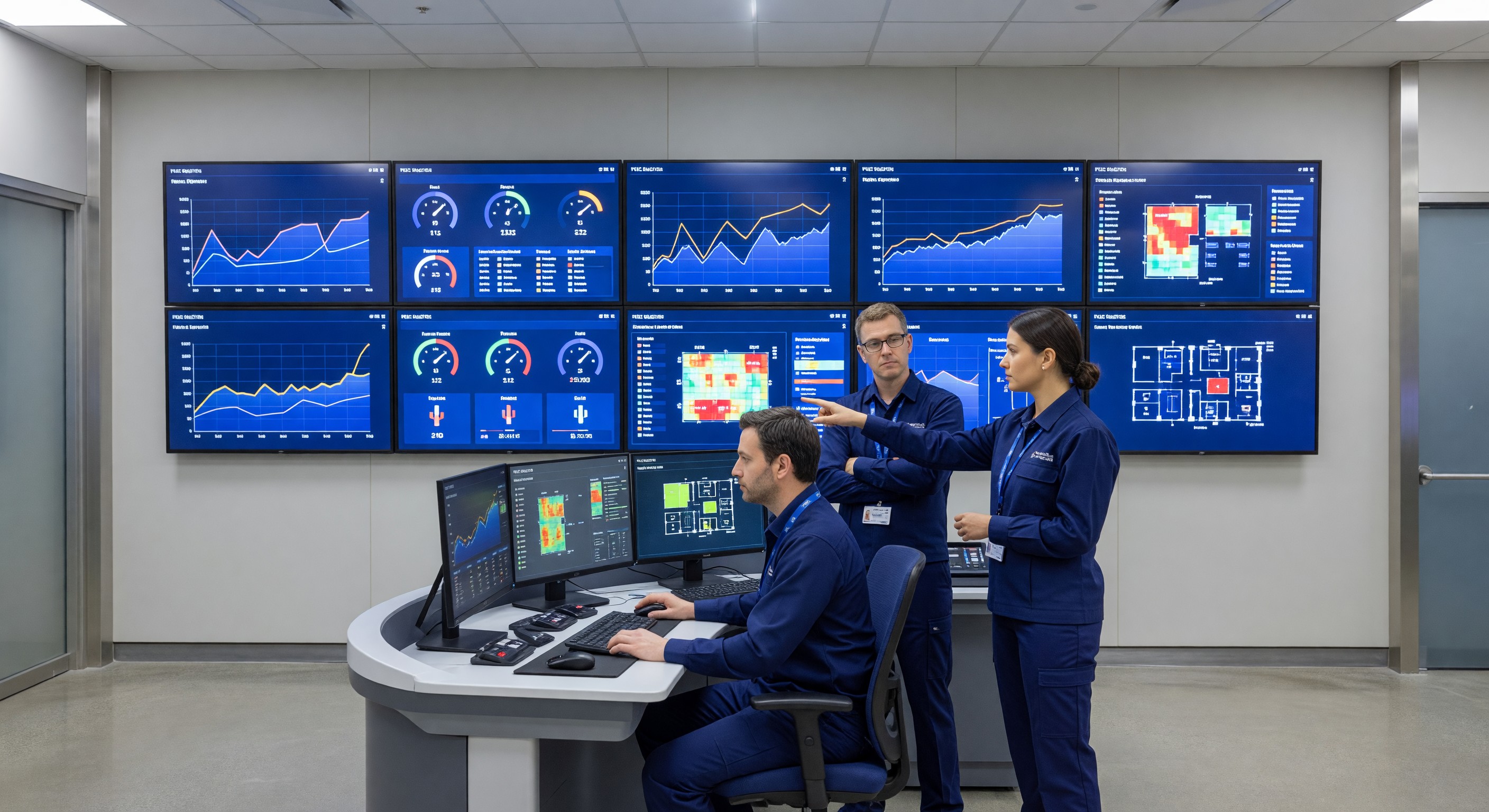
Unified Building Management Platform A cloud-based platform that aggregates data from IoT sensors, traditional BAS systems, lighting controls, access control, and other building systems into a single operational view. This eliminates the data silos that require facility staff to navigate between multiple systems to understand what’s happening across the building.
AI-Driven Fault Detection and Diagnostics Machine learning algorithms that analyze equipment performance data and identify equipment faults—not just obvious failures, but subtle performance degradation patterns—before they cause system failures or clinical environment excursions. Fault detection and diagnostics (FDD) has become the primary ROI driver for smart building investments in healthcare.
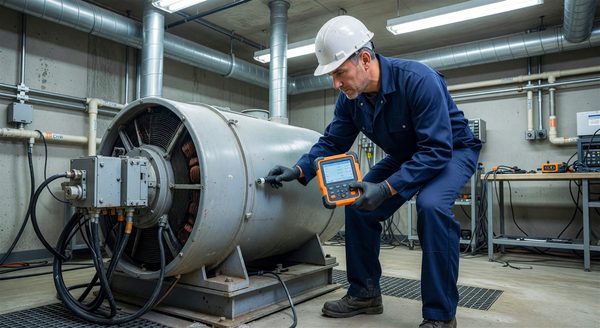
Predictive Maintenance Moving from calendar-based preventive maintenance (change filters every 3 months, inspect belts annually) to condition-based maintenance driven by real sensor data. Equipment that is performing well defers non-critical maintenance; equipment showing early deterioration signals triggers proactive service before failure.
Digital Twin Integration A virtual model of the physical building synchronized with real-time sensor data—allowing facility teams to test HVAC modifications, evaluate energy optimization scenarios, and simulate construction impacts on clinical environments without affecting real building operations.
Smart Building in Clinical Quality Contexts
The most compelling argument for smart building investment in healthcare is not operational efficiency—it’s clinical quality. Environmental parameters that smart building systems monitor and control directly affect patient outcomes:
Operating Room Environmental Control ASHRAE 170 specifies precise temperature, humidity, and pressure differential requirements for operating rooms. Smart building systems with room-level sensing and AI-driven control can maintain these parameters with precision not achievable with traditional zone-level control systems.
When an OR environment begins to drift—humidity rising toward the upper limit, pressure differential declining—AI-driven control can make micro-adjustments to maintain compliance before the parameter breaches the limit. Traditional BAS systems often wait for a setpoint exceedance alarm before responding.
Isolation Room Pressure Verification Continuous, certified pressure differential monitoring in airborne infection isolation rooms and protective environment rooms provides real-time compliance documentation and instant alerts when pressure relationships change—critical for infection prevention and Joint Commission compliance documentation.
Thermal Comfort and Patient Healing Patient room thermal comfort is increasingly recognized as a factor in healing, sleep quality, and patient satisfaction. Smart building systems that can adjust temperature and lighting at the individual room level—based on patient feedback, time of day, and clinical status—provide a level of personalized environment control that traditional systems cannot deliver.
Fault Detection and Diagnostics in Practice
FDD is the smart building capability generating the most consistent ROI in healthcare deployments. Healthcare-specific FDD applications include:
HVAC Fault Detection AI analysis of airflow, temperature, pressure, and runtime data identifies specific fault types: stuck dampers, dirty coils, failing heat exchangers, improperly calibrated controls. Rather than generating a generic “HVAC alarm,” FDD systems generate specific fault descriptions (“VAV box damper not tracking setpoint in Room 412, likely actuator failure”) that direct technician attention to the specific problem rather than requiring diagnosis from scratch.
Healthcare facilities implementing FDD across campus HVAC systems typically find 15–25 active fault conditions per 100 system components—representing energy waste, comfort degradation, and impending failures that traditional monitoring would not have identified.
Medical Equipment Energy Waste Imaging equipment (MRI, CT, PET) consumes significant energy even in standby modes. Smart building integration with equipment management systems can identify equipment left in high-energy modes when not in use, generating alerts that allow clinical staff to reduce energy consumption without affecting care delivery.
Refrigeration Monitoring Smart building platforms that integrate pharmaceutical and biological refrigeration monitoring provide centralized visibility and alerts for the temperature excursion risks described in healthcare refrigeration guidelines.
Predictive Maintenance Results
Healthcare facilities that have operated smart building predictive maintenance programs for 12–24 months report consistent findings:
Reduced Emergency Failures Facilities with mature predictive maintenance programs report 50–70% reductions in emergency HVAC equipment failures compared to their pre-program baselines. This has direct operational value—emergency failures in clinical areas are far more costly and disruptive than planned replacements.
Extended Equipment Life Condition-based maintenance that services equipment precisely when needed—neither too early (wasting maintenance effort) nor too late (allowing performance degradation that causes additional wear)—consistently extends equipment useful life compared to calendar-based programs.
Labor Efficiency Technicians dispatched with specific fault diagnoses and the correct parts resolve issues in fewer trips and less total labor time than technicians dispatching from generic alarm descriptions to unknown faults.
Implementation Approach for Healthcare Organizations
Healthcare organizations implementing smart building infrastructure in 2026 typically follow a pragmatic approach:
Start with Existing BAS Integration The fastest path to smart building value is connecting the existing BAS to a cloud analytics platform that adds FDD and predictive analytics to the data the BAS already collects—without requiring new sensor deployment. This approach delivers immediate value from existing infrastructure investment.
Layer IoT Sensors for Higher Resolution Deploy wireless IoT sensors in highest-priority areas—clinical spaces, mechanical rooms with critical equipment, refrigeration areas—to add the granularity that BAS systems don’t provide. Prioritize where room-level visibility delivers the most clinical or compliance value.
Digital Twin for New Construction New construction projects and major renovations should include digital twin development from the design phase—creating a virtual model that is commissioned alongside the physical building and synchronized with actual building data at commissioning. Retrofit digital twin development is possible but significantly more expensive.
Cybersecurity as a Foundation Smart building IoT devices represent an expanding attack surface for healthcare organizations that are already among the most targeted sectors for cyberattacks. Every IoT device deployed must be assessed for security configuration, placed on appropriate network segments, included in patch management programs, and monitored for anomalous behavior.
Frequently Asked Questions
What’s the typical ROI timeline for a healthcare smart building implementation? Most healthcare smart building implementations focused on FDD and predictive maintenance achieve positive ROI within 2–3 years from reduced energy costs, avoided emergency repair costs, and extended equipment life. Implementations that also improve clinical environment quality deliver additional value through regulatory compliance reduction and patient outcome improvements that are harder to quantify financially but are real.
How do small community hospitals access smart building technology that was originally developed for large academic medical centers? The SaaS delivery model for smart building analytics platforms has made previously enterprise-only technology accessible to smaller organizations. Cloud-based FDD platforms can be deployed at smaller facilities without the on-premises infrastructure investment required by first-generation smart building systems. Some regional health systems offer shared service arrangements where smaller member hospitals access smart building analytics through the health system’s platform investment.
What data from smart building systems is most useful for Joint Commission survey preparation? Continuous environmental monitoring logs from clinical spaces—particularly pressure differential records for isolation rooms and protective environments, temperature and humidity records for OR and sterile processing areas—provide the documentary evidence surveyors look for in EC.02.06.01 compliance. Smart building platforms that export compliance reports in survey-ready formats significantly reduce the manual documentation preparation burden before surveys.
How are healthcare smart building programs addressing the cybersecurity risk of expanding IoT infrastructure? Leading healthcare organizations are integrating IoT building devices into their enterprise cybersecurity programs rather than treating them as separate OT (operational technology) environments. This includes device inventory and classification, network segmentation policies that isolate building IoT from clinical networks, vulnerability management programs specific to OT/IoT devices, and incident response procedures that cover building system compromises.