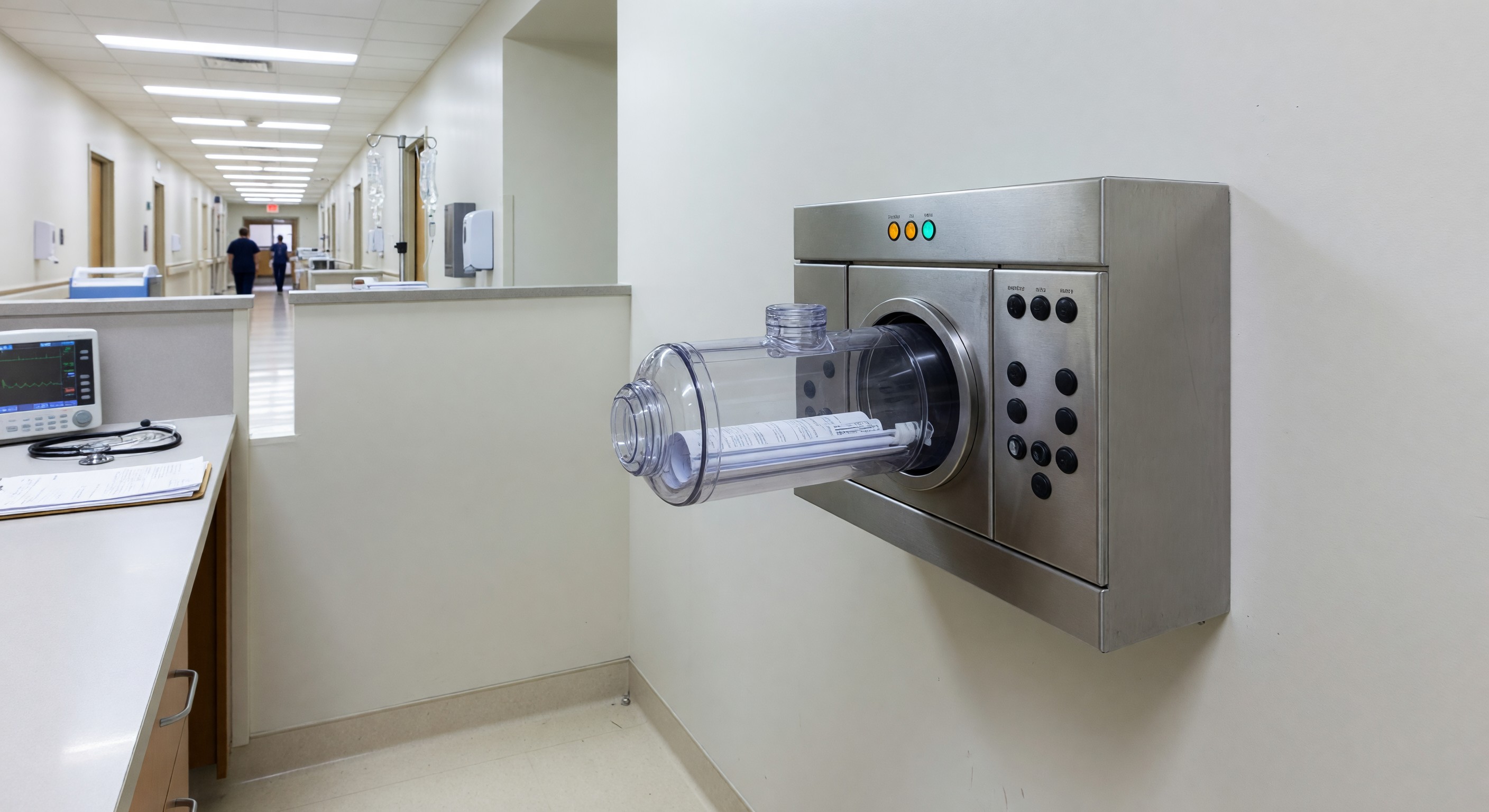
Pneumatic tube systems (PTS) are the invisible logistics infrastructure of most hospital campuses—quietly transporting medications, laboratory specimens, blood products, patient samples, and small supplies through networks of underground and in-wall pipes at speeds that ground transport cannot match. A medication order placed in the pharmacy can arrive at a nursing unit floor within 60 seconds through a properly functioning tube system. The same transfer through a human courier network might take 10–20 minutes.
For healthcare facility directors, pneumatic tube systems are high-value, high-maintenance infrastructure that requires specific operational knowledge and a proactive maintenance program. When tube systems fail—and they do fail, with carriers stuck in transport, biological specimens compromised by high-G-force transit, or blood products damaged by pressure changes—the operational and clinical consequences are significant.
What Pneumatic Tube Systems Transport in Healthcare
Healthcare pneumatic tube systems transport a specific subset of items that are appropriate for tube transit. Understanding what can and cannot be safely transported is fundamental to system management:
Appropriate for Transport
- Laboratory specimens in sealed, leak-proof containers
- Blood products in padded, temperature-regulated carriers (where system permits)
- Small medication packages and IV medications
- Pharmacy items
- Small paper documents and orders
- Patient personal items (eyeglasses, hearing aids in padded carriers)
Not Appropriate for Transport
- Fragile items (glass specimen containers without protection)
- Perishable or heat-sensitive items that cannot tolerate temperature variation in system
- Oversized items that exceed carrier capacity
- Heavy items that exceed carrier weight limits
- Hazardous materials except as specifically approved by system design
- Certain laboratory specimens that are sensitive to G-force (arterial blood gas samples and similar specimens sensitive to agitation)
Most hospitals establish written item restriction policies that define what can and cannot be transported, and include tube system training in laboratory and pharmacy orientation programs.
Blood Product Transport Considerations
Blood product transport via pneumatic tube requires particular attention because red blood cells and platelets can be damaged by excessive G-forces generated during transport. Research has documented that improperly transported blood products may have compromised integrity that is not visually apparent.
G-Force Parameters The American Association of Blood Banks (AABB) and blood product manufacturers specify maximum G-force limits for blood product transport. Pneumatic tube system manufacturers who support blood transport applications specify carrier design and system configuration parameters that maintain G-forces within acceptable limits.
Validation Requirements Healthcare facilities that transport blood products via tube system should conduct validation testing to verify that the specific carrier/system combination does not compromise blood product integrity. Validation protocols typically include laboratory assessment of transported blood products for hemolysis and other damage indicators.
Regulatory Considerations Blood bank accreditation through AABB requires that facilities using tube transport for blood products have documented validation of their transport process. AABB standards specify the validation approach and documentation requirements.
Tube System Maintenance Programs
Pneumatic tube systems require comprehensive preventive maintenance to maintain reliability and prevent the carrier jams and transport failures that disrupt hospital operations:
Daily/Weekly Maintenance
- System functional test through all zones (confirm stations are operational)
- Air compressor and vacuum pump inspection and pressure verification
- Carrier inventory check (ensure sufficient carrier supply at high-demand stations)
Monthly Maintenance
- Diverter valve inspection and lubrication per manufacturer specifications
- Carrier inspection and cleaning (damaged or worn carriers should be removed from service)
- Sending station and receiving station inspection
- System pressure and vacuum measurement
Quarterly Maintenance
- Full tube inspection in accessible sections
- Carrier seal inspection and replacement
- Controller software review for error logs and performance data
Annual Maintenance
- Comprehensive mechanical inspection by manufacturer service technician
- Compressor and pump component replacement per manufacturer schedule
- Full system performance test at rated capacity
- Diverter valve seal replacement where scheduled
Carrier Management Carriers are consumable items that degrade with use. Healthcare facilities should maintain a carrier tracking system that identifies carrier age, condition, and usage frequency. Carriers with worn seals, cracks, or damaged foam inserts should be replaced to prevent transport failures and specimen damage.
Common Failure Modes and Response
Carrier Jams The most common operational failure is a carrier stuck in transit. Response procedures must be documented and communicated to all station users:
- Do not attempt to free carrier by sending additional carriers—this creates a chain blockage
- Notify the facilities team or tube system dispatcher
- The service team locates the stuck carrier using zone-by-zone diagnostic procedures
- Carrier is retrieved from the nearest accessible access panel
Biological Specimen Damage When laboratory staff report that specimens transported by tube appear to have been compromised (hemolyzed blood samples, disrupted cell populations), investigate whether system parameters have changed—excessive pressure, high G-force diverter events, or specific route conditions that may have changed.
Station Malfunction Individual station failures (door won’t open, carrier not released) typically require component-level repair by the service technician. Ensure that spare parts for high-failure-rate components (door seals, release mechanisms) are stocked on-site to minimize repair downtime.
Planning for System Replacement
Pneumatic tube systems have useful lives of 15–25 years with proper maintenance. Planning for replacement requires:
Early Identification of End-of-Life Signs that a system is approaching end-of-life include: increasing frequency of mechanical failures, difficulty sourcing replacement parts, inability to expand to new building areas due to system capacity limits, and manufacturer announcement of end-of-support for the platform.
Replacement Scope Tube system replacement scope can range from software and controller replacement (retaining existing pneumatic piping) to complete replacement including piping. Piping replacement is extremely disruptive and expensive in existing buildings; retaining existing piping and replacing above-pipe components is the preferred approach when piping condition allows.
Capacity Planning New system capacity should be planned for projected growth in transport volume, not just current demand. Healthcare organizations that have grown since the original system installation should use current transport volume data to size the replacement system appropriately.
Frequently Asked Questions
What’s the typical annual maintenance cost for a hospital pneumatic tube system? Annual maintenance costs for hospital pneumatic tube systems vary significantly by system size and age. A mid-size hospital system serving 15–20 stations typically incurs $15,000–$40,000 annually in service contracts and parts, with additional capital for carrier replacement and periodic component upgrades. Older systems in poor condition may incur significantly higher maintenance costs.
Can pneumatic tube systems be extended to new building additions? Yes, with design planning. Extending a pneumatic tube system to a new building requires capacity analysis (will the existing compressors support the additional stations?), routing design for the connecting pipes, and access point planning during new building construction. It’s significantly less expensive to install tube infrastructure during new construction than to retrofit it afterward.
What should happen when the tube system is unavailable due to maintenance? Facilities should have documented contingency procedures for tube system unavailability—typically relying on human courier transport for time-sensitive items. Communicate planned downtime in advance with sufficient lead time for clinical departments to plan accordingly, and coordinate with pharmacy and laboratory to prioritize manual transport of the most time-critical items.
Are there infection control considerations for pneumatic tube carriers? Yes. Carriers that transport patient specimens are considered potentially contaminated and must be decontaminated between uses—particularly when used for blood or biological specimen transport. Decontamination procedures should be documented and consistently followed. Carriers with visible contamination should be removed from service immediately for decontamination. Cleaning and decontamination procedures for carriers should be developed in coordination with infection prevention.