Legionella pneumophila—the bacterium responsible for Legionnaires’ disease—is a persistent and serious risk in healthcare facility water systems. Immunocompromised patients, elderly residents, and individuals with chronic respiratory conditions face severe and often fatal illness when they contract Legionella infections. Healthcare-associated Legionella outbreaks have resulted in patient deaths, regulatory enforcement actions, significant litigation, and reputational consequences for the organizations involved.
The Joint Commission’s water management standard (EC.02.06.02) and CMS survey guidance effective since 2017 require healthcare facilities to implement proactive Legionella water management programs based on ASHRAE 188. For facility directors, this regulatory landscape makes Legionella management a non-negotiable operational priority.
Why Healthcare Facilities Are High-Risk Environments
Healthcare facilities create ideal conditions for Legionella growth and transmission:
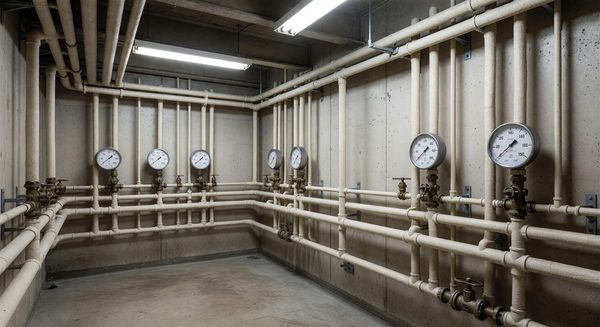
Complex Water Distribution Large campuses have extensive pipe networks with dead legs, infrequently used outlets, and recirculation loops that create conditions favoring bacterial amplification. Water that sits in pipes without adequate turnover, at temperatures in the Legionella growth range (68–122°F, with optimal growth at 95–115°F), provides ideal colonization conditions.
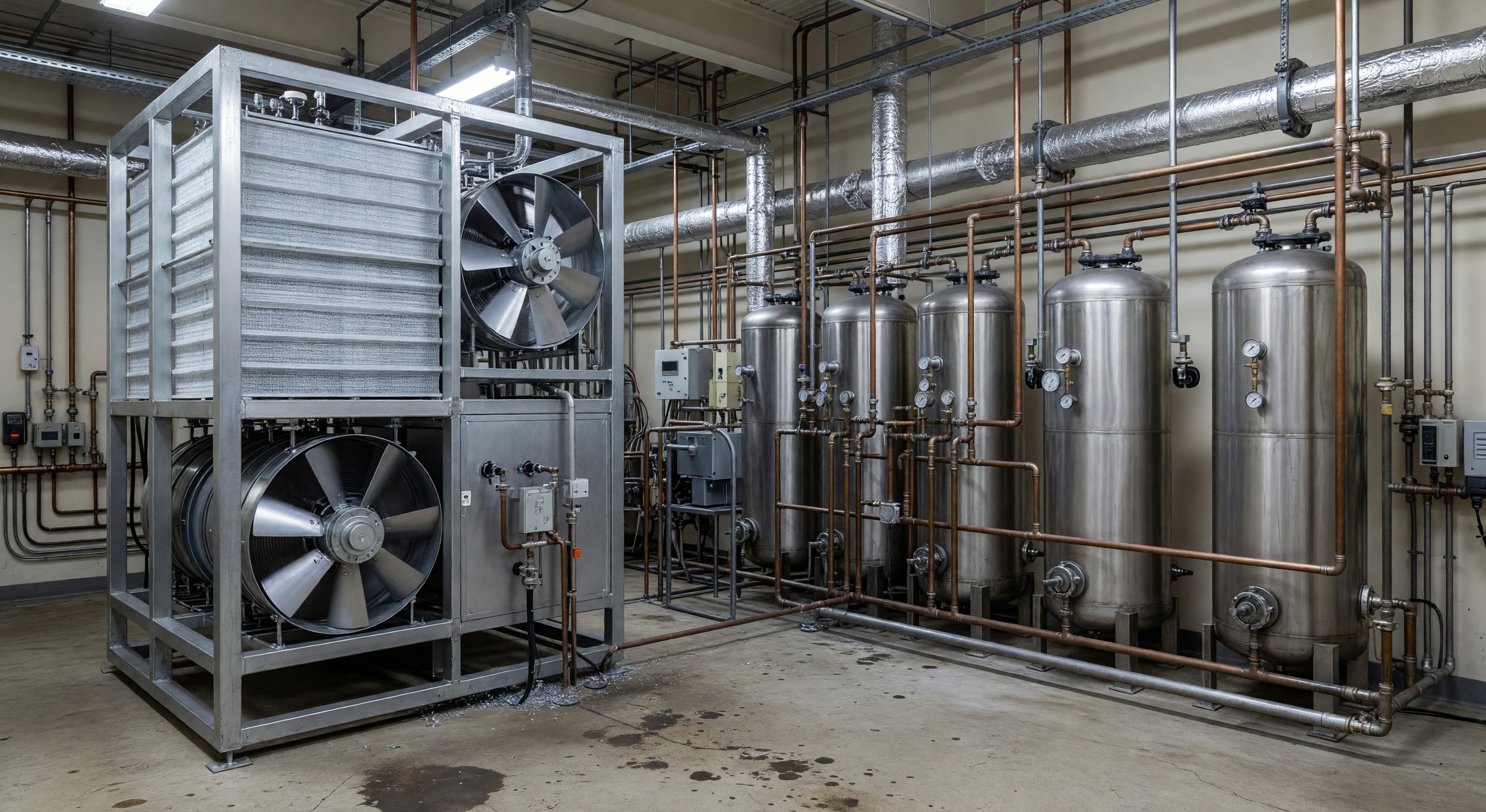
Cooling Towers Cooling towers for HVAC systems create aerosols from recirculating water that can carry Legionella over significant distances. Cooling towers at healthcare facilities represent one of the highest-risk Legionella sources in any building type.
Vulnerable Patient Population Hospitalized patients receiving immunosuppressive therapy, mechanical ventilation, or treatment for chronic lung disease face dramatically higher risk of severe Legionnaires’ disease than healthy adults. A single Legionella exposure event that might cause mild illness in healthy people can be fatal in a healthcare patient population.
Decorative Water Features Ornamental fountains, water walls, and other decorative water features in hospital lobbies and healing gardens create aerosols that can carry Legionella. The Joint Commission has specifically addressed decorative water features in healthcare environment guidance.
ASHRAE 188 and Water Management Programs
ASHRAE 188-2018 (Legionellosis: Risk Management for Building Water Systems) provides the technical framework that Joint Commission and CMS reference for healthcare water management requirements. A compliant ASHRAE 188 Water Management Program (WMP) includes:
Team Assembly The WMP requires a water management team including facilities management leadership, infection prevention, administration, and in some cases external water management consultants and industrial hygiene professionals. This team oversees program implementation and reviews ongoing monitoring data.
System Inventory and Analysis A complete inventory of all water systems in the facility—domestic hot and cold water, cooling towers, ice machines, decorative features, emergency eyewash stations, dental water lines, and other water-using equipment—with documentation of conditions that may support Legionella growth (temperatures, dead legs, seldom-used outlets).
Control Measures Identification of specific control measures for each identified risk: temperature management (hot water maintained above 120°F at heaters, 110°F at distal outlets; cold water below 68°F throughout the system), physical flushing protocols for infrequently used outlets, cooling tower chemical treatment, and other risk-specific interventions.
Monitoring and Limit Values Defined monitoring parameters and acceptable limits for each control measure. For water temperature, this typically means monthly temperature measurements at representative outlets. For cooling tower treatment, regular chemical concentration monitoring and biological testing.
Corrective Actions Documented procedures for responding when monitoring finds out-of-limit conditions: temperature excursions, biocide concentration failures, or positive Legionella culture results.
Documentation and Review Continuous documentation of monitoring results, corrective actions, and program reviews. The WMP should be reviewed and updated annually or whenever significant changes to water systems occur.
Key Control Points and Interventions
Hot Water Temperature Management The most fundamental Legionella control in healthcare potable water systems is temperature. Hot water heaters must maintain water above 140°F (60°C). Distribution systems must deliver water above 124°F (51°C) at distal outlets to prevent growth during distribution. This requires return loop temperature management and, in facilities with thermostatic mixing valves (TMVs) for scald protection, careful maintenance of mixing valve function and verification that distribution temperatures are adequate before mixing.
Infrequently Used Outlet Flushing Dead leg pipes and infrequently used outlets—sinks in storage rooms, showers in rarely used patient rooms, eyewash stations—are high-risk locations where water can stagnate at Legionella-growth temperatures without adequate turnover. Systematic flushing programs that purge these outlets on regular schedules (typically weekly) are a core WMP component.
Cooling Tower Management Cooling tower chemical treatment programs using biocides (typically oxidizing biocides like chlorine or bromine, sometimes supplemented with non-oxidizing biocides) must maintain adequate biocide concentrations continuously. Cooling towers must be drained and cleaned at least twice yearly per industry guidelines. Biological testing—including Legionella culture—provides additional verification of control program effectiveness.
Environmental Surveillance Culture Proactive environmental surveillance—regularly culturing water samples from throughout the distribution system—provides early warning of Legionella colonization before clinical cases occur. The appropriate frequency and scope of environmental surveillance is a subject of ongoing professional debate, but facilities that have experienced Legionella outbreaks are typically required to implement ongoing surveillance as part of remediation programs.
Joint Commission and CMS Survey Requirements
Joint Commission EC.02.06.02 requires that healthcare organizations identify and manage the risks associated with water systems, with specific reference to Legionella risk. Survey findings in this area have become increasingly common and more consequential since Joint Commission added specific water management requirements.
For survey readiness, healthcare facilities should have immediately available:
- Written Water Management Program document
- Team membership documentation
- System inventory and flow diagrams
- Control measure documentation with monitoring limits
- Monitoring records (typically 12+ months)
- Corrective action documentation for all limit exceedances
- Annual program review documentation
CMS survey guidance requires similar documentation and has increased focus on water management during health and safety surveys, particularly following healthcare-associated Legionella outbreaks at surveyed facilities.
Response to Healthcare-Associated Legionella Cases
When a healthcare-associated Legionella case is identified—typically through collaboration between infection prevention and clinical teams—the response requires immediate action:
Immediate Notification Notify public health authorities per state reportable disease requirements. Legionnaires’ disease is reportable in all states.
Epidemiological Investigation Work with infection prevention and public health to determine exposure source and time period. Identify other patients, staff, or visitors who may have been exposed.
Environmental Assessment Conduct immediate environmental investigation including environmental cultures from plausible exposure sources.
Clinical Review Review medical records of other patients for respiratory illness consistent with Legionella infection.
Remediation Implement remediation measures appropriate to the identified source: hyperchlorination, thermal shock, copper-silver ionization, or other source-specific interventions.
Program Review Conduct full review of WMP implementation to identify contributing factors and prevent recurrence.
Frequently Asked Questions
What is the required frequency for Legionella environmental testing in healthcare facilities? ASHRAE 188 and Joint Commission guidance do not specify universal testing frequencies—the frequency should be determined by the facility’s risk assessment and validated control program. Most healthcare infection prevention and water management professionals recommend quarterly environmental cultures at minimum, with more frequent testing in high-risk areas (immunocompromised patient units) or when control program deficiencies are identified.
Does a hospital need an outside consultant to develop a compliant Water Management Program? A qualified consultant is not strictly required if internal staff have the expertise to implement ASHRAE 188 requirements. However, many healthcare facilities benefit from external expertise for initial program development, particularly for facilities that have not previously maintained a formal WMP. External water management specialists can identify system conditions and control gaps that internal teams may miss.
What are the liability implications of healthcare-associated Legionella infections? Healthcare-associated Legionella infections that result in patient harm—including death—can generate significant litigation. Organizations that cannot demonstrate a compliant Water Management Program implemented and monitored in good faith face higher liability exposure. A well-documented, actively managed WMP that demonstrates good faith implementation of ASHRAE 188 is the most important risk management defense in Legionella litigation.
How should healthcare facilities handle Legionella risk in patient room ice machines and water dispensers? Ice machines and point-of-use water dispensers are recognized risk sources for healthcare-associated Legionella. Joint Commission and CMS guidance has increasingly focused on these devices. Appropriate controls include regular cleaning and disinfection per manufacturer recommendations, periodic culture surveillance, and—in highest-risk patient areas such as hematopoietic stem cell transplant units—use of commercially bottled water and ice.