Healthcare facility infrastructure deteriorates at a rate that systematically outpaces most organizations’ capital investment capacity. The average US hospital building is over 40 years old, and the gap between what needs to be replaced or renovated and what annual capital budgets can fund has grown to crisis proportions at many health systems. The American Society for Healthcare Engineering estimates that the deferred maintenance backlog at US hospitals exceeds $100 billion.
For facility directors attempting to manage this infrastructure gap, a facility condition assessment (FCA) is the foundational tool. An FCA provides an objective, comprehensive inventory of every significant building system component, its current condition, its remaining useful life, and the cost to replace or repair it. This data drives capital prioritization decisions, long-term financial planning, and the evidence base for capital budget requests that must compete against clinical technology investments.
What an FCA Includes
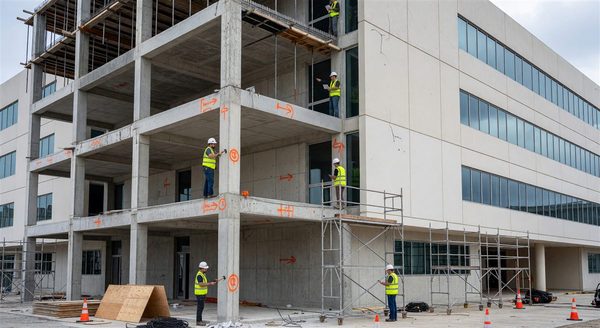
A comprehensive healthcare facility condition assessment evaluates all major building systems across all campus structures:
Structural and Envelope Systems
- Foundation condition
- Structural framing (concrete, steel, masonry) condition
- Exterior wall assemblies and windows
- Roofing systems (membrane type, age, condition, drainage)
- Waterproofing and below-grade systems
Mechanical Systems
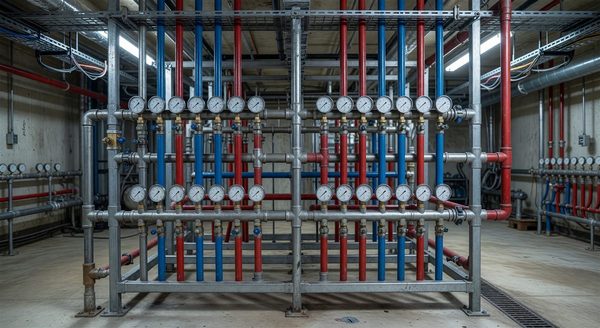
- HVAC equipment inventory and condition (air handlers, chillers, boilers, cooling towers, heat exchangers)
- Medical gas systems (piping, zone valve boxes, outlets)
- Plumbing infrastructure (domestic hot and cold water, sanitary, storm)
- Fire suppression systems (sprinkler, special suppression)
Electrical Systems
- Electrical service and primary distribution
- Emergency power systems (generators, automatic transfer switches, UPS)
- Lighting systems
- Technology infrastructure (data, communications, nurse call)
Transportation Systems
- Elevators and escalators
- Pneumatic tube systems
Site Systems
- Site utilities (underground electrical, telecommunications, water, sanitary)
- Paving and site drainage
- Landscape and hardscape
FCA Methodology and Data Quality
The value of an FCA depends entirely on the quality of the data collected. Healthcare facility condition assessments use one of two primary methodologies:
Walk-Through Assessment Experienced assessors walk through all buildings, visually inspect accessible components, and document their observations. This is the most common approach for initial FCAs—relatively efficient and cost-effective for large portfolios. Walk-through assessments can identify obvious deficiencies and develop reasonable condition rating estimates, but may miss deficiencies that require intrusive investigation (underground utilities, concealed structural conditions, inaccessible mechanical spaces).
Detailed Destructive Investigation For specific systems where walk-through assessment is insufficient—particularly underground utilities, roof conditions requiring core sampling, and structural systems with suspected deterioration—a more intensive investigation involving material testing, borescope inspection, or limited destructive investigation provides higher confidence in condition data.
Healthcare FCAs typically use walk-through assessment for most systems with targeted detailed investigation for the highest-cost systems where inaccurate condition assessment would most significantly affect capital planning.
Condition Rating and Cost Estimation
Most FCA methodologies apply a standardized condition rating system to each component:
- Good: Component is performing its intended function with no deficiencies; at or below mid-life
- Fair: Component shows visible wear or minor deficiencies; performing adequately but approaching end-of-life
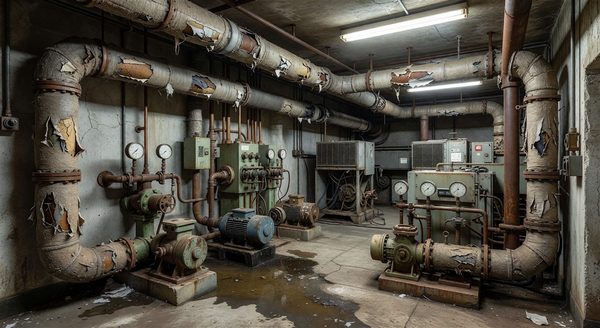
- Poor: Component shows significant deterioration or deficiencies; functional performance may be compromised; replacement is near-term priority
- Critical: Component has failed or is at imminent risk of failure; immediate action required
Alongside condition ratings, the FCA assigns a replacement cost to each component based on current construction cost data (typically RSMeans or comparable regional cost databases). Multiplying the replacement cost by an age/condition adjustment provides a Present Worth Replacement Value—the estimated current capital requirement to restore the component to like-new condition.
The sum of all Present Worth Replacement Values divided by the Current Replacement Value of all assessed assets produces the Facility Condition Index (FCI):
FCI = Deferred Maintenance Cost ÷ Current Replacement Value
An FCI below 0.05 (5%) is generally considered “good” condition. An FCI of 0.05–0.10 indicates “fair” condition with meaningful but manageable deferred maintenance. An FCI above 0.10 represents a significant infrastructure backlog that requires strategic attention.
Healthcare campuses with older infrastructure frequently present FCIs of 0.15–0.25 or higher, reflecting decades of capital investment that has not kept pace with deterioration.
Using FCA Data for Capital Prioritization
Raw FCA data does not automatically generate a capital plan—it provides the evidence base that facility directors and finance leadership use to make prioritization decisions. Effective capital prioritization frameworks for healthcare FCAs consider:
Regulatory and Compliance Priority Systems where deterioration creates Joint Commission, CMS, OSHA, or building code compliance exposure receive the highest priority regardless of FCI. A failing fire suppression system, a deteriorating emergency generator, or an HVAC system unable to maintain required clinical environmental conditions must be addressed before discretionary improvements.
Mission-Critical Infrastructure Systems that are essential to the delivery of clinical services—patient care unit HVAC, surgical suite mechanical systems, medical gas distribution, emergency power—receive priority over systems that affect comfort or aesthetics but not clinical operations.
Risk of Catastrophic Failure Components rated “critical” or “poor” with high replacement cost and high mission-criticality represent the greatest capital risk. An emergency generator that fails during a power outage or a roof that collapses during a storm creates operational and liability consequences that far exceed the cost of planned replacement.
Portfolio Sequencing Efficiency Grouping related projects—replacing all roofs in a campus zone during a single contractor mobilization, replacing all chillers in a mechanical building during one construction sequence—reduces unit costs through economies of scale and minimizes operational disruption compared to piecemeal replacement.
Communicating FCA Results to Leadership
Healthcare CFOs and board members need to understand FCA results in terms they can act on:
- Total deferred maintenance backlog in dollars (absolute and as percentage of replacement value)
- Annual investment required to prevent the backlog from growing (typically 2–4% of replacement value annually)
- Compliance and safety priority items requiring immediate funding
- 10-year capital plan showing prioritized projects by year with funding requirements
- Risk of inaction for the highest-priority items
A well-presented FCA translates what might seem like a routine facilities report into a compelling financial and risk management narrative that competes effectively for capital budget allocation alongside clinical technology requests.
Frequently Asked Questions
How often should healthcare facilities conduct facility condition assessments? A comprehensive FCA should be conducted every 5–7 years, with annual updates to capture new deterioration, completed projects, and cost escalation. Facilities that have experienced significant system failures, flooding, seismic events, or other facility impacts should conduct targeted reassessments of affected systems immediately following the event.
Can healthcare facilities conduct FCAs with internal staff, or is external expertise required? Many healthcare facilities have engineering staff capable of conducting meaningful internal FCAs for mechanical and electrical systems. However, structural assessment, envelope evaluation, and cost estimation typically require external expertise—licensed engineers and construction cost specialists. The most reliable FCAs for capital planning purposes use external assessors who bring objectivity and broad comparative experience across multiple facilities.
What software platforms are used for healthcare FCA data management? The most widely used platforms in healthcare facility management include Archibus, VFA (now part of Accruent), AssetWorks, and FM:Systems. These platforms manage asset inventories, condition data, cost estimates, and capital planning scenarios. Many integrate with CMMS platforms for ongoing asset tracking between formal FCA cycles.
How should healthcare facilities handle the political challenge of communicating large deferred maintenance backlogs to leadership? Frame the backlog as a financial risk management issue rather than a facilities budget request. A $50 million deferred maintenance backlog represents $50 million in potential emergency capital expenditure that will be required over the coming years regardless of planning. The question is whether to address it proactively at planned-replacement costs or reactively at emergency-replacement costs, which typically run 30–50% higher. This framing resonates with board-level risk management thinking.