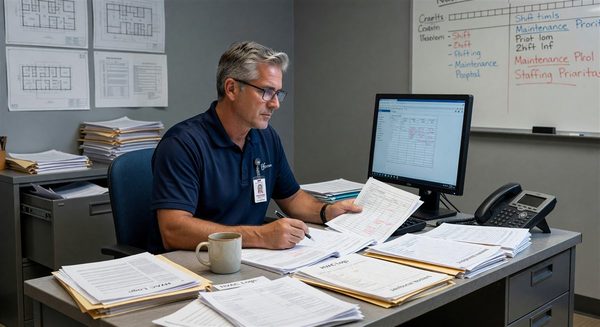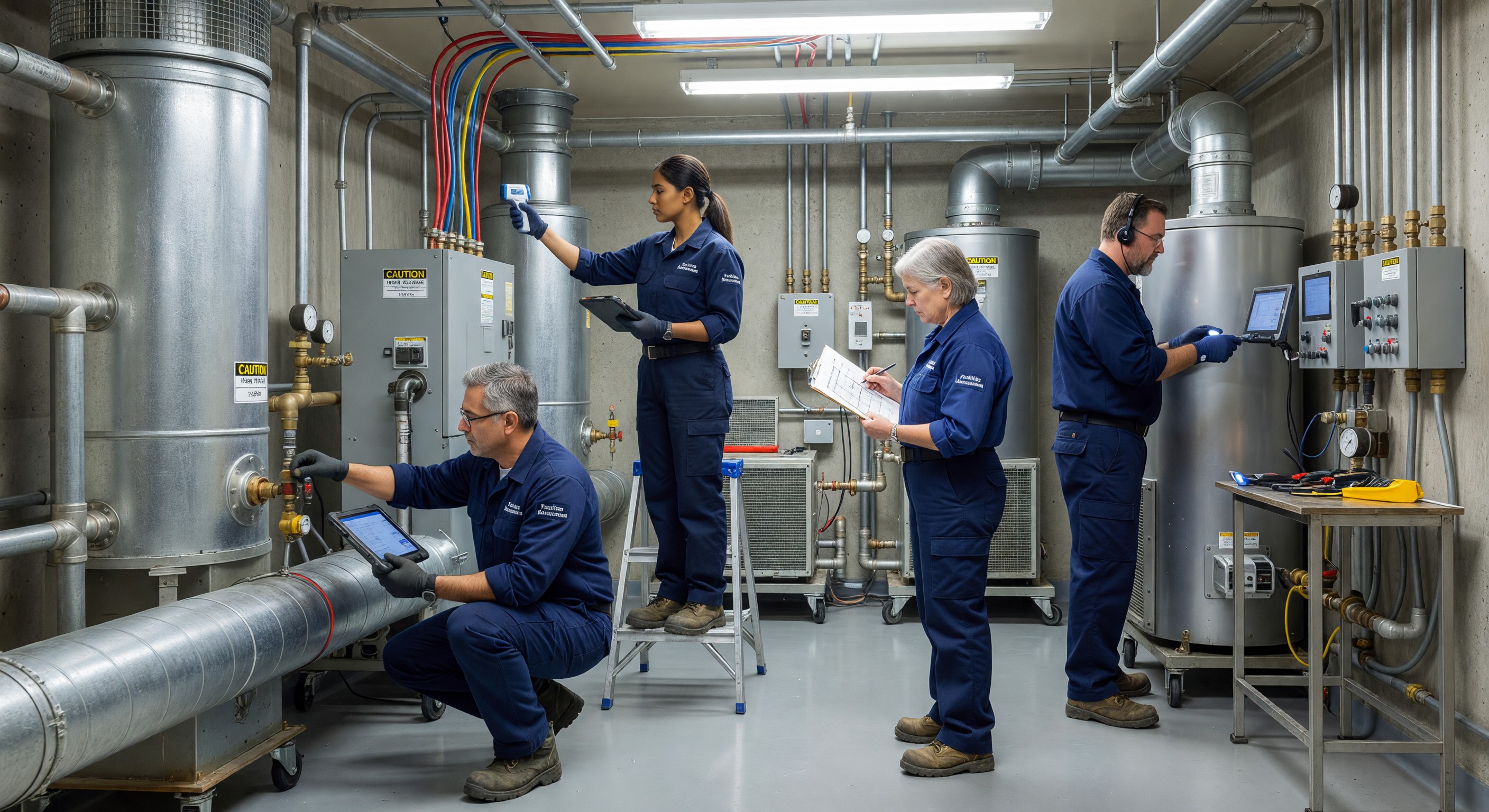
Healthcare facilities management staffing is under simultaneous pressure from multiple directions. The skilled trades workforce is aging and shrinking—the pipeline of licensed electricians, plumbers, HVAC technicians, and biomedical engineers is not replacing retirements at pace with demand. Healthcare organizations are competing for this workforce against construction, manufacturing, and commercial facilities sectors that offer comparable or higher wages without healthcare’s regulatory complexity. At the same time, the regulatory burden on healthcare facilities departments—NFPA compliance documentation, Joint Commission preparation, OSHA requirements, CMS conditions—has increased substantially.
The result is a structural staffing challenge that most healthcare facility directors are navigating with some combination of strategic outsourcing, technology investment to extend existing staff capacity, and workforce development programs designed to build pipelines that commercial employers haven’t prioritized.
The Insource vs. Outsource Decision
The foundational staffing decision for healthcare facilities operations is which functions to staff internally versus contract to outside service providers. There is no universal right answer—the optimal model depends on organization size, geographic labor market conditions, operational priorities, and financial constraints.
Arguments for In-House Staffing
- Institutional knowledge: In-house staff develop deep familiarity with specific equipment, systems, and buildings that contract staff rarely match
- Response time: On-site staff can respond to equipment failures in minutes; contracted maintenance staff may have hours-long response windows
- Culture fit: In-house facilities staff can be integrated into the healthcare organization’s safety culture, teamwork expectations, and patient-focused values
- Quality control: Direct supervision and accountability for work quality is simpler with employees than contractors
- Regulatory compliance: In-house staff can be trained to the specific documentation and compliance requirements of the facility’s regulatory environment
Arguments for Outsourcing
- Specialized expertise: Some functions—elevator maintenance, medical gas system certification, biomedical equipment maintenance—require specialized expertise that is impractical to maintain in-house
- Staffing flexibility: Contract services can scale up for peak demand and reduce for low-demand periods without the inflexibility of employment relationships
- Management simplicity: Outsourcing functions eliminates the recruitment, supervision, benefits, and HR management of those employees
- Capital substitution: Service contracts convert capital-intensive equipment maintenance into predictable operating expense
The Hybrid Reality Most healthcare organizations use a hybrid model: in-house staff for high-frequency, critical, and institutionally specific functions; contracted services for specialized functions, after-hours coverage extensions, and surge capacity. The specific mix varies by organization.
Benchmarking Facilities Staffing Levels
Healthcare facility directors are regularly asked whether their staffing levels are appropriate—by CFOs seeking cost reduction, by boards reviewing operational efficiency, and by themselves when evaluating whether current capacity matches operational demands.
Industry benchmarks for healthcare facilities staffing are available from several sources:
ASHE Annual Survey The American Society for Healthcare Engineering conducts an annual survey of healthcare facilities departments that provides benchmarks for staffing levels, compensation, outsourcing practices, and operational metrics. Facility directors can compare their organizations against ASHE benchmarks by facility type, size, and geography.
Square Footage-Based Staffing Models A common benchmarking approach relates facilities maintenance staff to total maintained square footage. Healthcare facilities maintenance staffing typically runs 1 maintenance FTE per 10,000–20,000 square feet of maintained space, with significant variation based on facility age, complexity, and technology systems density.
Regulatory Compliance Burden Healthcare’s regulatory environment—Joint Commission, CMS, OSHA, state licensing—creates documentation and compliance work that commercial facilities don’t face at the same intensity. Staffing models that don’t account for regulatory compliance workload underestimate the total staffing requirement.
Technology as a Staffing Force Multiplier
Technology investment can extend the capacity of existing facilities staff without proportional staffing increases:
Computerized Maintenance Management Systems (CMMS) A well-implemented CMMS reduces the administrative burden of maintenance scheduling, documentation, and work order management. Technicians spend more time on technical work and less on paperwork. Mobile-enabled CMMS platforms allow technicians to manage work orders from smartphones, eliminating trips to and from the maintenance office.
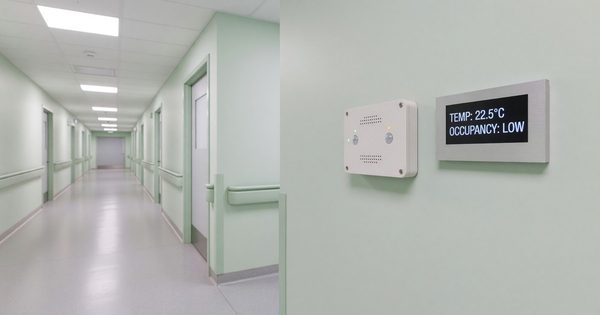
Building Automation Systems BAS remote monitoring capabilities allow a single staff member to monitor environmental conditions across an entire campus from a central workstation rather than requiring physical rounds to check equipment status. BAS alarm management that prioritizes urgent conditions helps facilities teams focus attention where it’s needed most.
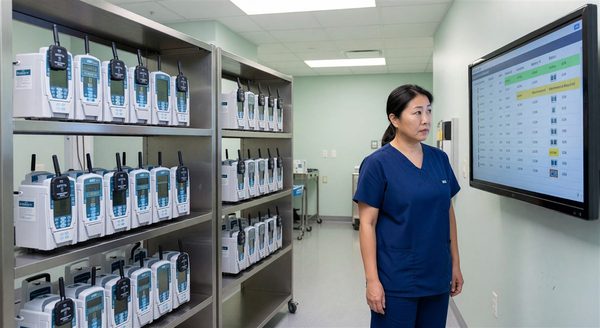
Predictive Maintenance Analytics IoT sensors and analytics platforms that predict equipment failures before they occur allow planned maintenance rather than emergency response. Each avoided emergency call-in response—which typically costs 3–5 times as much as planned maintenance due to after-hours labor costs, rush parts sourcing, and clinical disruption—directly reduces staffing pressure.
Video and Remote Monitoring Remote camera access to mechanical rooms, rooftop equipment, and parking infrastructure allows facilities staff to verify system status without physical inspection, reducing routine inspection labor and enabling faster troubleshooting.
Workforce Development and Pipeline Programs
The healthcare facilities workforce pipeline challenge is structural—it won’t be solved by compensation increases alone. Healthcare organizations that are building durable staffing capacity are investing in:
Apprenticeship Programs Partnering with local unions, community colleges, and vocational programs to develop apprenticeship pipelines creates entry-level pathways into healthcare facilities careers. Healthcare-specific apprenticeship programs that combine technical training with healthcare environment exposure provide candidates who understand the unique requirements of healthcare work.
Internal Career Development Environmental services and facilities support staff are a natural pipeline for facilities maintenance careers. Healthcare organizations that create structured development pathways—from environmental services to facilities maintenance technician with paid training and certification support—retain internal talent that would otherwise leave for external facilities careers.
Certification Support Supporting staff pursuit of industry certifications (CHFM—Certified Healthcare Facilities Manager, licensed trades certifications, NFPA certification programs) builds expertise while improving retention. Staff who feel their employer is investing in their professional development are significantly more likely to remain.
Frequently Asked Questions
What’s the appropriate ratio of management to craft workers in a healthcare facilities department? Most healthcare facilities departments operate with a supervisor-to-technician ratio of approximately 1:8 to 1:12. Smaller ratios (more supervisors) are appropriate when work requires close coordination, specialized oversight, or the regulatory documentation burden is high. Larger ratios work when work is routine, staff are experienced and self-directed, and technology tools support supervision.
How should healthcare facilities departments handle 24/7 coverage without overstaffing? Most healthcare facilities departments staff for daytime operations (highest volume of planned and corrective maintenance) and use a reduced on-call model for after-hours emergency response. Defining clear criteria for what constitutes an emergency requiring after-hours response—versus what can wait until normal hours—is essential for managing on-call burden and cost. Critical life safety systems and patient care equipment failures typically require immediate response; non-urgent building system issues can wait.
What’s the facilities management implications of significant outsourcing decisions? When healthcare organizations outsource significant facilities functions (comprehensive facilities management contracts, total facilities outsourcing), they must maintain sufficient internal expertise to manage the contract, verify performance, and retain clinical safety oversight. Organizations that outsource facilities completely without retaining knowledgeable internal oversight staff often find that quality and regulatory compliance suffer. A retained internal facilities management function—even if small—is necessary to maintain organizational accountability for regulatory compliance.
How are healthcare facilities departments addressing the retirement wave in skilled trades? The most effective approaches combine near-term actions (competitive compensation and benefit packages, flexible scheduling, respectful workplace culture) with medium-term pipeline development (apprenticeship programs, vocational school partnerships) and long-term technology investment (predictive maintenance, remote monitoring, automation) that reduces the headcount required to maintain current service levels.