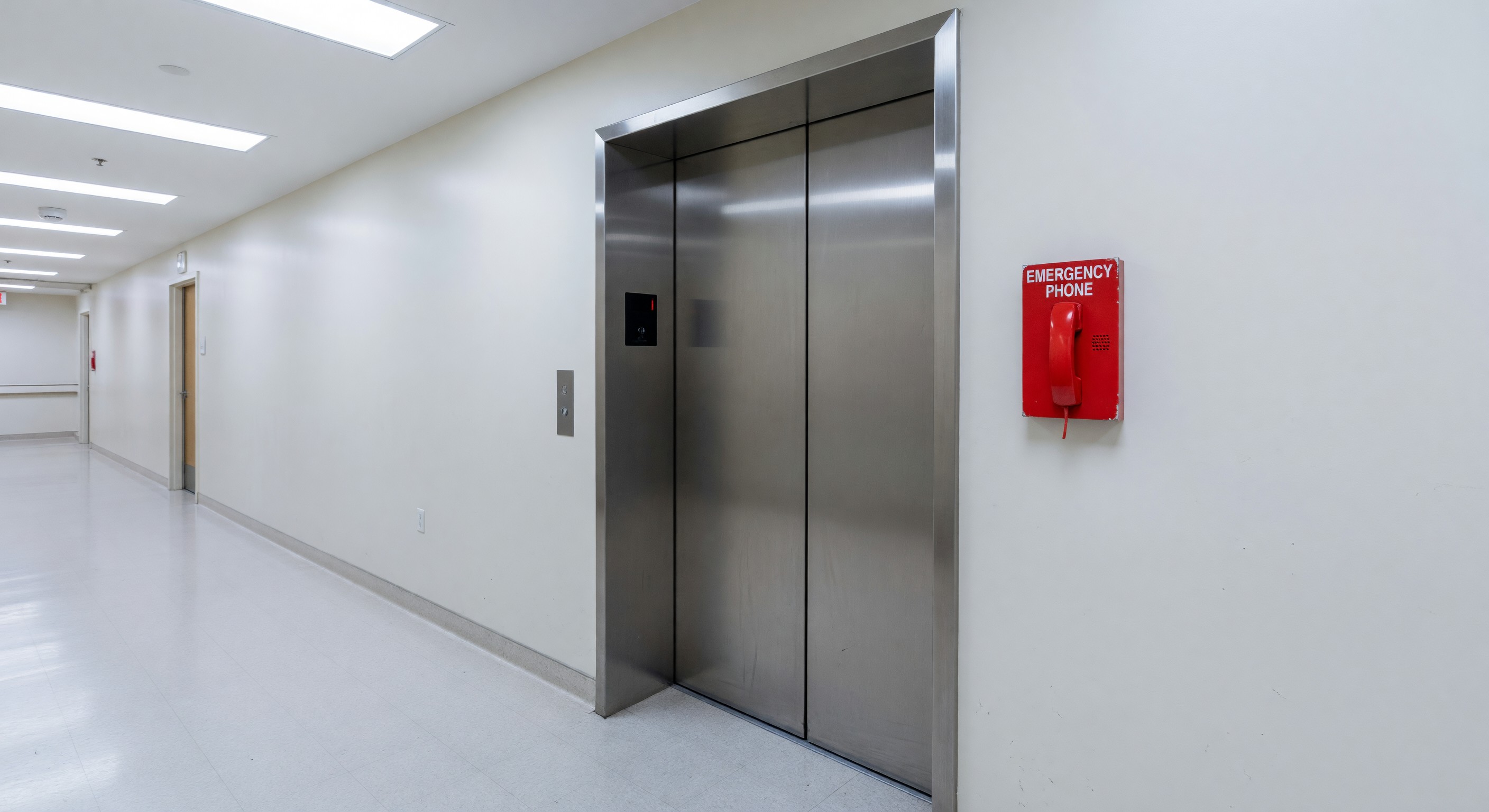
Elevators in a hospital are not a convenience feature — they are clinical infrastructure. A patient being transported from the ICU to the imaging suite, a bed moving from the surgical suite to the recovery floor, or a supply cart delivering medications to a nursing unit all depend on elevators that operate reliably, safely, and with the capacity and configuration appropriate for healthcare demands.
Elevator downtime in a hospital creates immediate clinical disruptions. A single elevator outage in a multi-story facility can delay patient transport, require staff to carry equipment via stairs, and create cascading schedule impacts. Managing elevator systems with the rigor they deserve is a fundamental responsibility of healthcare facility management.
Healthcare Elevator Types and Configurations
Hospital elevators differ from commercial elevators in several important ways:
Bariatric capacity — Modern hospitals must accommodate bariatric patients who may exceed standard elevator weight limits. Many clinical elevators are specified at 5,000–6,000 pounds capacity with extra-wide car dimensions (typically 7 feet wide × 6 feet deep minimum) to accommodate bariatric stretchers and transport equipment.
Stretcher depth — Clinical elevators must accommodate standard hospital stretchers (76 inches long) plus staff escort space. This typically requires a car depth of at least 84–90 inches.
Door width — ADA and clinical transport requirements call for a minimum 36-inch clear door opening, with 42–48 inches preferred for primary patient transport elevators.
Fire service (Phase I and Phase II) — All elevators in healthcare facilities must be equipped with fire service recall per ASME A17.1 (Safety Code for Elevators and Escalators). Phase I returns all cars to the designated lobby level when the fire alarm activates. Phase II allows firefighter manual control of the elevator during emergency operations.
Hospital service (Phase III) — Some jurisdictions and healthcare facilities specify an additional hospital emergency service mode that allows designated staff (not firefighters) to operate elevators during emergency conditions such as patient evacuation.
Regulatory Requirements
Elevator inspection and maintenance in healthcare facilities is governed by a combination of federal, state, and local requirements:
ASME A17.1 — The primary national elevator safety code. Referenced by most state elevator safety programs. Sets design, installation, inspection, and testing requirements.
State elevator inspection programs — Most states require periodic inspection of all elevators by state-licensed inspectors or approved third-party inspectors. Inspection frequency varies by state but is typically annual. Certificates of inspection must be posted in the elevator cab and maintained current.
Joint Commission EC.02.04.01 — Requires that the hospital manages medical equipment, which broadly encompasses elevators used for patient transport. Maintenance documentation and performance monitoring are expected.
NFPA 101 (Life Safety Code) — Governs elevator fire service recall requirements and requirements for elevator lobbies as smoke compartment boundaries.
Non-compliance with state elevator inspection requirements can result in mandated shutdown of elevator equipment — an extreme outcome in a hospital setting that has occurred at facilities that allowed inspection certifications to lapse.
Preventive Maintenance Programs
Healthcare elevator preventive maintenance should be provided by a service provider with demonstrated healthcare facility experience, under a contract that specifies:
Maintenance frequency — Monthly preventive maintenance visits are standard for high-utilization hospital elevators. Each visit should include lubrication of mechanical components, inspection of safety devices, door operation adjustment, and electrical systems check.
Response time for emergency service — What is the contracted response time for an elevator entrapment (passenger trapped in car) or a car out of service during business hours? For a patient care facility, 2–4 hour emergency response should be the minimum acceptable SLA.
Parts availability — Proprietary elevator components with limited parts availability create extended downtime risk. When negotiating maintenance contracts for older equipment, confirm parts availability and consider whether modernization is more cost-effective than maintaining aging equipment.
Documentation — Every maintenance visit should generate a written service record documenting work performed, components inspected, adjustments made, and any deferred items requiring follow-up.
Performance metrics — Track callback rate (unscheduled service calls per car per month), entrapment frequency, door operation issues, and annual downtime per car. These metrics establish a performance baseline and help identify equipment in decline before complete failure.
Emergency Recall Testing
ASME A17.1 requires that fire service recall (Phase I and Phase II) be tested annually by a qualified elevator inspector. Facilities often make the mistake of assuming that periodic PM visits include this testing — they typically do not unless specifically included in the maintenance contract scope.
Annual fire service recall testing requires:
- Activating the building fire alarm system (or a test switch that simulates activation)
- Verifying all elevators return to the designated recall level and doors remain open
- Testing Phase II firefighter manual operation on each car
- Testing door obstruction devices in Phase II mode
- Documenting test results
Testing should be coordinated with the fire alarm system and conducted when clinical operations can accommodate the brief disruption of elevator use.
Modernization Planning
The average hospital elevator has an operational life of 20–25 years before modernization is warranted. Elevators built before digital controls became standard in the early 2000s often cannot be maintained to modern safety standards or reliability expectations as they age.
Modernization projects — replacing controls, drives, cab interiors, and safety systems while retaining the hoistway — typically cost $150,000–$400,000 per car depending on scope. Complete replacement (new equipment in existing hoistway, or new hoistway and equipment) ranges from $300,000–$800,000+ per car in healthcare settings.
Planning for modernization should include:
- Current condition assessment by an independent elevator consultant
- Phasing strategy to maintain service continuity during renovation
- Scope definition (controls only vs. full modernization)
- Specification development that includes healthcare-specific requirements
Frequently Asked Questions
What do we do when a patient is trapped in an elevator? Activate the elevator emergency protocol: maintain voice contact with the trapped occupant via the in-car emergency phone; dispatch security to the elevator location; contact the elevator service provider for emergency dispatch; do not attempt to open doors manually or rescue occupants without proper training and equipment. If the occupant has a medical emergency, provide guidance by phone and coordinate with emergency services.
How many elevators should be down for maintenance at any given time? A general principle is that no more than 25% of the elevator fleet in any served area should be out of service simultaneously. For a building with only two elevators, one should always be operational. For patient floors, service during maintenance should be evaluated against the clinical transportation demand during that period — overnight off-peak hours are preferred for significant maintenance work.
Are there special requirements for elevators serving labor and delivery floors? Elevators serving obstetric units should prioritize: sufficient car depth for a birthing bed, weight capacity for bariatric patients, and reliable operation during labor and delivery surge periods. Some facilities designate a specific elevator as priority L&D transport that other departments are discouraged from using during peak hours.
What certifications should elevator maintenance technicians hold for healthcare facilities? Elevator mechanics and inspectors should hold NEIEP (National Elevator Industry Educational Program) certification or equivalent state licensing. Some states issue separate elevator inspector licenses. For healthcare-specific work, look for technicians with documented experience at hospital and healthcare facility accounts — understanding the operational urgency and communication requirements of healthcare settings is as important as technical competency.