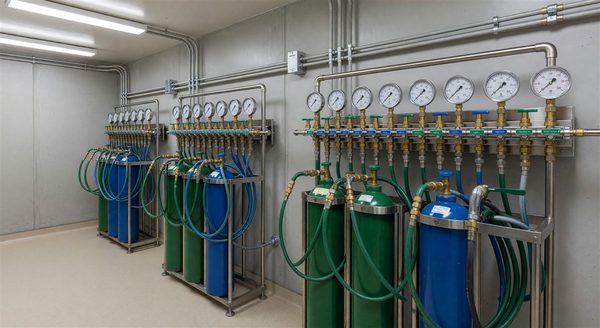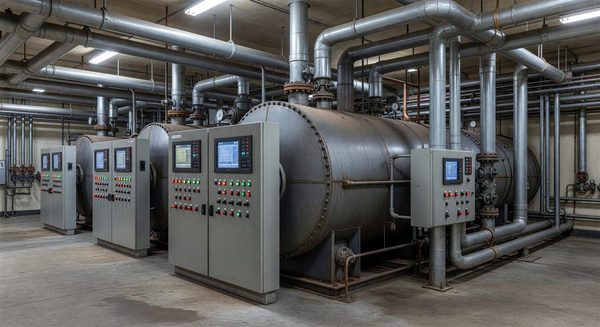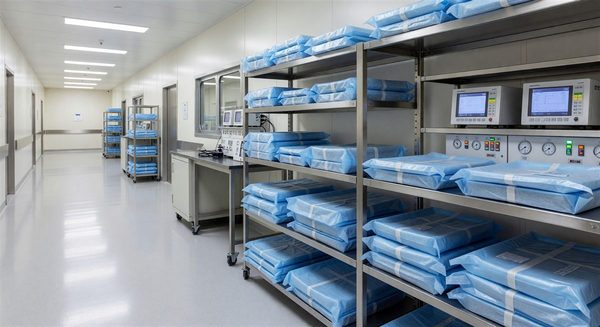
Medical compressed air systems in hospitals are life-support infrastructure. Unlike industrial compressed air—which tolerates moisture, oil contamination, and variable pressure—medical air must meet strict purity standards because it is delivered directly to patients through ventilators, anesthesia equipment, and respiratory therapy devices. Contaminated or compromised medical air delivered to a patient’s lungs can cause immediate serious harm.
NFPA 99 establishes comprehensive requirements for medical compressed air systems in healthcare facilities—covering source equipment specifications, distribution system design, monitoring requirements, purity standards, and maintenance obligations. For healthcare facility directors responsible for these systems, understanding NFPA 99 medical air requirements and maintaining a compliant program is a direct patient safety obligation.
What Makes Medical Air Different
Medical compressed air must meet specific purity standards that industrial compressed air cannot reliably provide:
USP Compressed Medical Air The United States Pharmacopeia (USP) defines the purity standard for medical air: not less than 19.5% and not more than 23.5% oxygen content, maximum 5 parts per million hydrocarbons, maximum 500 parts per million carbon dioxide, maximum 25 parts per million carbon monoxide, maximum 0.1 milligrams per cubic meter of oil content, and freedom from taste and odor.
Oil-Free Compressors Required Because oil contamination is a critical purity concern, NFPA 99 requires oil-free compressor technology for medical air systems in healthcare settings. Oil-lubricated compressors—common in industrial compressed air applications—are not acceptable for medical air source equipment.
Source Location Requirements Medical air compressor intakes must be located to avoid contamination from vehicle exhaust, boiler flue gases, generator exhaust, and other pollutant sources. NFPA 99 specifies minimum distances from these sources and requires that intake locations be evaluated during system design.
NFPA 99 Medical Air System Requirements
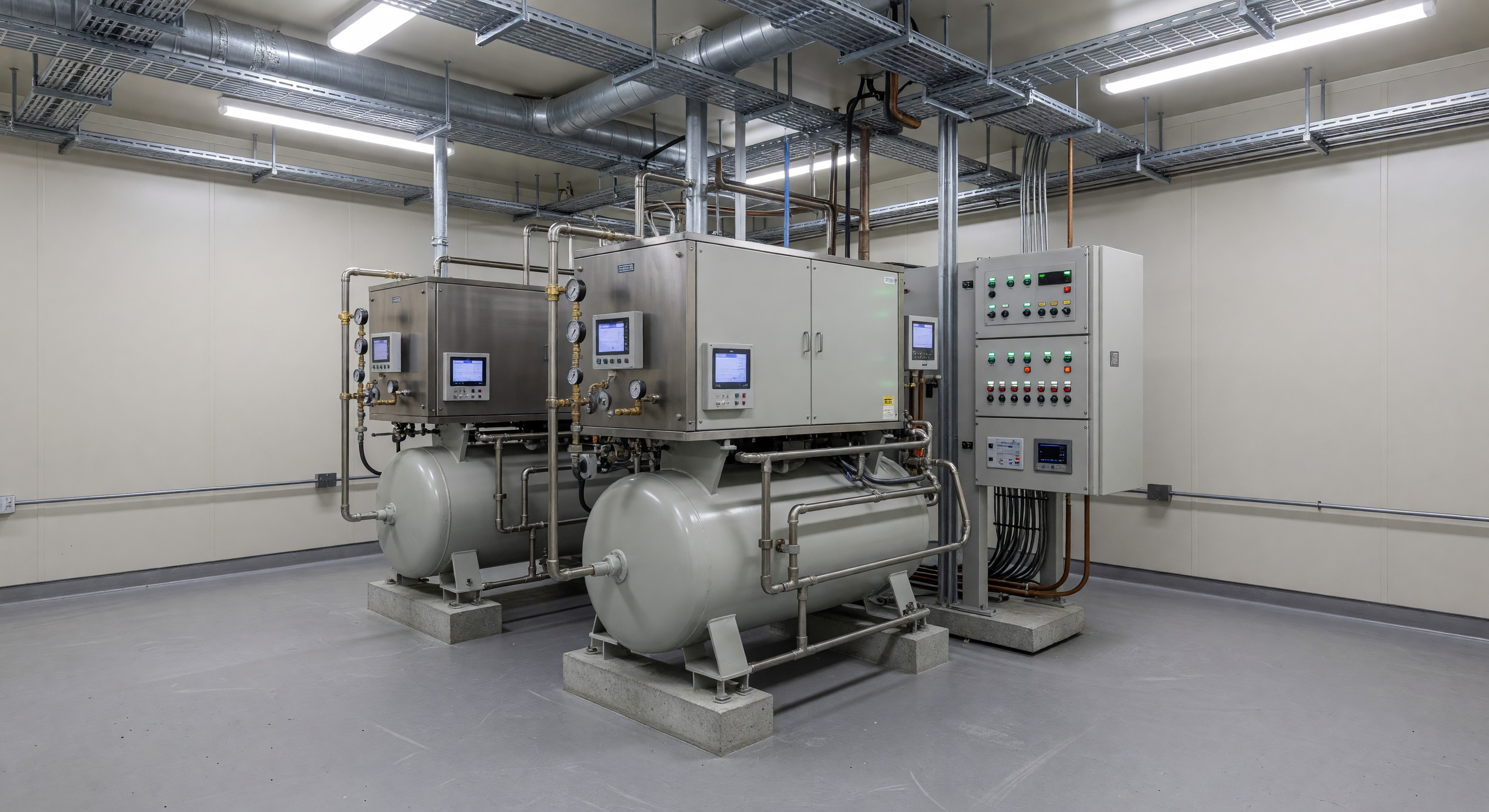
Source Equipment NFPA 99 requires medical air systems to have at least two independent compressor units (duplex configuration or more) so that the system remains operational if one unit fails or requires maintenance. Compressors must be rated for continuous duty and must be capable of supplying peak demand with one unit out of service.
Receiver Tanks Receiver tanks provide pressure storage that absorbs demand peaks and reduces compressor cycling. NFPA 99 specifies minimum receiver capacity relative to compressor capacity.
Drying and Filtration Medical air must be dried to prevent moisture accumulation in distribution piping (which supports microbial growth and causes equipment damage) and filtered to remove particulates, hydrocarbons, and other contaminants. Redundant drying and filtration trains are required so maintenance can be performed without system interruption.
Distribution System Medical air distribution piping must be identified with specific color coding (yellow per NFPA 99) and labeling, must be designed to prevent cross-connection with other medical gas systems, and must include zone isolation valves at defined locations that allow sections of the system to be shut down for maintenance without affecting the entire facility.
Zone Valve Boxes Zone valve boxes at each wing, floor, or functional zone allow portions of the medical air distribution system to be isolated for maintenance or emergency without affecting other areas. Each zone valve box must be labeled with the area it serves and accessible to clinical staff for emergency shutoff.
Outlet Identification Medical air outlets must be DISS (Diameter Index Safety System) indexed to prevent connection of the wrong gas to an outlet. NFPA 99 prohibits interchangeability between medical air and other gas outlets.
Monitoring Requirements
NFPA 99 requires continuous monitoring of medical air systems with alarm notification at appropriate locations:
Source Equipment Monitoring
- Compressor failure alarm: Activates when a compressor unit fails
- Reserve unit on alarm: Activates when the system automatically switches to reserve capacity due to primary unit failure
- High dew point alarm: Indicates moisture levels approaching the maximum acceptable limit
- High/low pressure alarm: Indicates system pressure outside normal operating range
- Carbon monoxide monitor and alarm: Required by NFPA 99 for facilities where internal combustion engine emissions could contaminate the air intake
Area Alarm Panels Area alarm panels located at nursing stations or other appropriate locations within each patient care area receive alarm signals from the zone and display them for immediate nursing attention. Area alarms are required at each zone or set of zones within a patient care area.
Master Alarm Panels Master alarm panels—typically located at the facility switchboard/security or facilities control room—receive all medical gas system alarms and provide centralized monitoring of the complete system.
Purity Testing and Verification
Medical air purity must be verified at specified intervals:
Initial Verification Before initial use, medical air systems must be tested to verify compliance with USP medical air purity standards. This includes testing for oxygen percentage, carbon monoxide, carbon dioxide, hydrocarbons, and oil content.
Periodic Purity Testing NFPA 99 requires ongoing purity verification. The specific testing frequency and parameters are defined in the standard and may vary based on facility type and system configuration. Many healthcare organizations test medical air purity annually as part of their preventive maintenance program.
After Maintenance or Modification Any significant maintenance or modification to medical air source equipment or distribution piping should be followed by verification testing to confirm that system integrity has been maintained.
Annual Inspection and Maintenance
The comprehensive annual inspection program for medical air systems includes:
- Compressor performance testing (flow capacity, pressure maintenance at rated flow)
- Oil analysis on compressor components (even in “oil-free” systems, certain components use oil lubrication)
- Filter element replacement per manufacturer schedule
- Dryer performance verification (dew point measurement)
- Safety valve testing and inspection
- Zone valve box operational testing
- Alarm panel functional testing at all monitoring locations
- Outlet flow and pressure verification
Documentation of annual maintenance and testing must be retained as evidence of compliance with NFPA 99 maintenance requirements.
Frequently Asked Questions
Can a hospital use a portable industrial compressor as temporary backup if the medical air system fails? No. NFPA 99 requires that medical air systems be served only by approved medical-grade source equipment. Industrial compressed air does not meet the purity standards required for medical air and cannot be used as a substitute, even temporarily, without compromising patient safety. Emergency response to medical air system failure should involve switching to cylinder-supplied medical air, not industrial compressed air.
What’s the response procedure when a medical air zone valve needs to be closed for maintenance? Closing a zone valve interrupts medical air to the entire zone it serves—which may include multiple patient rooms and procedural areas. The response procedure must include: notification to clinical leadership of the impending interruption, coordination with clinical staff to transfer any patients dependent on medical air to other devices or locations before closure, verification that all medical air-dependent equipment is accounted for in the affected zone, and confirmation from clinical leadership before proceeding with closure.
How often should medical air outlets be tested in patient rooms? NFPA 99 requires medical air outlets to be tested at periodic intervals, typically through annual flow and pressure testing at each outlet. Outlets in areas with infrequent use should also be checked before first use after extended periods of inactivity to verify they haven’t developed leaks or pressure loss during the dormant period.
What qualifications are required for technicians who service medical gas systems? NFPA 99 requires that medical gas systems be installed, maintained, and verified by qualified individuals. The ASSE 6000 series of medical gas standards establishes competency requirements and credentials for medical gas system work: ASSE 6010 (installer), ASSE 6020 (inspector), and ASSE 6030 (verifier) credentials are recognized in the industry. Healthcare facility directors should verify that contractors performing medical gas work hold appropriate ASSE credentials.