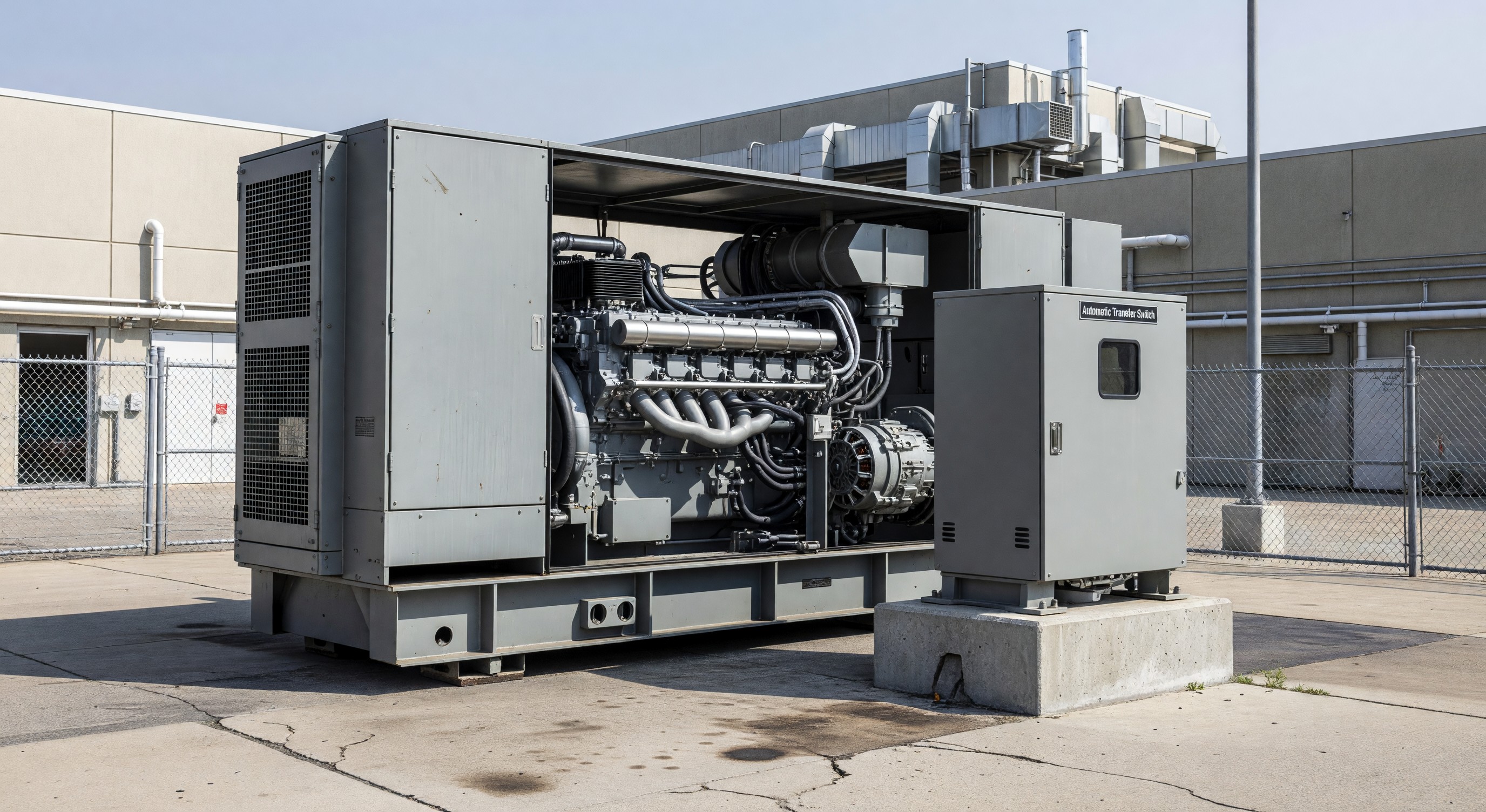
Power failure in a hospital is not an inconvenience — it is a patient safety emergency. Life support equipment, surgical lighting, monitoring systems, ventilators, infusion pumps, and electronic medical records all require continuous, reliable power. The regulatory and engineering requirements for hospital backup power reflect this stakes-level reality.
NFPA 99 (Health Care Facilities Code) and NFPA 110 (Standard for Emergency and Standby Power Systems) establish the minimum framework for backup power in healthcare facilities. Understanding these requirements — and the engineering decisions that implement them — is core competency for healthcare facility directors.
The Three-Tier Power System
Hospital emergency power is organized into three categories by function:
Normal Power — Utility-supplied power under normal operating conditions. All systems operate on normal power when available.
Emergency Power — Automatically engages within 10 seconds of normal power failure. Required for life safety systems, critical care areas, and essential medical equipment. NFPA 99 defines emergency power as the Essential Electrical System (EES).
Legally Required Standby Power — Supports systems whose failure would create fire, life safety, or public health hazard but are not covered under the emergency classification. Not universally required in healthcare but may be mandated by local jurisdictions.
Essential Electrical System (EES) Architecture
NFPA 99 defines the Essential Electrical System for hospitals as comprising two separate systems:
Emergency System — Must come online within 10 seconds of normal power failure. Divided into:
- Life Safety Branch: Exit signs, egress lighting, fire alarm, communications, elevator controls for patient evacuation, generator lighting
- Critical Branch: Patient care areas, nurse call, critical care monitoring, task lighting in ORs, medication refrigerators, blood bank refrigerators
Equipment System — Serves large medical equipment and fixed equipment without the 10-second requirement. Typically takes 60–90 seconds to establish following utility failure.
Hospitals with more than 150 KVA of emergency load are required to have at least two sources of normal power (dual utility feeds) or one utility feed plus emergency generation.
Generator Sizing and Selection
Emergency generator sizing is determined by load analysis — calculating the total connected load of all EES circuits, then applying appropriate demand factors to determine the peak load the generator must carry.
Key sizing considerations:
Starting load vs. running load — Large motors (HVAC compressors, chillers) draw 3–6 times their running current during startup. The generator must handle these inrush currents without voltage collapse. Automatic transfer sequences can stage motor starting to reduce simultaneous inrush.
Redundancy — Most hospitals with significant emergency load deploy two or more generator sets in parallel, providing N+1 redundancy. A single generator failure does not result in loss of emergency power.
Fuel storage — NFPA 110 requires on-site fuel storage sufficient for a minimum of 3 days of operation at full load. Post-Katrina and post-Sandy experience has driven many facilities to target 7–10 days of on-site diesel storage.
Exhaust and vibration — Generator exhaust must comply with EPA emissions regulations and local air quality permits. Vibration isolation is essential for generators installed near clinical spaces.
Uninterruptible Power Systems (UPS)
Emergency generators require 10 seconds to start and transfer. During that 10-second window, power is interrupted. For most clinical equipment, 10 seconds without power is tolerable. For some systems, it is not.
UPS (Uninterruptible Power Supply) systems provide seamless, instantaneous power bridging during the generator start sequence. Critical healthcare UPS applications include:
- Operating room UPS — ORs cannot tolerate even brief power interruption during an active procedure. UPS with 10–15 minute runtime bridges until generator transfer.
- Laboratory instrument UPS — Analytical equipment such as hematology analyzers and chemistry platforms can lose calibration or ongoing runs during a power interruption.
- ICU UPS — Critical monitoring and ventilation equipment in ICUs may be on individual equipment-level UPS as a secondary protection layer.
- Data center UPS — Hospital information systems, EMR servers, and medical imaging storage require UPS runtime sufficient for controlled system shutdown or generator transfer.
UPS batteries require annual capacity testing and typically need replacement every 5–7 years for lead-acid technology (or 10–12 years for lithium ion, increasingly common in new installations).
Transfer Switch Requirements
The automatic transfer switch (ATS) is the mechanism that detects utility failure and connects the load to emergency power. NFPA 99 and NFPA 110 require that transfer switches be:
- Rated for the full load they serve
- Tested under load monthly (brief utility disconnection test)
- Subjected to a full-load annual test
- Capable of automatic and manual operation
- Equipped with a time delay to prevent false transfer during momentary power fluctuations
Transfer switch testing must be documented. NFPA 110 requires that a written record of each test (date, time, duration, load, failures noted) be maintained and available for inspection.
COVID-19 and Emergency Power Lessons (2020)
The COVID-19 pandemic revealed backup power vulnerabilities at facilities that had expanded ICU capacity into spaces not originally designed for critical care. Repurposed conference rooms and converted post-surgical units operating as COVID ICUs sometimes lacked the critical branch circuit density to power the additional ventilators, monitoring systems, and IV pumps brought in for surge capacity.
Engineering teams worked alongside electricians to run temporary critical branch extensions into surge spaces — an expensive, time-consuming improvisation that underscored the importance of designing flexibility into emergency power infrastructure from the outset.
The pandemic also drove demand for portable generator connections (Camlock or shore power connections) that allow rapid connection of trailer-mounted generators during extended utility outages or equipment failures.
Annual Testing and Compliance
NFPA 110 requires annual load testing of emergency generators at no less than 30% of nameplate rating for a minimum of 2 continuous hours. For generators that cannot be tested under load using building load, portable load banks are used to simulate the required loading.
Joint Commission surveyors review generator test logs during surveys and frequently cite facilities for testing deficiencies. Common finding areas:
- Missing monthly brief run documentation
- Annual test not meeting the 2-hour continuous requirement
- Annual test not achieving 30% nameplate loading
- No documentation of fuel sample analysis (required at least annually)
- Transfer switch test records incomplete
Frequently Asked Questions
What is the difference between the Life Safety Branch and the Critical Branch of the Essential Electrical System? The Life Safety Branch powers systems whose failure would jeopardize occupant evacuation — exit signs, egress lighting, fire alarm, emergency communications. The Critical Branch powers patient care equipment and clinical operations. Both are part of the Emergency System and must come online within 10 seconds, but they are served by separate transfer switches and distribution panelboards for isolation.
How do we ensure our generators will start when needed? Monthly exercise runs, annual load bank or building-load tests, weekly visual inspections, coolant and oil checks per manufacturer schedule, and battery replacement per the manufacturer’s recommendation. Generators that sit for extended periods are more likely to fail on demand. Some facilities run generators under load for 30 minutes weekly to maintain readiness.
What happens if our generators fail during an actual utility outage? Immediate life safety response: deploy battery-backed lighting, notify administration and clinical leadership, activate Emergency Operations Plan. Contact your generator service provider for emergency response. If the failure will be prolonged, consider patient diversion or transfer. NFPA requires that failure to start during a real emergency event be documented and investigated with root cause analysis.
Are there regulatory requirements for generator fuel quality? Yes. NFPA 110 requires that on-site fuel be tested at least annually for microbial contamination and other degradation. Diesel fuel that sits in storage can develop microbial growth and water accumulation that causes fuel system failures. Fuel polishing — circulating stored fuel through filtration — is a maintenance practice that extends fuel quality in high-storage facilities.
Related Reading
For a deeper 2026 look at generator load testing intervals, the annual load-bank schedule, and how growing EV-charging load affects emergency power capacity planning, see our guide to NFPA 110 compliance in 2026.