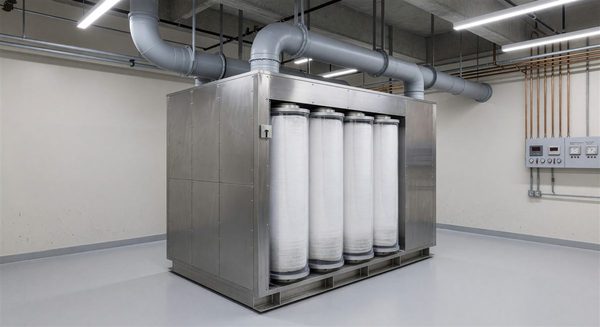
Air filtration in healthcare facilities is the mechanical defense against airborne infection transmission—the engineering control that reduces the concentration of pathogenic particles in the air patients and staff breathe. The COVID-19 pandemic dramatically increased awareness of healthcare ventilation and filtration standards, but the requirements that protect patients from Aspergillus, tuberculosis, measles, and other airborne threats have been established in ASHRAE 170 for decades.
Healthcare facility directors responsible for HVAC systems must understand air filtration requirements, verify that filtration systems meet applicable standards, and maintain filter replacement programs that sustain filtration performance over time. Inadequate filtration in clinical areas has documented consequences: fungal infections linked to construction dust penetrating clinical areas, tuberculosis transmission in inadequately filtered spaces, and immunocompromised patient infections from insufficiently protected environments.
ASHRAE 170 Filtration Requirements
ASHRAE 170-2017 establishes minimum filtration requirements for specific healthcare space types, expressed in MERV (Minimum Efficiency Reporting Value) ratings:
Two-Stage Filtration System Most clinical areas require a two-stage filtration approach: a prefilter that removes larger particles and extends final filter life, followed by a higher-efficiency final filter that provides the primary pathogen protection.
Space-Specific Requirements
- Operating rooms and orthopedic/transplant rooms: MERV 17 (HEPA equivalent) final filter, MERV 7 prefilter
- Critical care (ICU, NICU, CCU): MERV 14 final filter, MERV 7 prefilter
- Protective environment rooms (for immunocompromised patients): MERV 17 (HEPA) final filter
- Airborne infection isolation rooms: MERV 14 final filter, MERV 7 prefilter (negative pressure provides the primary protection; high filtration on exhaust)
- General patient rooms and nursing stations: MERV 7 minimum
- Corridors and public areas: MERV 7 minimum
MERV Rating System
The MERV (Minimum Efficiency Reporting Value) rating system—developed by ASHRAE—rates filters from MERV 1 (least efficient) to MERV 16 (highest rated within the standard, though HEPA filters exceed MERV 16 capability):
MERV 7–8: Captures pollen, dust mite debris, mold spores, pet dander. Minimum for healthcare public areas.
MERV 13–14: Captures most bacteria, respiratory droplets, smoke particles. Appropriate for general patient care areas per COVID-19 upgraded guidance and for critical care per ASHRAE 170.
MERV 17 (HEPA): Captures 99.97% of particles 0.3 microns and larger—including virtually all bacteria and most virus-carrying particles. Required for operating rooms and protective environments.
COVID-19 and Elevated Filtration Standards
The COVID-19 pandemic prompted ASHRAE and CDC to issue updated guidance recommending filtration upgrades beyond ASHRAE 170 minimums for general patient care areas. The updated guidance recommends MERV 13 or higher for all patient care areas to reduce airborne COVID-19 transmission risk.
Healthcare facilities that upgraded to MERV 13 filtration during the pandemic face an ongoing decision: maintain the elevated filtration standard or return to ASHRAE 170 minimums. The public health and clinical community generally recommends maintaining elevated filtration, with the primary limitation being the increased energy cost of higher-efficiency filters (greater resistance means more fan energy to maintain required air flows).
For facility directors navigating this question, the balance of evidence supports maintaining MERV 13 or better in all patient care areas beyond COVID-specific justification—the protection against other airborne pathogens has value independent of any single pathogen.
HEPA Filtration in Healthcare
High-efficiency particulate air (HEPA) filters—which capture 99.97% of particles 0.3 microns and larger—are required in specific healthcare spaces and used supplementally in others:
Required HEPA Applications
- Operating room supply air (per ASHRAE 170)
- Protective environment rooms for immunocompromised patients
- Sterile processing clean areas
- Some pharmacy clean rooms (ISO Class requirements)
- Isolation rooms for highly hazardous pathogens (per CDC guidance)
Supplemental HEPA Applications Portable HEPA air cleaners and room air purifiers are deployed supplementally in patient care areas to increase effective air cleaning beyond what central HVAC systems provide. During ICRA construction projects, portable HEPA units are standard equipment for managing dust and particle control in occupied areas adjacent to construction.
Filter Maintenance Programs
Filtration effectiveness degrades as filters load with captured particles. A comprehensive filter maintenance program ensures that installed filters maintain their rated performance:
Filter Change Schedules Prefilters in high-particulate environments (near construction, in areas with higher ambient particle levels) may require monthly changes. Final filters in clinical areas are typically changed every 6–12 months, with actual change interval driven by filter loading rather than calendar schedule.
Pressure Drop Monitoring Filter resistance (pressure drop) increases as filters load. BAS monitoring of filter pressure drop is the most reliable indicator of filter loading status—filters should be changed when pressure drop reaches the manufacturer’s maximum rated pressure drop, not on a fixed calendar schedule.
Filter Integrity Verification HEPA filters in critical areas (operating rooms, protective environments) should be tested after installation with particle count testing to verify that the installed filter assembly doesn’t have bypass pathways around the filter media that would compromise filtration efficiency.
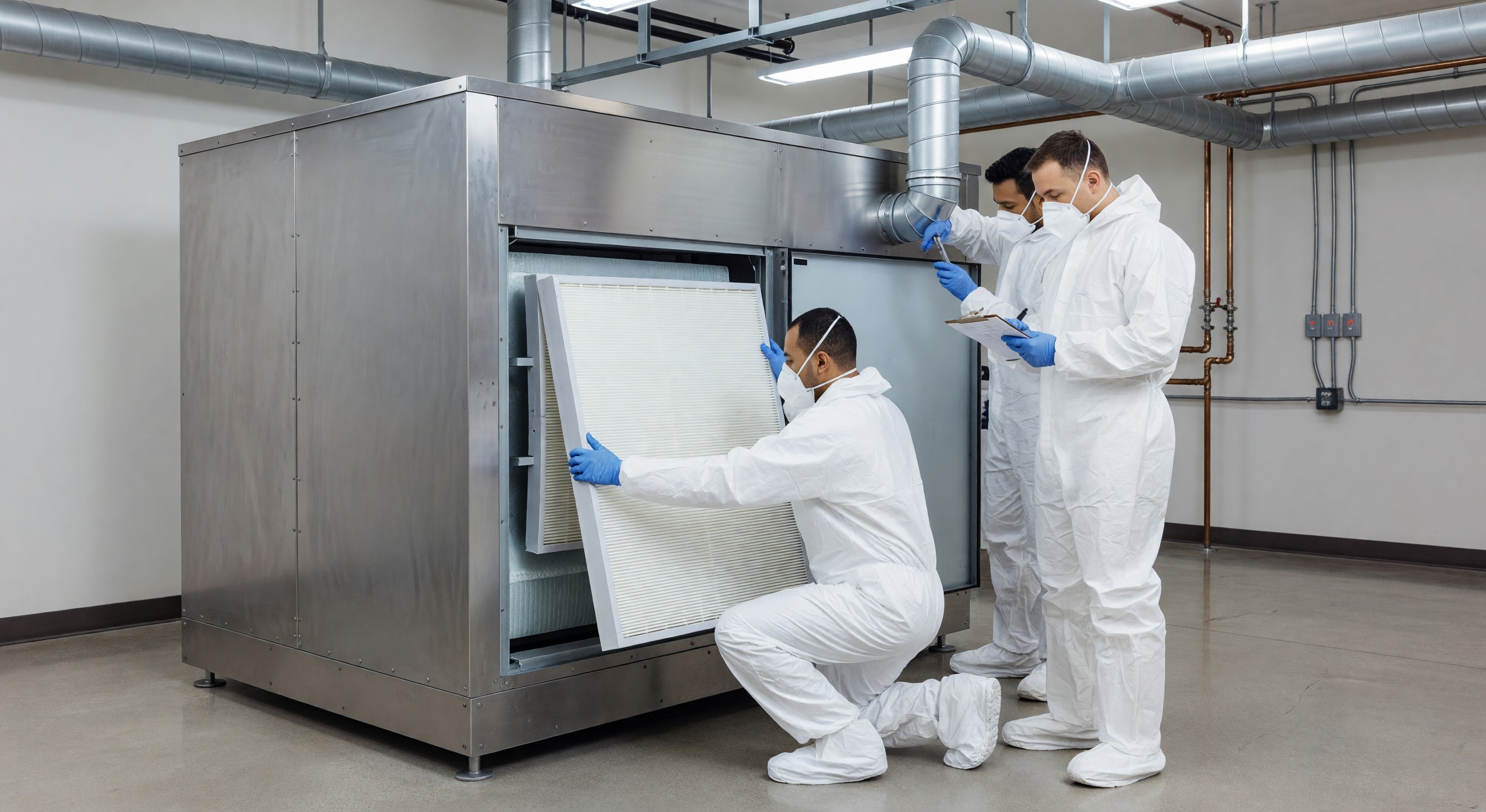
Maintenance Worker Safety Removing loaded filters from clinical areas exposes maintenance workers to concentrated captured particles, including microorganisms. Filter change procedures should specify appropriate PPE (N95 respirator minimum, gloves, eye protection) and bag-and-remove protocols that contain captured particles during filter change.
Frequently Asked Questions
How do healthcare facilities verify that filtration systems are achieving ASHRAE 170 required efficiencies? Direct verification requires particle count measurements downstream of the filter system, comparing against upstream concentrations to calculate actual filter efficiency. Most healthcare facilities rely on verifying that installed filters meet or exceed the rated MERV level through filter specification review rather than post-installation efficiency testing—with the exception of HEPA installations in critical environments where installation testing is a clinical safety requirement.
What’s the energy cost impact of upgrading from MERV 7 to MERV 13 filtration? Higher MERV filters have greater resistance to airflow, requiring more fan energy to maintain required air change rates. The energy cost increase for upgrading from MERV 7 to MERV 13 filtration system-wide at a typical hospital has been estimated at 5–15% of HVAC fan energy, depending on system design. This cost is meaningful but generally justified by the infection control benefit.
Can portable HEPA air cleaners substitute for upgrading central HVAC filtration? Portable HEPA units supplement but don’t substitute for central HVAC filtration. Central filtration treats all supply air before it enters the space; portable units treat recirculated room air at a fraction of the total air change rate. In situations where central HVAC filtration cannot be upgraded—during construction periods, or in existing systems with fixed capacity—portable HEPA units provide meaningful supplemental protection.
What documentation should healthcare facilities maintain for air filtration compliance? Maintain: filter specifications for each air handling unit and space type served; filter change records with date, filter type, and technician; pressure differential readings at each filter bank with date; HEPA installation and integrity test records; and the ASHRAE 170 reference used for the specified filter ratings. This documentation supports Joint Commission EC compliance documentation and provides the audit trail needed if a healthcare-associated infection investigation examines environmental controls.