NOAA’s August 2026 update lowered the Atlantic outlook to 7–13 named storms, of which 2–6 could reach hurricane strength and 0–2 could become major hurricanes. Forecasters put the odds of a below-normal season at 75%, citing a strengthening El Niño and the wind shear that comes with it. Two named storms have formed so far, Arthur and Bertha, and no hurricanes.
The season nonetheless peaks around September 10, and NOAA expects most remaining activity in August, September, and October. For facility directors, the forecast number is close to irrelevant. A below-normal season that produces one landfall over your service area is, from a power-continuity standpoint, identical to an active one. What determines the outcome is whether the fuel arrangement holds under conditions where every other facility in the region is calling the same supplier.
What the requirement actually is
Three requirements stack, and they are frequently conflated.
The CMS Emergency Preparedness Final Rule, at 42 CFR 482.15, requires hospitals to plan for maintaining essential operations for a minimum of 96 hours. This is an emergency-management planning obligation, not a storage mandate — the rule requires a defensible plan, which may combine on-site storage with contracted delivery.
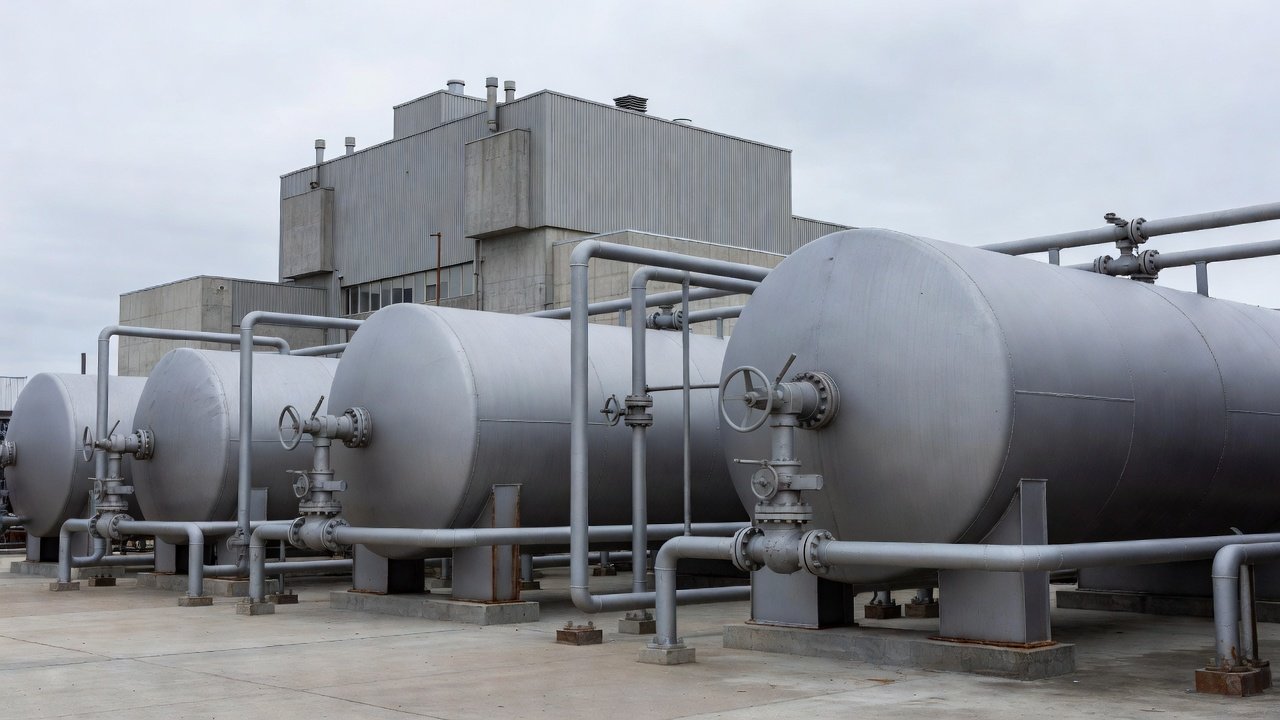
NFPA 110, referenced by both CMS and Joint Commission as the technical basis, governs the emergency power supply system itself: fuel capacity sized to the system’s assigned class, with storage sized at 133% of the fuel needed for the specified runtime. The margin exists because tanks cannot be drawn to the bottom without pulling sediment and water into the fuel train.
State licensure adds a third layer, and in hurricane-exposed states it is often the strictest. Florida hospital licensure requirements combine with the above to require documented runtime that can range from 96 to 240 hours, monthly load testing, fuel quality testing, and contracted priority dispatch with a named supplier.
The practical consequence: a hospital can be fully compliant with the 96-hour planning rule and still run out of fuel, because the plan’s second half — delivery — is a commercial arrangement, not an engineering one.
The contract terms that fail
A fuel supply agreement is only worth what it delivers on the third day of a regional outage. The clauses that decide this are rarely the ones that get negotiated hardest.
Priority tier, stated explicitly. “Priority customer” with no defined position in the supplier’s dispatch order means nothing when the supplier’s entire book declares an emergency simultaneously. The term to press for is a named tier and a stated response interval, with the supplier’s total committed volume across all priority customers disclosed.
Force majeure scope. Many fuel agreements excuse performance for exactly the conditions the contract exists to cover. Read what the supplier is relieved of during a declared emergency, road closure, or terminal shutdown. If a hurricane voids the obligation, the contract is decorative.
Named delivery assets, not corporate capacity. A supplier’s fleet size is not a commitment. Which terminals will serve you, and what happens when the primary terminal is offline or without power to pump, is the question. Terminal outage — not truck availability — is the common regional failure mode.
Credentialed access. Drivers need to reach a facility inside a restricted zone. Pre-arranged access credentials and a documented site delivery procedure, including who meets the truck at 2 a.m., belong in the contract rather than in someone’s memory.
Fuel quality is the quieter risk
Stored diesel degrades on a schedule that does not care about the storm track. Degradation begins at roughly six months, and fuel is generally considered to deteriorate within six to twelve months. Water intrusion promotes microbial growth, which clogs filters and damages injectors — a failure that presents during the load transfer, when the generator is asked for sustained output for the first time in months.
A tank that has sat full since the last hurricane season and has been exercised only in brief monthly tests may hold fuel that will not sustain 96 hours at load. Annual ASTM-standard fuel analysis, biocide treatment, and polishing for long-stored diesel are the mitigations. The relevant point for late August is that fuel analysis has a turnaround time. Sampling in September to find out whether the fuel is sound means learning the answer after the peak.
Sizing the actual number
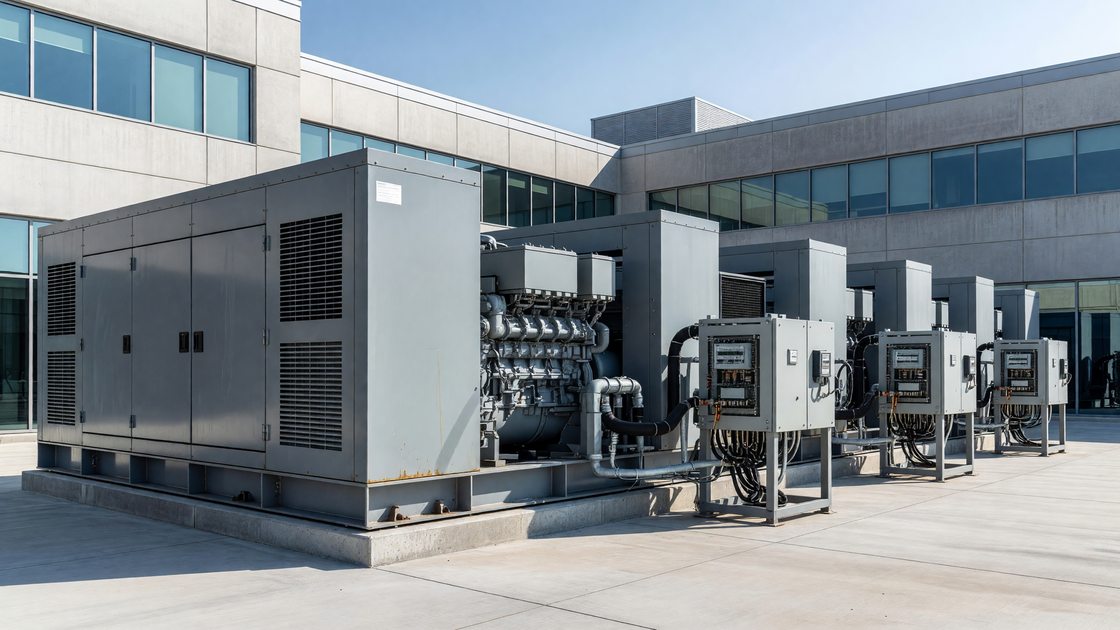
Facility directors are sometimes surprised by how large the required volume is once it is calculated rather than assumed. A reasonable planning figure for diesel generators is approximately 0.07 gallons per kW per hour at full load. A 1,000 kW unit at full load therefore consumes on the order of 70 gallons per hour, or about 6,720 gallons across 96 hours — before the NFPA 110 133% factor, and before accounting for multiple units.
Two adjustments matter. Generators rarely run at full nameplate load, so consumption estimated at nameplate is conservative — but load during an actual event is higher than during a monthly test, because the building is running on emergency power with cooling demand that a brief test never imposes. And the runtime clock does not start when the fuel arrives; it starts at the outage.
What to confirm before the peak
Preparedness work of this kind is conventionally scheduled for May: annual load testing, polishing where storage exceeds six months, and confirmation of contracted emergency dispatch. For any facility where that did not happen, late August is the last useful moment.
The short list is four items. Confirm the current fuel analysis is less than a year old and passed. Confirm the supply agreement names a priority tier, a response interval, and specific terminals. Confirm the force majeure language does not excuse performance during the exact scenarios in your hazard vulnerability analysis. Confirm someone on each shift knows the delivery procedure without looking it up.
None of these require capital, and all of them are documentation a surveyor may ask for regardless of the weather.
Editorial only; not medical, legal, or compliance advice. Verify all requirements against current CMS, Joint Commission, NFPA, and state licensure texts and your authority having jurisdiction.