ASHE named Geisinger the winner of its 2026 Excellence in Health Care Facility Management Award on July 28, with the award presented at the Health Care Facilities Innovation Conference in Minneapolis in early August. The recognised work is a commissioning program that has run since 2016 and, across 16 retro-commissioning and optimisation initiatives in hospitals, ambulatory facilities, and central utility plants, has saved more than $4.05 million in operating costs.
Geisinger is a regional system headquartered in Danville, Pennsylvania, with 10 hospital campuses and more than 130 primary and specialty care clinics. The program spans its northeastern, central, and western regions.
The dollar figure is what gets quoted. The structure is what other systems should copy.
The two-layer design is the actual innovation
The program pairs retro-commissioning projects in 12 hospital buildings with ongoing monitoring-based commissioning in 23 facilities. Those are different activities, and running them together is the whole point.
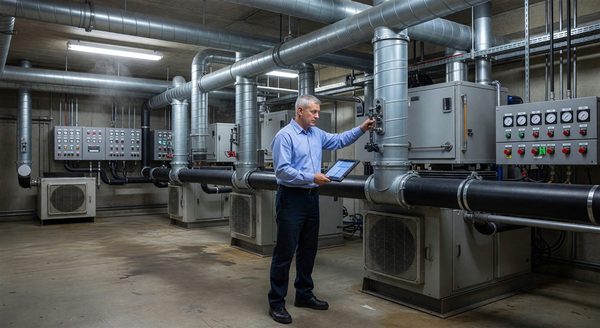
Retro-commissioning is an event. A team investigates an existing building, finds control sequences that have drifted, dampers that are stuck, valves leaking by, schedules that were overridden years ago for a reason nobody remembers — and it corrects them. It produces a large, satisfying, one-time number.
The problem is that the number decays. Overrides come back. A new nurse manager complains about a cold room and someone disables the setback permanently. A sensor drifts and the sequence that depends on it quietly stops working. Systems that run retro-commissioning as a standalone capital project frequently rediscover the same deficiencies at the next study, having paid twice for the same findings.
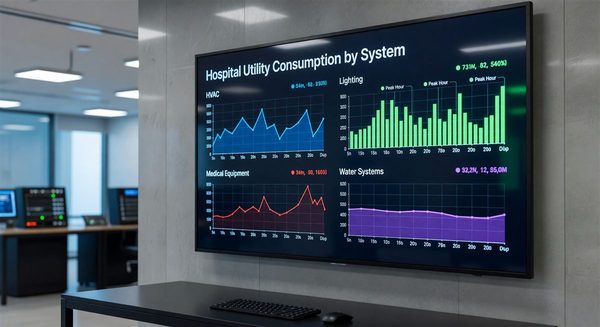
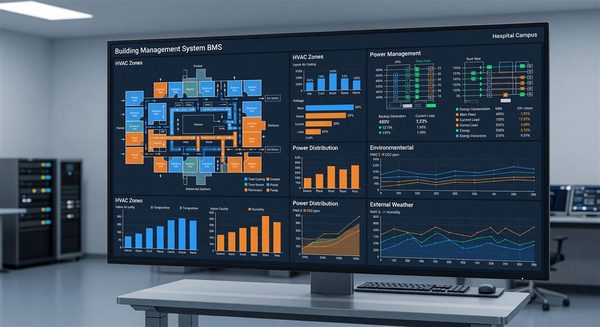
Monitoring-based commissioning is the layer that stops that. Continuous data from the building automation system is analysed against expected performance, so drift surfaces as an alert rather than as a discovery five years later. Geisinger applied it to nearly twice as many facilities as it retro-commissioned, which is the correct ratio — the monitoring layer is cheaper per building and it is what preserves the value the retro-commissioning created.
Nine years is the other number
The savings figure is cumulative since 2016. That is not a program that was funded, executed, and closed. It is a sustained operating capability with continuous budget, and the $4.05 million reflects savings that persisted rather than savings claimed at project handover.
This matters when building an internal business case. A single-year retro-commissioning payback presented to finance is a weaker argument than a persistence story, because finance has usually seen energy projects whose savings evaporated. A program that can show maintained performance across nine years is answering the objection before it is raised.
The delivery model was collaborative and multi-vendor
Geisinger executed with the energy solutions firm Envinity, working through a team of controls vendors and mechanical contractors — JCI, Valley T&B, Penn State Mechanical, and NRG Controls.
That structure is worth noting because it is the opposite of a single-source turnkey contract. The analytical and program-management function sat with a partner whose interest was in identifying deficiencies, while the correction work went to the controls and mechanical contractors already working in those buildings. The party finding the problems was not the party paid to fix them.
For systems whose controls estate is already mixed across vendors — which is most systems with any acquisition history — this is a practical model. It does not require standardising the building automation platform first, which is the prerequisite that kills a lot of these programs before they start.
How to translate this to a smaller system
Not every organisation has 10 campuses or a nine-year runway. The transferable elements scale down:
Start with the monitoring layer, not the retro-commissioning event. Analysing existing BAS trend data against expected sequences identifies where the money is before committing to a study. It also produces the baseline that any later savings claim will be measured against.
Pick central utility plants first. Geisinger’s initiatives included central plants alongside buildings, and plants concentrate load — chiller sequencing, pump staging, and simultaneous heating and cooling are where the largest single findings usually sit.
Separate the finder from the fixer. Whatever the contracting vehicle, keep the party identifying deficiencies distinct from the party billing to correct them.
Fund persistence explicitly. Budget the monitoring as an operating line, not as part of the project. If it is inside the project budget it ends when the project ends, and the savings go with it.
The award recognises a decade of unglamorous work on buildings that were already standing. That is the most replicable kind.