Healthcare workers face workplace violence at rates approximately four times higher than workers in other industries. Emergency departments, psychiatric units, and long-term care settings are highest risk, but violence against healthcare workers — from patients, visitors, and occasionally colleagues — occurs across all care settings.
Facility directors play a central role in workplace violence prevention through environmental design, access control infrastructure, and physical plant decisions that either amplify or reduce risk. While clinical and behavioral interventions address the human dimensions of violence prevention, the physical environment creates the conditions in which those interventions succeed or fail.
The Regulatory Landscape
Joint Commission Sentinel Event Alert #59 (2018) elevated workplace violence prevention to a leadership and governance priority in accredited facilities. The Joint Commission’s requirements, phased in beginning 2018, include:
- Written workplace violence prevention program
- Leadership responsibility assignment for the program
- Post-incident reporting and review system
- Annual environmental risk assessment
- Staff education and training
- Workplace violence data tracking and analysis
OSHA’s General Duty Clause has been applied to workplace violence cases, and the agency has maintained an active healthcare workplace violence enforcement program. OSHA issued a proposed rule in 2024 for healthcare-specific workplace violence prevention requirements.
Many states have enacted specific healthcare workplace violence prevention legislation, requiring facilities to have written prevention programs, report incidents, and provide staff training.
Environmental Design and CPTED Principles
Crime Prevention Through Environmental Design (CPTED) is an evidence-based framework for reducing the opportunity for violence through thoughtful building and site design. In healthcare settings, CPTED principles include:
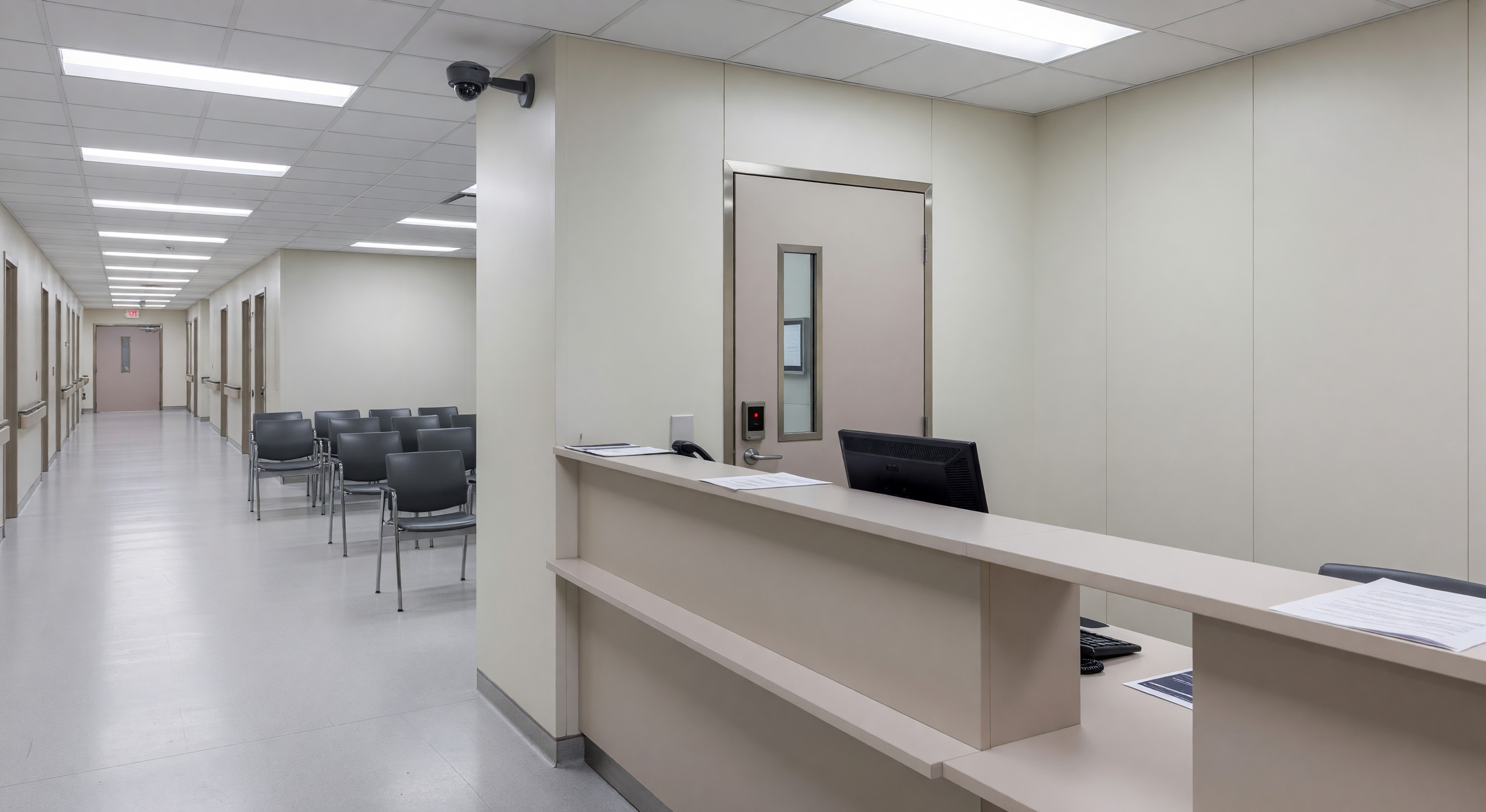
Natural surveillance — Design spaces so that staff can see and be seen. Open nursing station designs, clear sight lines down corridors, camera coverage visible to patients and visitors, and placement of staff work areas adjacent to high-traffic zones all increase natural surveillance.
Territorial reinforcement — Clearly define where the public is welcome and where they are not. Signage, flooring transitions, and access control points signal boundaries. A patient or visitor who crosses into a clinical work area without challenge has encountered a territorial reinforcement failure.
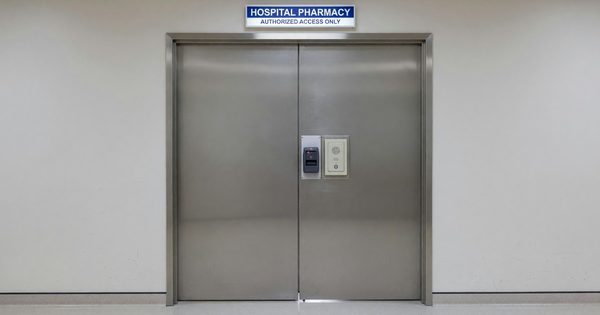
Access control — Physical design elements that limit unauthorized entry into clinical areas, including secured staff entrances, waiting rooms that physically separate the public from clinical space, and controlled access to high-risk units (ED, psychiatric, pediatric).
Lighting — Adequate illumination in parking areas, building approaches, and interior spaces reduces risk and improves staff comfort and security.
Hiding place elimination — Architectural features that create concealed alcoves, blind corners, or poorly lit areas where an aggressor could wait undetected should be identified and modified.
Emergency Department Design
The emergency department presents the highest workplace violence risk in most hospitals. High-acuity patients, intoxicated individuals, patients in psychiatric crisis, and family members under extreme stress create a volatile environment.
Emergency department physical design elements that reduce violence risk:
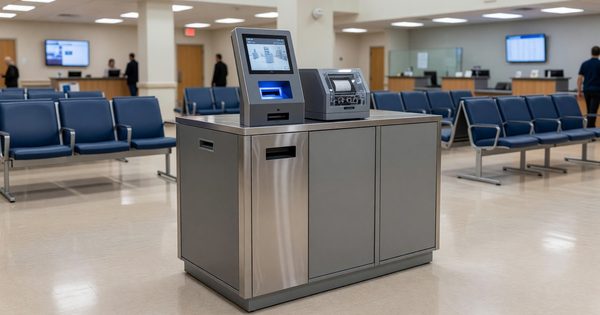
Triage screening area — A dedicated, access-controlled screening space allows assessment of patients and visitors before they enter the main ED. Metal detection systems integrated with triage have been implemented at numerous high-violence-risk EDs.
Secure staff work areas — The nursing station should not be an open counter that patients and visitors can walk directly behind. A combination of counter height, pass-throughs for document exchange, and access-controlled staff entry points creates a protective barrier without eliminating the working relationship between staff and patients.
Waiting room design — Remove furniture that can serve as weapons (heavy chairs, free-standing objects). Use fixed, lightweight seating. Install visible security cameras. Ensure staff sightlines into the waiting area from the nursing station.
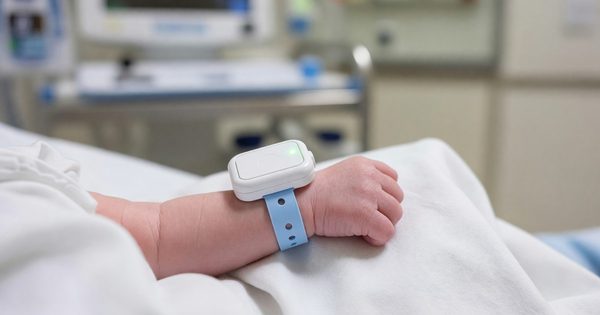
Panic alarms — Every staff member should have access to a duress alarm within reach. Wall-mounted panic buttons at nurses’ stations, patient care rooms, and treatment areas provide immediate alert to security when activated. Staff-worn personal emergency response buttons provide mobility.
De-escalation rooms — Purpose-designed rooms for de-escalation of agitated patients or visitors — with no objects that can be used as weapons, furniture secured to the floor, and a staff emergency exit — allow trained staff to work with escalating individuals safely.
Psychiatric Unit Design
Psychiatric units require the most intensive application of safe design principles:
Anti-ligature hardware — Door hinges, window handles, plumbing fixtures, and furniture in patient areas must be designed to prevent attachment of ligatures. Anti-ligature design is both a patient suicide prevention measure and a safety measure for staff working in close proximity to patients.
Room design — Patient rooms should have a minimum of objects that can be used as weapons, fixtures that are recessed or tamper-resistant, and breakaway curtain rods.
Controlled environment — Staff access to medications, instruments, and equipment must be strictly controlled and audited. Sharps management in psychiatric units requires policies and systems adapted for the setting.
Outdoor spaces — Secure outdoor areas for patient exercise and outdoor time reduce patient agitation. Access to outdoor space must be controlled — the area must be fully enclosed and monitored.
Technology Solutions
Several technology platforms support healthcare workplace violence prevention:
Security camera systems — Coverage of all public-facing areas, corridors, parking areas, and facility approaches. Modern video analytics can identify agitated or unusual behavior patterns and alert security before an incident escalates.
Personal emergency response systems (PERS) — Wearable devices carried by staff that activate a duress alarm when pressed. Integration with RTLS can pinpoint the alarming staff member’s location for faster response.
Metal detection — Weapons screening at ED and psychiatric unit entrances has been implemented at high-risk facilities. Walk-through metal detectors at main entrances for these units, combined with handheld detection and bag screening, reduce the introduction of weapons.
Video doorbell and access control integration — Intercoms with video at clinical unit access points allow staff to visually screen visitors before granting access, without opening the door to the clinical area.
Frequently Asked Questions
Is metal detection at hospital entrances standard practice? Metal detection at all hospital entrances is not currently standard practice but is more common at EDs and psychiatric units in facilities with high violence rates. The Joint Commission does not mandate metal detection, but it is recognized as an effective violence prevention measure. The decision to implement metal detection involves policy, operational, patient experience, and cost considerations that vary by facility.
How should we document and report workplace violence incidents? Establish a reporting culture where all incidents — including verbal threats and near-misses, not just physical assaults — are expected to be reported. Reporting must be easy (electronic or paper form, accessible within the unit). Reports should be reviewed by the workplace violence prevention team and analyzed for trends. OSHA 300 recordable criteria apply to injuries resulting from workplace violence.
What role does access control play specifically in violence prevention? Access control creates time and distance between a threatening individual and clinical staff. Doors that require credential presentation cannot be rushed through by an agitated individual. Knowing that a clinical unit is physically secured changes the behavior of potential aggressors and gives staff time to respond. Access control also limits the spread of an incident — a person who becomes violent in the waiting room cannot immediately access the clinical floor.
How do we balance open, welcoming hospital environments with the security measures violence prevention requires? The most effective environments integrate security unobtrusively. Clear wayfinding, visible staff presence, and welcoming but structured check-in processes create a secure environment that does not feel fortress-like. Visible cameras and intercoms signal that the environment is monitored. Security staff trained in customer service and de-escalation are more effective than an intimidating uniformed presence. The perception of safety is as important as actual physical security measures.