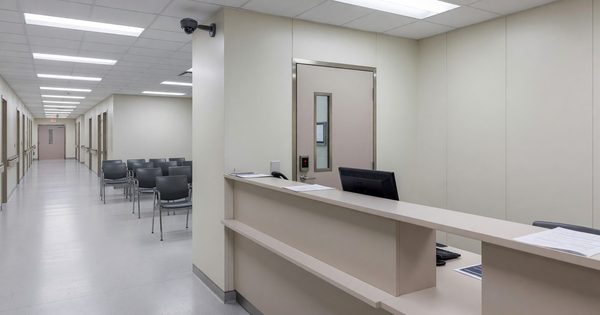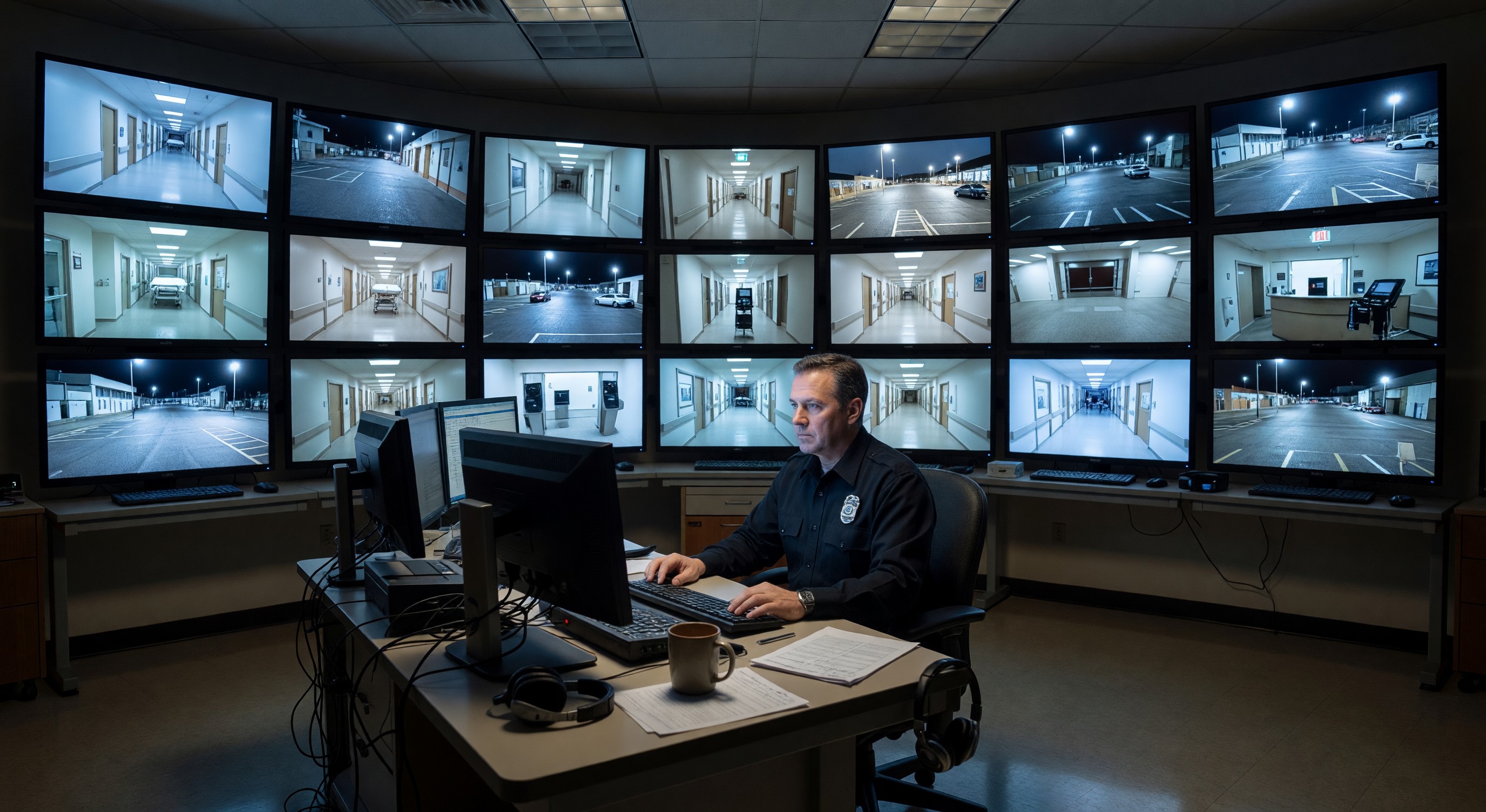
Video surveillance in healthcare settings serves multiple purposes simultaneously: patient safety, staff protection, incident investigation, asset protection, and increasingly, operational analytics. A well-designed camera system supports all these functions while respecting the privacy expectations of patients, staff, and visitors in what is simultaneously a public facility and an intensely private environment.
Healthcare facility directors who have delegated video surveillance entirely to their security departments may be missing the facility management implications of these systems. Coverage planning, integration with access control, data retention, and system reliability are all facility-level concerns.
Coverage Planning Principles
Not every location in a hospital requires the same surveillance intensity. A tiered coverage planning approach allocates camera resources based on risk:
High-priority coverage areas:
- All building entrances and exits
- Parking areas and access points
- Emergency department lobby and triage
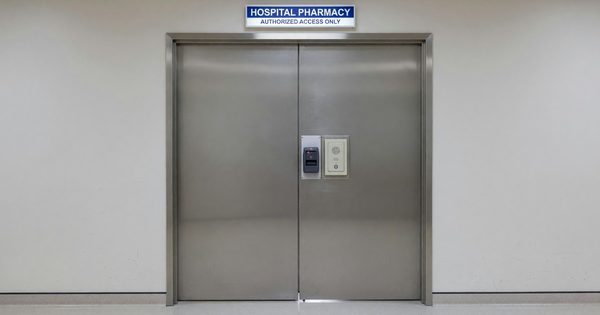
- Pharmacy and controlled substance storage areas
- Server rooms and data centers
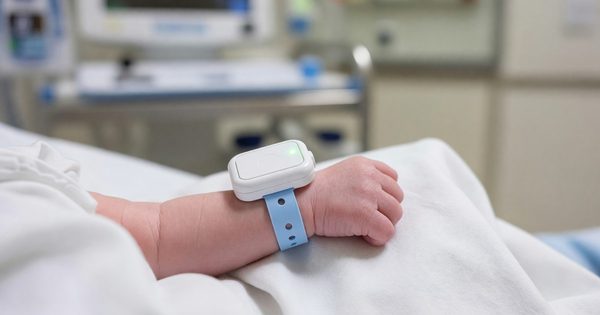
- Infant care and maternity areas
- Behavioral health unit access points
- Cash-handling locations (parking pay stations, gift shop, cafeteria)
- Loading docks and service entrances
- Stairwells and elevator lobbies
Moderate-priority coverage areas:
- Main lobby and public corridors
- Nursing station corridors on patient care floors
- Outpatient waiting areas
- Cafeteria and public areas
Areas where cameras are inappropriate or restricted:
- Patient rooms (absent specific clinical or safety protocol)
- Restrooms and locker rooms
- Employee break rooms (except in limited circumstances with notice)
- Areas where physician-patient privileged communications regularly occur
Camera Technology Selection
Modern healthcare surveillance systems use IP-based megapixel cameras that offer significantly better image quality than legacy analog systems. Key technology decisions:
Resolution — Entry-level cameras at 2 megapixels (1080p) are adequate for general coverage of corridors and open areas. License plate capture at parking entry/exit requires 4–8 megapixel cameras with appropriate lens focal length. Facial recognition applications (whether or not currently used) benefit from higher resolution.
Lens type — Fixed focal length lenses for coverage of defined areas. Varifocal or motorized zoom for cameras that need flexibility in coverage area. PTZ (pan-tilt-zoom) cameras for areas that require active monitoring with operator control.
Low-light performance — Healthcare facilities operate 24/7, and many high-priority areas have poor nighttime lighting (parking areas, exterior entrances). Select cameras rated for the low-light conditions they will encounter. Infrared or supplemental lighting may be required.
Wide dynamic range (WDR) — Cameras positioned at entrance doors face a difficult lighting condition: bright outdoor light and dark interior simultaneously. WDR cameras compensate for this dynamic range difference, producing usable images where standard cameras see either a washed-out exterior or a dark interior.
Video Management System (VMS) Selection
The Video Management System is the software platform that receives and displays camera feeds, manages recording, and provides video retrieval and analysis capabilities.
Healthcare-specific VMS requirements:
- Scalability to support a large number of cameras (a major hospital may have 500–2,000+ cameras)
- Retention management to meet varying retention requirements by area
- User access control (not all staff should have access to all camera views)
- Analytics support (motion detection, person detection, crowd analysis)
- Integration with access control (linking camera views to door access events)
- Redundant storage (video evidence cannot be lost due to storage failure)
- Cybersecurity features (encrypted streams, authenticated access)
Patient Privacy Considerations
Patients in healthcare settings have a reasonable expectation of privacy that video surveillance systems must respect. HIPAA does not directly regulate surveillance cameras, but the broader obligation to protect patient privacy applies.
Key privacy considerations:
- Post notice of video surveillance at facility entrances (common practice, reduces legal exposure)
- Define and document which areas are surveilled and which are explicitly camera-free
- Restrict access to patient-area camera footage to those with legitimate need (security investigations, clinical events)
- Define retention periods — longer retention for higher-risk areas, shorter for general corridors
- Establish a written policy governing who can access recorded footage and under what circumstances
- Address video footage requests from attorneys, law enforcement, and insurance in a written protocol
Patient room cameras — Cameras in individual patient rooms for patient safety monitoring (fall prevention, elopement monitoring) require specific consent protocols and strict access limitations. These specialized applications should be governed by clinical policy with privacy officer involvement.
Analytics and Intelligent Video
Modern VMS platforms offer video analytics that extract operational intelligence beyond traditional incident review:
Motion detection — Generates alerts when motion occurs in defined areas outside normal operating hours. Reduces the need for continuous live monitoring.
Person detection and counting — Identifies individuals in camera field of view and counts occupancy. Useful for crowd management, waiting area monitoring, and parking lot utilization analysis.
Parking analytics — Vehicle counting, space occupancy rates, and dwell time analysis from parking area cameras. This data can inform parking operations decisions without requiring separate parking guidance sensors.
Behavioral analytics — Algorithms that detect unusual behavior patterns — loitering, fast movement, falls. These analytics are used for patient fall detection in some clinical monitoring applications.
LPR integration — License plate recognition analytics on parking cameras can feed vehicle entry/exit data directly to the parking management system.
Data Retention and Storage
Video storage requirements in healthcare depend on the coverage area and organizational policy:
- General corridor and lobby: 30 days minimum
- Emergency department: 30–90 days
- Pharmacy and controlled substance areas: 60–90 days (supports DEA inspection readiness)
- Parking areas: 30–60 days (supports vehicle theft investigations)
- Incident-related footage: Retained indefinitely pending investigation completion and legal hold release
Storage sizing requires calculating total camera count × bit rate × retention period. Modern VMS platforms use motion-triggered compression to reduce storage requirements substantially compared to continuous recording.
Frequently Asked Questions
Do we need to notify staff that they may be recorded on video? Most jurisdictions require notification to employees that workplace surveillance may occur. This is commonly accomplished through employee policy acknowledgment at hiring, posted notice in areas under surveillance, and policy documentation. Some states have specific video surveillance disclosure requirements. Review applicable state law with legal counsel.
How should we handle a request from law enforcement for camera footage? Develop a written protocol before you receive the first request. Generally: require a written request (or subpoena for urgent criminal matters), document the request and your response, provide footage responsive to the specific request (not broader than requested), and notify your legal counsel before compliance with a formal subpoena. Patient privacy considerations apply even in law enforcement response.
What is the typical lifespan of a hospital surveillance system? Camera hardware typically has a 5–7 year useful life before resolution and feature limitations relative to available technology justify replacement. VMS software should receive regular updates and may require significant platform migration every 5–10 years. Plan camera and VMS replacement separately — cameras can often be upgraded without full VMS replacement if the VMS supports the new camera protocol.
How many cameras does a typical 300-bed hospital have? Camera counts vary widely based on facility design, security risk profile, and budget. A rough estimate is 2–4 cameras per clinical floor plus parking, lobby, and perimeter coverage, suggesting 300–800 cameras for a facility of this size. Larger, more security-conscious institutions or those with complex campus layouts may have 1,000+ cameras.