Not all areas of a hospital are equally accessible — and managing who can enter which areas is among the most consequential security functions in healthcare facility management. Pharmacy corridors, surgical suites, behavioral health units, pediatric areas, and data centers all require differentiated access that reflects their unique security and safety requirements.
Effective restricted zone access management combines physical barriers, electronic credential systems, written policy, and operational culture. Technology alone does not create security — it enables the security decisions that facility directors and security teams define.
Defining Restricted Zones: A Risk-Based Approach
The first step in restricted zone management is defining which areas warrant restriction and at what level. A risk-based classification framework considers:
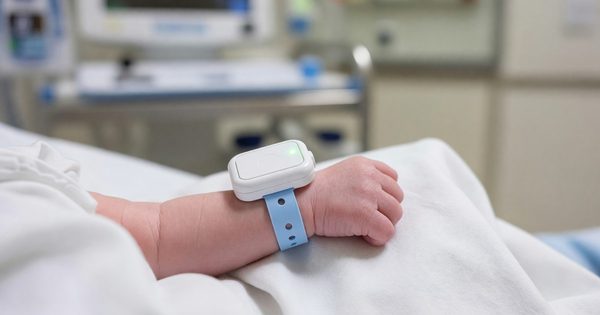
Vulnerability of occupants — Pediatric units, psychiatric units, and behavioral health areas house patients who may be at risk from unauthorized visitors. The security investment should reflect the patient population’s vulnerability.
Controlled substance presence — Pharmacies, medication rooms, and anesthesia storage require high-security access control with audit logging per DEA requirements.
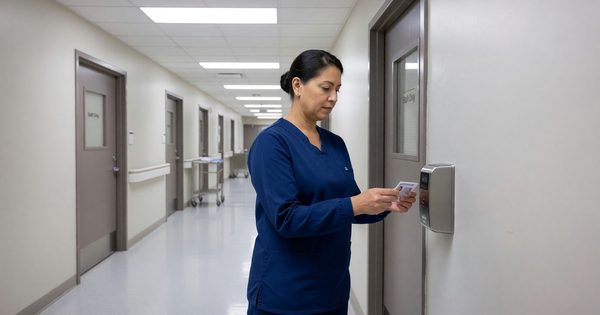
Sterility requirements — Operating rooms, sterile processing areas, and central sterile supply require not just restricted access but also hygiene control. Access systems at OR entries must accommodate staff wearing gowns and gloves.
Sensitive information or assets — Medical records storage, data centers hosting patient information, and administrative areas with financial or personnel information.
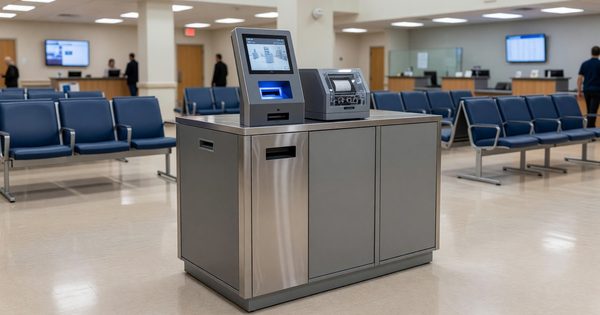
Public traffic patterns — Areas adjacent to high-public-traffic zones (lobbies, main corridors) warrant additional consideration because unauthorized access attempts are more likely in these locations.
Pharmacy Security: DEA and Beyond
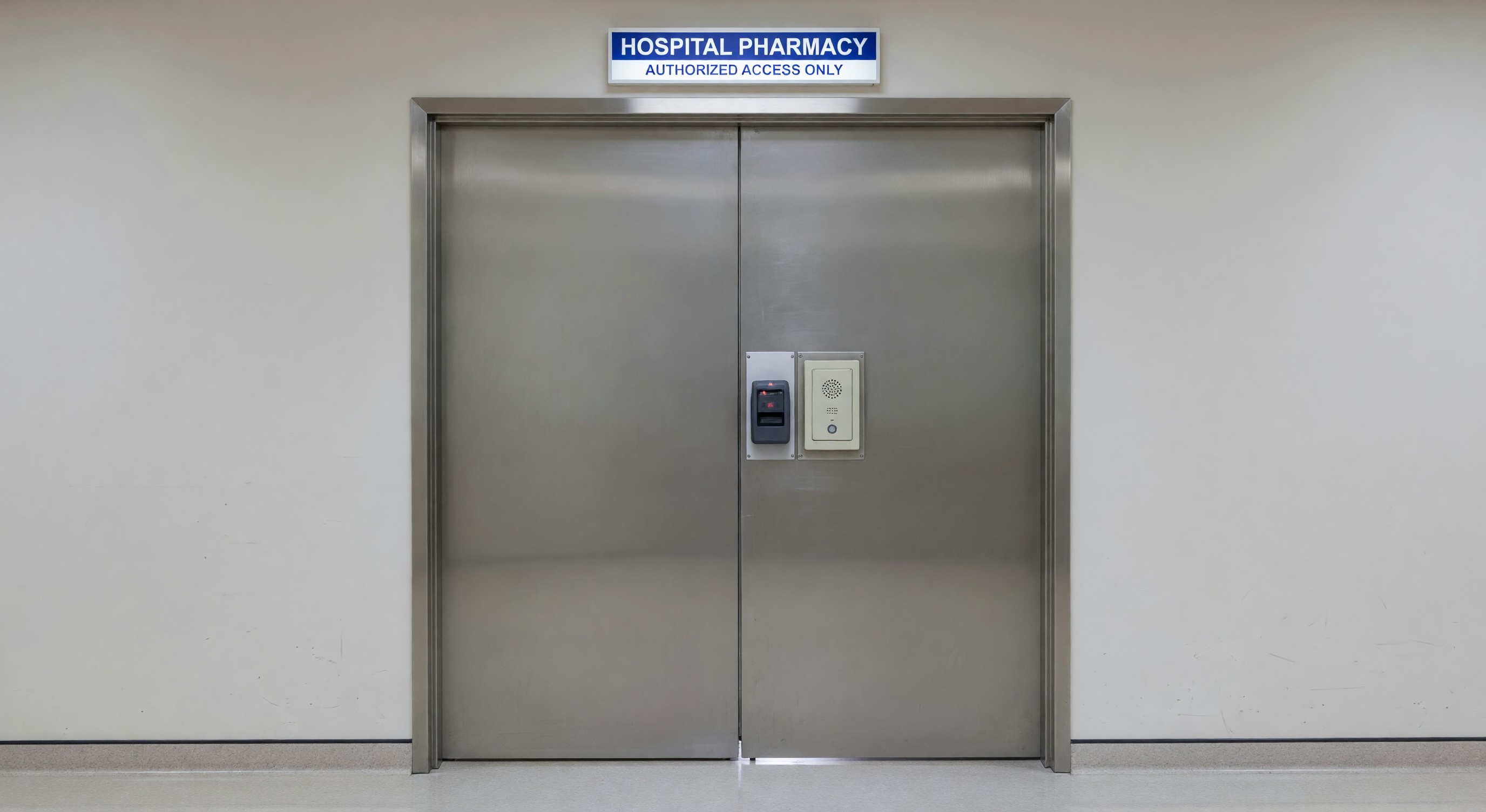
Pharmaceutical storage security is among the most intensively regulated in healthcare. DEA 21 CFR Part 1301.75 requires that Schedule I and II controlled substances be stored in a substantially constructed cabinet or safe with restricted access. More broadly, state pharmacy boards and organizational policies govern the security of all pharmaceutical storage areas.
Practical security requirements for hospital pharmacy restricted zones:
- Card-plus-PIN access for two-factor authentication at main pharmacy entry
- Separate high-security storage for Schedule II controlled substances, often with biometric or dual-key control
- Complete audit logging of all entries with user identity and timestamp
- Camera coverage at all pharmacy entry points and at controlled substance storage locations
- Policy prohibiting propping of pharmacy access doors (monitored with door-held-open alarms)
- Regular access privilege review — only active pharmacy staff with current credentials should retain access
Automated dispensing cabinets (ADCs) in clinical areas are an extension of pharmaceutical restricted access. ADC access controls, discrepancy reporting, and waste management are pharmacy security issues with direct facility management implications for cabinet placement and network connectivity.
Behavioral Health Unit Security
Psychiatric and behavioral health units present access control requirements driven by patient safety rather than (primarily) asset protection. The goal is to prevent elopement (unauthorized departure) and protect both patients and staff.
Key access control characteristics for behavioral health units:
Delay-egress hardware — NFPA 101 allows delay-egress locks that hold a door closed for up to 15 seconds after activation, allowing staff to respond before a patient exits. These must integrate with fire alarm systems and release immediately upon alarm.
Anti-climb hardware — Stairwell doors, roof access points, and any elevated exterior access points require hardware designed to prevent patient access.
No-access patient inventory — Most behavioral health units implement policies where patients’ access to their own rooms is mediated by staff, preventing unsupervised room access.
Visitor control — Visitor access to behavioral health units should be individually authorized for each patient, with non-authorized visitors denied access rather than redirected. Some patient treatment plans may require visitor restrictions that facility security must enforce.
De-escalation room design — Rooms designed for de-escalation of agitated patients should have access control that allows staff to maintain control of the door while protecting staff safety.
Surgical Suite Access Management
Surgical suites present access control challenges related to sterility maintenance and traffic management. Non-sterile individuals entering a surgical suite corridor can contaminate the sterile environment and compromise surgical outcomes.
Surgical suite access control typically implements:
Zone designations — Semi-restricted (scrub attire required, but sterile procedures not immediately in progress) and restricted (sterile attire required, sterile procedures in progress) areas require different access thresholds.
Traffic control at suite entry — The transition from unrestricted to semi-restricted areas is the key control point. Card readers or key pads at this transition limit entry to those with appropriate authorization.
Scheduling integration — For elective procedures, access can be correlated with OR schedule data — device representatives, for example, should only have access when a case involving their equipment is scheduled.
Air quality integrity — Suite entry airlocks (vestibules between the corridor and the suite) reduce the introduction of contaminants from outside the sterile zone. These must be designed so that both doors are never open simultaneously.
Door Hardware for Clinical Environments
Door hardware selection for healthcare access control requires consideration of clinical operating conditions that commercial hardware is not designed for:
Infection control — High-frequency touch surfaces (door handles, card readers) are vectors for pathogen transmission. Antimicrobial hardware coatings, hands-free activation options (foot pulls, elbow latches, motion-activated openers), and hardware designs that minimize crevices that trap contaminants are all relevant.
Crashout capability — Doors in patient care areas may need to open outward quickly during a medical emergency or evacuation. Hardware must support rapid, unobstructed opening without the need for credential presentation during emergencies.
Durability under heavy use — Door hardware in a busy hospital is cycled thousands of times per week. Commercial-grade hardware rated for high-cycle applications should be specified.
Power failure behavior — In a power failure (absent generator power or UPS backup), doors with electric latch hardware may default to locked or unlocked depending on the hardware configuration. For life-safety egress paths, fail-safe (fail-unlocked) configuration is required. For security-critical spaces, fail-secure (fail-locked) may be appropriate. Define each door’s fail state intentionally.
Frequently Asked Questions
How do we manage access privileges for PRN (as needed) and float pool staff who work across multiple units? Float pool and PRN staff present a genuine access control challenge because their work areas are variable. Options include: issuing broad access credentials that cover all units where they may be assigned (highest convenience, lowest security), issuing time-limited credentials activated at the start of each shift based on assignment (highest security, more administrative burden), or maintaining a “float pool” credential profile in your access control system that matches the access level of the most restrictive regular assignment.
What documentation should we maintain for restricted zone access? Maintain a master access matrix (which credential classes have access to which zones), a current access authorization list (which individuals hold each credential class), a record of all access privilege changes (grants and revocations with authorization documentation), and access event logs. Retain access event logs for at least two years; retain privilege records indefinitely.
How should we handle a staff member who reports losing their access badge? Deactivate the badge immediately upon report. Issue a temporary credential for the shift or workday. Issue a permanent replacement credential after identity verification. Do not allow staff to continue working on a lost badge reported to be lost — the badge may have been stolen rather than lost.
What is the difference between card access and keypad access for restricted zones? Card access (proximity or smart card) provides individual credential tracking — you know exactly who entered and when. Keypad access (PIN code) is shared among all authorized users and does not provide individual attribution. For restricted zones requiring audit trails (pharmacies, controlled substance storage), individual card credentials are required. Keypad access may be appropriate as a supplemental factor in two-factor authentication where the card provides the individual identity.