Infant abduction from hospital settings is rare — but the consequences are so severe that even a single incident represents an unacceptable patient safety failure. Hospitals operating maternity and neonatal services have both an ethical and regulatory obligation to implement robust infant security programs.
The Joint Commission, through its Environment of Care and National Patient Safety Goals standards, expects hospitals to have implemented security measures appropriate to the risk of infant abduction. Facilities that have experienced incidents or near-misses are subject to additional scrutiny.
The Threat Profile
Infant abductions from healthcare facilities follow recognizable patterns that inform preventive system design. According to National Center for Missing and Exploited Children (NCMEC) data, abductors at healthcare facilities typically:
- Are female, often posing as a healthcare worker or nurse
- Frequently target postpartum units where security may be less intensive than NICU
- Act during periods of reduced staff coverage (evenings, nights, weekends)
- May attempt to leave via stairwells, utility corridors, or less-monitored exits rather than main entrances
This profile drives the design emphasis in effective infant security systems: detection at all potential exit points (not just main exits), real-time alarm response capability, and physical barriers that delay rather than merely detect unauthorized removal.
Infant Security System Technologies
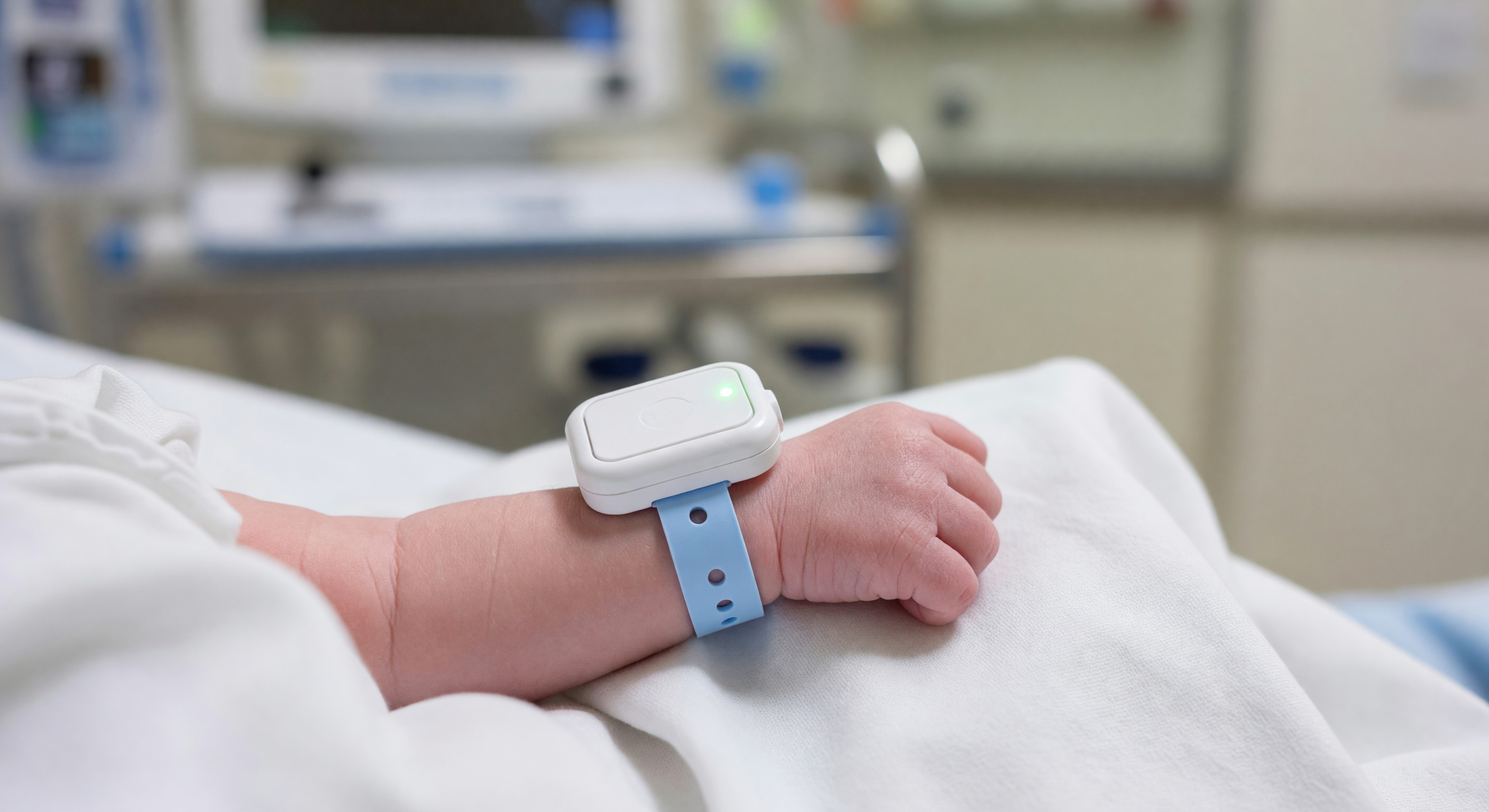
Band-based RTLS with door controller integration — The most widely deployed technology. A band containing an RTLS transmitter is placed on the infant’s ankle or wrist. Receivers mounted throughout the maternity unit and at all exit points monitor tag proximity. If a tagged infant approaches a monitored exit point without authorization, the system:
- Triggers an audio and visual alarm at the unit nursing station
- Sends alert to security personnel
- Automatically locks elevators and designated doors within the affected zone
Bi-directional bands — Some systems use bands that communicate confirmation of proper placement. A band that has been removed (or has had its transmission interrupted by shielding) generates a tamper alarm.
Camera integration — Video footage of the alarm event is automatically queued for security review, providing evidence of the individual who triggered the alarm.
Bi-directional alarm acknowledgment — Security staff receiving an alarm should be required to acknowledge receipt via radio or mobile device, confirming response is underway.
System Design Considerations
Coverage mapping — Every potential exit from the protected zone must be covered. This includes stairwells, elevators, utility corridors, and service entrances, not just main hallways. A security assessment walking every potential exit route from the maternity unit to the exterior of the building is the starting point.
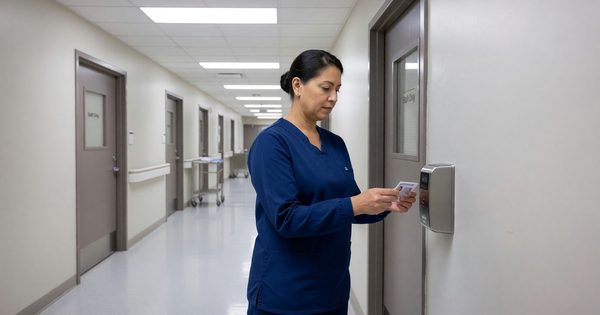
Door control integration — The highest-value feature of modern infant security systems is automatic door locking upon alarm. This creates a physical barrier to exit during the response window. The system must be integrated with fire alarm controls so that security doors release automatically in a fire event — a life safety requirement that cannot be compromised by security system locks.
Zone architecture — Some facilities use a “defense in depth” approach with nested zones: the maternity unit is the primary zone, the hospital floor is a secondary zone, and building exits are the tertiary zone. An alarm at the primary zone triggers a response before the secondary or tertiary zones are reached.
Alarm response time — The system’s value is only as good as the response it triggers. Security response time to infant security alarms should be tested regularly. Many facilities target a 60-second maximum response time to any infant security alarm point.
Operational Program: Beyond Technology
Technology is necessary but insufficient. An effective infant security program requires:
Staff education and drills — Every staff member in the maternity unit, NICU, and adjacent areas should know the Code Pink (or locally designated color) response procedure. Monthly drills are recommended. Drill documentation is expected by surveyors.
Visitor identification and management — Limit access to the maternity unit to identified, badged visitors with specific patient association. Visitor check-in for maternity units should be more intensive than general hospital visitor management.
Patient education — Educate mothers about infant security measures: what the tag is, what happens if it alarms, and what to do if they observe someone they do not recognize handling an infant. Patients and family members are the most constant eyes on their infant.
Communication protocols — Define the communication cascade for an infant security alarm: who is notified, in what order, what their responsibilities are, and how the all-clear is issued. Practice this cascade in drills.
Door control testing — All door controls linked to the infant security system must be tested for proper operation monthly. Log test results and address failures immediately.
COVID-19 Visitor Restrictions and Infant Security (2020)
The pandemic’s visitor restriction policies created an unexpected infant security benefit: the reduction of unauthorized visitors on maternity units dramatically reduced the risk profile for infant security incidents. However, the restriction also created challenges:
- Birth companions who were not the mother needed expedited credentialing in a period when visitor management infrastructure was overwhelmed
- Staff focused on COVID-19 protocols may have reduced attention available for infant security drills and monitoring
- Some facilities temporarily suspended infant security drill schedules during peak COVID periods, creating a gap that required remediation
The Joint Commission maintained its expectation for infant security program integrity even during COVID-19 operations, and surveyors have noted infant security as a focus area in post-pandemic reviews.
Regulatory and Standards References
Joint Commission EC.02.01.01 — Requires the hospital to establish and maintain a security management program. Infant security is specifically referenced as a high-priority security risk for applicable facilities.
Joint Commission NPSG — Patient identification and protection standards include expectations for infant security in maternity settings.
State regulations — Many states have specific regulations governing infant security systems in hospitals. Review your state’s hospital licensing regulations for applicable requirements.
NCMEC guidelines — The National Center for Missing and Exploited Children publishes guidelines for hospital infant security programs that are widely referenced by accreditation surveyors.
Frequently Asked Questions
How often should infant security systems be tested? Alarms should be tested daily by placing a test tag near each monitored exit point to confirm alarm activation. Door controller integration should be tested monthly. Full system performance testing with simulated abduction scenarios should occur at least annually, ideally quarterly.
What happens if the infant security band causes a skin reaction? NICU infants with extremely fragile skin may have adverse reactions to standard band materials. Work with your vendor and clinical team to identify alternative attachment methods or materials for highest-risk neonates. Document your clinical accommodation protocol.
Should we use the same infant security vendor as our general RTLS vendor? Integration between infant security and general RTLS can offer operational advantages (single monitoring platform, unified infrastructure). However, infant security has sufficiently different performance requirements and regulatory significance that some facilities prefer a dedicated system with a specialized vendor. Evaluate both approaches.
What do we do in the event of an actual infant abduction? Activate Code Pink immediately. Secure all exits (the infant security system should automatically lock monitored exits, but manual secondary control of all building exits should also be initiated). Contact law enforcement immediately. Contact NCMEC (1-800-THE-LOST). Follow your documented emergency response plan, which should be exercised regularly so activation is practiced rather than improvised.